
Sleep Apnea: Why It's More Dangerous Than Snoring — and How Your Dentist Can Help
Every night, millions of Americans stop breathing — sometimes hundreds of times — without ever knowing it. Their partners hear the snoring stop, then restart, then stop again. Their mornings are foggy. Their afternoons are exhausting. They are told to lose weight, drink less caffeine, sleep on their side. But the real problem is in their airway — and it is treatable.
What Is Sleep Apnea?
Obstructive sleep apnea (OSA) is a condition in which the soft tissues of the throat — the tongue, the soft palate, and the walls of the airway — collapse and block the passage of air during sleep. When this happens, your breathing stops. Your oxygen level drops. Your brain detects the crisis and sends an emergency signal that briefly wakes you, reopens the airway, and allows breathing to resume.
This cycle — collapse, apnea (breathing pause), arousal, resume — can happen anywhere from 5 to more than 100 times per hour. Each event lasts 10 seconds to over a minute. You usually do not remember these awakenings in the morning. You just feel terrible — and cannot figure out why.
Sleep apnea severity is measured by the Apnea-Hypopnea Index (AHI): the number of breathing interruptions per hour. Mild sleep apnea is 5–14 events per hour; moderate is 15–30 per hour; severe is over 30 per hour — with frequent daytime sleepiness that interferes with normal daily activities.
Left: Normal sleep — the tongue and soft palate stay in position, the airway remains open, and oxygen flows freely. Right: Sleep apnea — soft tissue collapses into the airway, blocking air. Oxygen drops. The brain triggers a partial awakening to reopen the airway. This happens silently — and can occur hundreds of times per night.
The Real Medical Danger: What Untreated Sleep Apnea Does to Your Body
Most people think sleep apnea is a nuisance — a snoring problem that bothers their bed partner. The clinical reality is far more serious. Obstructive sleep apnea is a significant independent risk factor for cardiovascular morbidity and mortality. The mechanisms are well-established in research through 2025.
High Blood Pressure
Each apnea event triggers a surge in sympathetic nervous system activity — raising heart rate and blood pressure. OSA prevalence is as high as 40–80% in patients with hypertension. Many cases of "resistant hypertension" that do not respond to medication are driven by undiagnosed sleep apnea.
Stroke Risk
Moderate or severe sleep apnea significantly increases the risk of cerebrovascular events (strokes). Repeated episodes of oxygen deprivation and blood pressure surges damage blood vessel walls and increase clot formation risk.
Heart Disease & Heart Failure
OSA has been linked to coronary artery disease, cardiac arrhythmias including atrial fibrillation, and left ventricular hypertrophy. OSA can cause left ventricular diastolic dysfunction, which increases the risk of heart failure.
Type 2 Diabetes Risk
Sleep fragmentation and chronic intermittent hypoxia impair insulin sensitivity and glucose metabolism. OSA is strongly associated with type 2 diabetes and metabolic syndrome.
Daytime Accidents
People with untreated sleep apnea are significantly more likely to be involved in motor vehicle accidents due to excessive daytime sleepiness and impaired reaction time — comparable to driving under the influence of alcohol.
Cognitive Decline
Chronic oxygen deprivation during sleep accelerates memory impairment, reduces executive function, and has been linked to increased risk of dementia. The brain simply cannot repair and consolidate without adequate oxygen during sleep.
CPAP vs. Oral Appliance Therapy
CPAP (Continuous Positive Airway Pressure) is the standard first-line treatment for sleep apnea. It delivers a continuous stream of pressurized air through a mask you wear over your nose or mouth while you sleep — physically holding the airway open. When used consistently, it is highly effective.
The problem is consistency. CPAP has a significant compliance challenge. The mask is bulky, uncomfortable, generates noise, requires careful fitting to avoid air leaks, and causes frequent side effects including sore throats, dry mouth, skin rashes, and headaches. Many patients find CPAP intolerable and simply stop using it — often within months.
- Highly effective when used — gold standard for severe OSA
- Requires wearing a mask over nose or face every night
- Machine noise may disturb sleep or partner
- Bulky — difficult to travel with
- Requires electricity — camping or power outages are a problem
- Side effects: dry mouth, nasal congestion, mask leaks, claustrophobia
- Compliance is a major challenge — many stop using it
- Cleaning the machine and mask is a daily requirement
- Effective for mild to moderate OSA
- Small custom mouth guard — fits in your pocket
- Silent — no machine noise
- Travel-friendly — fits in a small case
- No electricity needed
- Far fewer side effects — most patients adapt quickly
- Higher nightly adherence than CPAP in studies
- Rinse with water — simple daily care
Mandibular advancement devices (MADs) consistently reduced AHI from baseline and improved daytime sleepiness and snoring in clinical studies. In head-to-head comparisons, MADs generally yielded smaller reductions in AHI than CPAP but achieved comparable improvements in symptoms and quality of life — with higher nightly adherence. For many patients, an oral appliance they actually wear every night is more effective than a CPAP machine they stopped using after three months.
Introducing the Glidewell Silent Nite 3D Sleep Appliance
The Silent Nite® 3D
Sleep Appliance
Glidewell — one of the world's leading dental laboratories — has launched the Silent Nite 3D: a fully digital, 3D-printed mandibular advancement device fabricated from durable light-cured resin. It is the evolution of the Silent Nite appliance that dentists have been prescribing since 1996 — now rebuilt using the same advanced digital manufacturing technology that has transformed dental crown and veneer fabrication.
🖨️ 3D-Printed Precision
Custom-fabricated using high-resolution 3D printing. Every surface contoured precisely to your teeth from a digital scan — no casting, no distortion.
🔩 Adjustable in 0.5mm Steps
Nylon connectors adjust the jaw position forward in 0.5mm increments over a 10mm total range — allowing Dr. Nguyen to fine-tune to your exact therapeutic jaw position.
😊 Scalloped Edges for Comfort
3D-printed scalloped edges minimize gum contact and maximize retention — the appliance stays in place without irritating soft tissue.
🏥 Medicare-Eligible Option
The Silent Nite with Glidewell Hinge is PDAC-approved for Medicare reimbursement under code E0486 — expanding access for Medicare-enrolled patients with a diagnosed OSA condition.
🛡️ Twinpak Option
Glidewell offers a Clinical Twinpak — a duplicate appliance fabricated simultaneously — so patients always have a backup without additional scanning or impressions.
✈️ Travel Ready
Fits in a pocket-sized case. No machine, no hose, no mask. Takes your entire sleep apnea treatment anywhere you go.
How the Silent Nite 3D Opens Your Airway
The Silent Nite 3D is a mandibular advancement device — it works by gently shifting your lower jaw forward into a therapeutic position during sleep. This forward repositioning of the mandible activates the airway muscles and ligaments, preventing the tongue and soft palate from collapsing into the airway.
The Silent Nite 3D advances the lower jaw forward during sleep, tensioning the airway muscles and preventing the tongue and soft palate from collapsing. The result: the airway stays open, oxygen flows freely, and you sleep through the night without disruption.
How to Get Your Silent Nite 3D at SoftDental
Sleep Apnea Screening Consultation
Dr. Nguyen evaluates your symptoms, sleep history, and risk factors. He will discuss whether a home sleep test or referral to a sleep physician for polysomnography is appropriate before proceeding.
Same-day consultation availableSleep Study (If Not Already Done)
A proper OSA diagnosis requires a sleep study — either a home sleep test (type III) or an in-lab polysomnography. Mild to moderate OSA is the primary indication for an oral appliance. Dr. Nguyen can coordinate with your physician or sleep specialist.
Required for diagnosisiTero Digital Scan — No Putty Required
Dr. Nguyen scans your upper and lower teeth with the iTero digital scanner. The precise 3D digital model is sent directly to Glidewell's laboratory for appliance fabrication. The scan takes under 2 minutes and requires no impressions.
Comfortable — quick — accurateAppliance Fabricated by Glidewell
Glidewell's advanced laboratory fabricates your Silent Nite 3D from the digital file. The 3D-printed construction ensures a precise custom fit every time. A second Twinpak duplicate can be fabricated simultaneously at your request.
Lab precision · Digital fabricationDelivery, Fitting & Titration
At the delivery appointment, Dr. Nguyen seats the appliance, verifies comfort and fit, and sets the initial jaw position. The nylon connectors allow adjustment in 0.5mm increments — fine-tuning over the following weeks until your optimal therapeutic position is achieved.
Adjustable to your needsFollow-Up Sleep Study to Confirm Effectiveness
After reaching your therapeutic jaw position, a follow-up sleep test confirms that the AHI has been reduced to the treatment target. This is important both for your care and for insurance documentation.
Verify results with your physicianSleep apnea is one of the most underdiagnosed conditions in medicine — and one of the most dangerous. When a patient comes to me with headaches, jaw grinding, fatigue, and a partner who hears them stop breathing at night, the answer is often not a harder mattress or less caffeine. It is a small custom appliance that costs less than a watch and protects the heart, brain, and years of quality life.
— Dr. Minh Nguyen, D.D.S., P.A. · SoftDental, Houston TXTired of being tired?
If you snore, gasp, wake up exhausted, or have been told you stop breathing during sleep — there is a quiet, custom answer that fits in your nightstand drawer. Ask us about the Silent Nite 3D today.
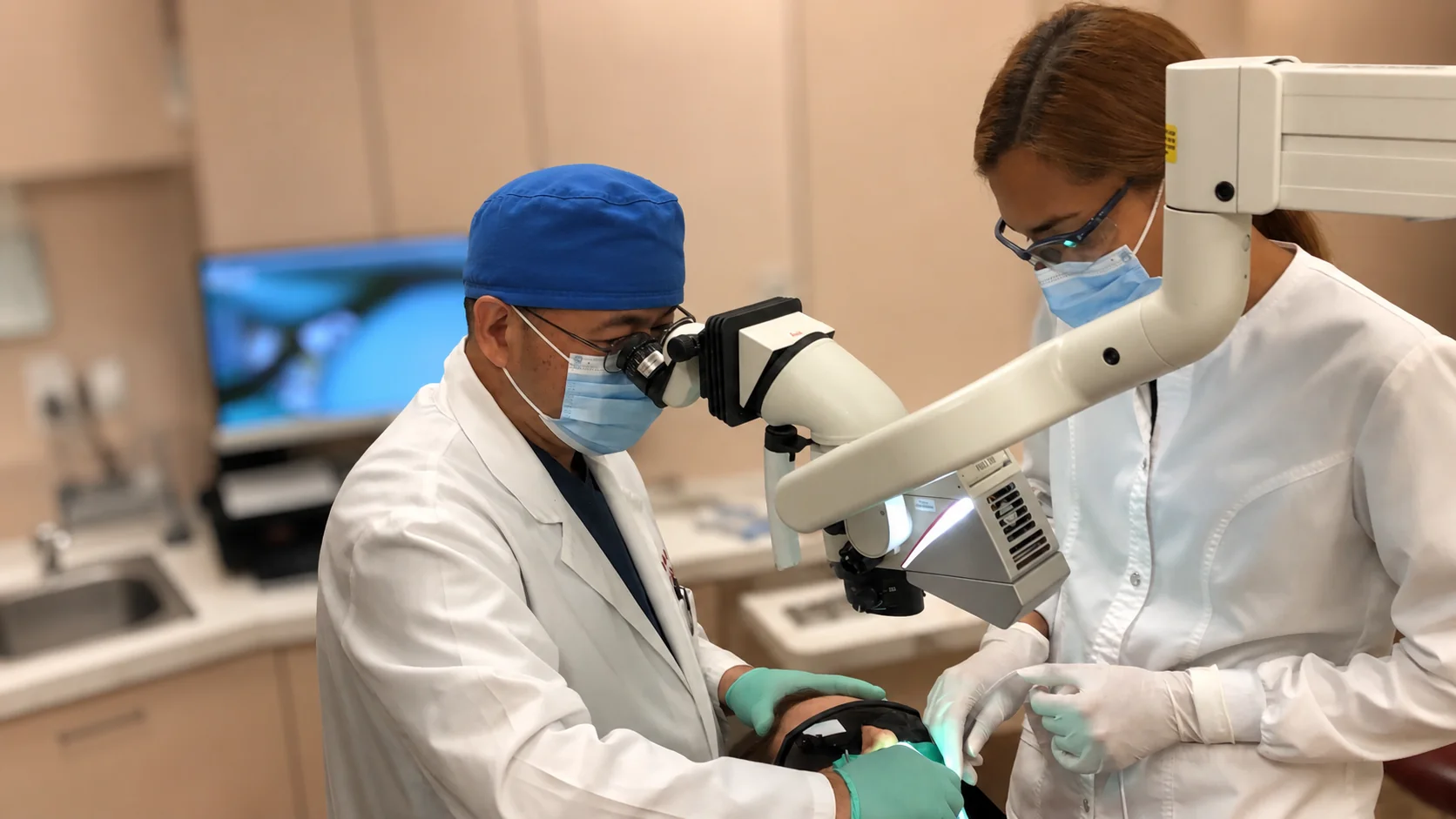
Glidewell Silent Nite 3D Sleep Appliance · iTero Digital Scanner · Anatomage 3D CBCT
This article is for patient education only and is not medical advice. Sleep apnea diagnosis requires a physician-ordered sleep study. Oral appliance therapy should be coordinated with your sleep physician. Statistics cited from clinical research published through 2025. © 2026 SoftDental | Dr. Minh Nguyen DDS PA · 10028 West Road Ste. 108, Houston TX 77064 · 281-807-6111
Questions about your own teeth?
Our team is happy to answer them in person, without pressure. Call us or book a visit.
Educational information only. Not a substitute for a personal exam with a licensed dentist.