
Botox and TMJ/TMD: Honest Pros, Cons, and Patient Expectations
Patients often ask, “Can Botox fix my TMJ?” The honest answer is: sometimes it can help symptoms, especially muscle-driven jaw pain or clenching, but it does not fix every TMJ problem. Botox is a tool — not a cure, not a replacement for diagnosis, and not the first answer for every patient.
First: TMJ vs. TMD — What Are We Really Talking About?
The TMJ is the temporomandibular joint — the jaw joint in front of the ear. TMD means temporomandibular disorder, a group of problems involving the joint, chewing muscles, ligaments, discs, bite forces, pain processing, or a combination of these.
Many patients say “I have TMJ,” but what they usually mean is: jaw pain, clicking, locking, headaches, jaw fatigue, clenching, grinding, ear-area pain, or trouble chewing. These symptoms can come from different sources. That is why treatment should not start with an injection before the diagnosis is understood.
How Botox Works for Jaw Muscles
Botox is a brand name for botulinum toxin type A. In small clinical doses, it temporarily weakens or relaxes selected muscles by blocking nerve signals to those muscles. For TMD-related use, clinicians may inject muscles such as the masseter and sometimes the temporalis — muscles heavily involved in chewing and clenching.
When those muscles are overactive, patients may develop jaw soreness, morning tightness, tension headaches, tooth wear, cracked fillings, or pain from constant clenching. Botox may reduce the force of clenching and temporarily reduce muscle pain in selected patients.
Botox may be useful when the main problem is overactive jaw muscles. It does not physically repair joint damage, disc displacement, arthritis, tooth wear, or the cause of clenching.
The Honest Answer: Does Botox Work for TMD?
The evidence is mixed. Some patients report meaningful relief from jaw muscle tension, clenching pain, and headaches. Some clinical studies show improvement in selected muscle-related cases. But high-quality research has not proven that Botox reliably works for all TMD patients, and national dental/medical sources caution that the evidence remains limited or inconclusive.
| Patient situation | Botox may help? | Why |
|---|---|---|
| Masseter muscle soreness from clenching | Possibly | Botox can temporarily reduce muscle contraction force. |
| Morning jaw fatigue or muscle tightness | Possibly | May reduce overnight muscle overactivity in selected patients. |
| Tooth wear from grinding | May reduce force, but does not protect teeth by itself | A night guard may still be needed to protect enamel and restorations. |
| Clicking without pain | Usually not the main answer | Clicking can come from disc movement. Botox does not reposition the disc. |
| Jaw locking or limited opening | Case dependent | Needs diagnosis. Locking may involve disc displacement, muscle spasm, arthritis, or other causes. |
| Arthritis or joint degeneration | Limited | Botox relaxes muscles; it does not rebuild cartilage or bone. |
| Tooth infection, cracked tooth, or bite trauma | No | The dental cause must be treated. Botox would only mask symptoms. |
Pros of Botox for TMJ/TMD Symptoms
May reduce muscle pain
Patients with tight, overactive masseter or temporalis muscles may feel less soreness and fatigue.
May reduce clenching force
Weaker muscle contraction can reduce the intensity of grinding or clenching forces.
May reduce tension headaches
Some headaches linked to jaw muscle overload may improve when the chewing muscles relax.
May protect dental work indirectly
By reducing bite force, Botox may reduce stress on crowns, fillings, veneers, implants, or natural teeth — but a guard may still be needed.
Quick appointment
Treatment is usually done in-office with small injections and no major surgery.
Reversible over time
The effect wears off, commonly around 3–4 months. That can be an advantage if the patient does not like the result.
Cons and Risks Patients Should Know
Patients deserve the full picture. Botox is commonly used in medicine and cosmetics, but it is still a neurotoxin medication with real limitations and possible side effects.
Not FDA-approved for TMD
Use for TMD is off-label. Insurance may not cover it, and evidence is not definitive.
Temporary effect
Botox wears off. Repeat injections may be needed if it helps and remains appropriate.
Chewing weakness
Some patients may feel weaker chewing, especially with tough foods, if masseter muscles are weakened too much.
Smile or facial asymmetry
If toxin affects nearby facial muscles, temporary smile imbalance or facial changes can happen.
Muscle and bone concerns
Repeated weakening of chewing muscles may affect muscle size and possibly bone loading. This is an area where research is still evolving.
Rare serious warning
FDA labeling warns that botulinum toxin effects can spread from the injection site and cause serious swallowing or breathing problems in rare cases.
What Botox Cannot Do
Botox can be helpful when used correctly, but it should not be used to hide problems that need real treatment.
What Should Be Tried Before Botox?
Most TMD care should start conservatively. The safest approach is usually reversible, low-risk treatment first — especially because many TMD symptoms improve over time or respond to self-care.
Diagnosis first
Dr. Nguyen checks teeth, bite, jaw joint, muscles, signs of grinding, X-rays when needed, headaches, sleep symptoms, and whether pain is coming from the joint, muscles, teeth, or another source.
Do not guessBehavior changes
Limit gum chewing, hard foods, wide yawning, nail biting, and daytime clenching. Keep lips together, teeth apart, and tongue relaxed when not chewing.
Reduce muscle overloadNight guard or occlusal appliance
A well-made appliance may protect teeth and restorations from grinding forces. It does not cure every TMD, but it can protect the teeth.
Protect teethPhysical therapy or jaw exercises
Some patients need muscle therapy, posture work, jaw mobility training, or referral to a clinician familiar with TMD.
Muscle functionMedication guidance when appropriate
Anti-inflammatory medication, muscle relaxants, or pain management may be considered depending on medical history and diagnosis. Do not self-medicate long term without guidance.
Case by caseSleep and stress evaluation
Grinding and clenching may be linked to stress, poor sleep, airway problems, caffeine, medications, or sleep apnea. Treating the trigger matters.
Find the triggerWhen Botox May Be Reasonable
Dr. Nguyen may discuss Botox when the patient’s symptoms and exam suggest the main problem is muscle overactivity, and conservative treatment is not enough or needs additional support.
| Better candidate | Less ideal candidate |
|---|---|
| Muscle soreness in masseter/temporalis | Main problem is painless clicking only |
| Strong clenching or grinding force | Untreated tooth infection or cracked tooth |
| Morning jaw fatigue | Uncontrolled joint locking needing specialist evaluation |
| Large masseter muscles from clenching | Pregnant or breastfeeding patient |
| Teeth/restorations overloaded despite guard | Neuromuscular disorder, swallowing or breathing concern |
| Patient understands off-label status, cost, and temporary effect | Patient expects a permanent cure after one visit |
What to Expect If Botox Is Chosen
The exact protocol depends on the diagnosis, muscle size, symptoms, medical history, and clinician judgment. Patients should expect a consultation first — not automatic injections.
Exam and consent
Dr. Nguyen reviews symptoms, diagnosis, alternatives, risks, benefits, medical history, medications, and realistic expectations.
Muscle mapping
The masseter and/or temporalis muscles may be palpated while the patient clenches so injection areas can be identified.
Small injections
The injection itself is typically quick. Mild soreness, bruising, or tenderness can occur.
Gradual effect
Results are not instant. Many patients notice changes over days to two weeks.
Follow-up
Follow-up helps determine whether symptoms improved, whether the dose was appropriate, and whether other treatment is still needed.
Patient Questions to Ask Before Saying Yes
Botox can be useful for some TMJ patients, especially when jaw muscles are overactive. But it is not magic, and it is not the right answer for every patient. At SoftDental, the goal is honest diagnosis first, conservative care when possible, and Botox only when the benefits make sense for the patient’s specific condition.
— Dr. Minh Nguyen, D.D.S., P.A. · SoftDental HoustonSources and Further Reading
National Institute of Dental and Craniofacial Research: TMD — explains TMD basics, conservative treatment, Botox's off-label status for TMD, and limited/inconclusive evidence for symptom relief.
PLOS ONE systematic review: Effectiveness of botulinum toxin for temporomandibular disorders — reviews BTX for pain reduction in TMD and notes the evidence has not yielded definitive conclusions.
Jaw pain, clenching, or morning soreness?
Start with the right diagnosis.
Dr. Nguyen can evaluate your teeth, bite, jaw muscles, joint symptoms, grinding signs, and sleep-related risks to decide whether conservative care, a night guard, Botox discussion, or specialist referral makes the most sense.
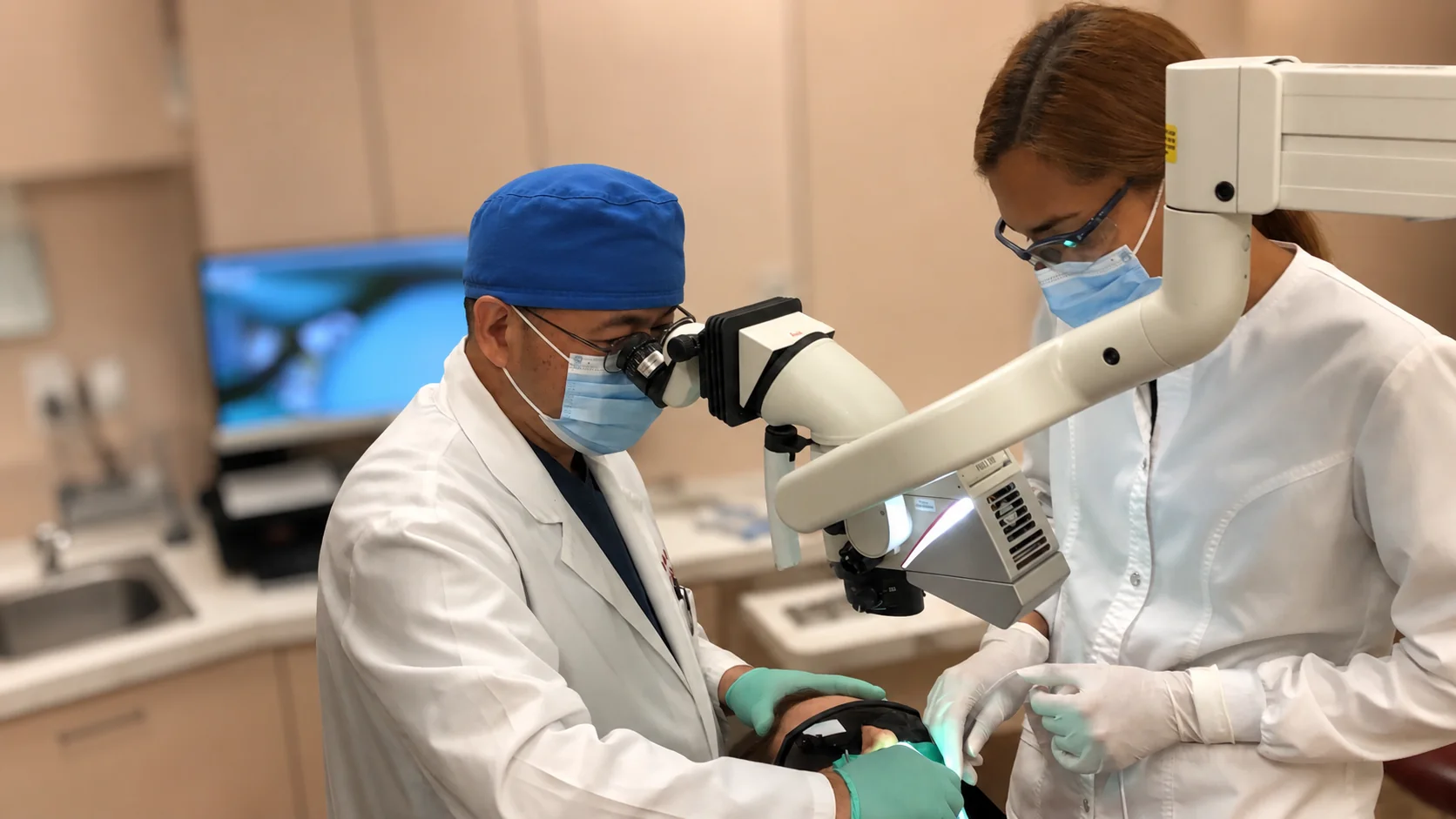
Jaw Pain Evaluation · Bruxism Screening · Night Guards · Botox Discussion When Appropriate
This article is for patient education only and is not a diagnosis, prescription, or guarantee of treatment outcome. Botox for TMD is off-label and may not be appropriate for every patient. TMJ/TMD treatment depends on diagnosis, medical history, medications, pregnancy/breastfeeding status, neuromuscular conditions, bite, tooth condition, muscle findings, joint findings, and patient goals. Some cases may require referral to an orofacial pain specialist, oral surgeon, physician, physical therapist, or sleep specialist. © 2026 SoftDental | Dr. Minh Nguyen DDS PA · 10028 West Road Ste. 108, Houston TX 77064 · 281-807-6111
Questions about your own teeth?
Our team is happy to answer them in person, without pressure. Call us or book a visit.
Educational information only. Not a substitute for a personal exam with a licensed dentist.