
Orthognathic Jaw Surgery: Not Just Cosmetic
Many patients think jaw surgery is only for changing the face. That is a misconception. Orthognathic surgery can improve appearance, but the main reason many patients are evaluated is function: how the teeth meet, how the jaws move, how the airway works, how the patient chews, and whether the bite is damaging the teeth over time.
What Is Orthognathic Surgery?
Orthognathic surgery, also called corrective jaw surgery, is surgery to reposition the upper jaw, lower jaw, or both. It is typically performed by an oral and maxillofacial surgeon. It is often coordinated with orthodontic treatment because the teeth and jawbones must work together.
Braces or clear aligners move teeth. Orthognathic surgery moves the jawbones. That difference is important. If the bite problem is caused by the jaw skeleton, moving only the teeth may not fully solve the problem.
Why Jaw Surgery Is Not Just Cosmetic
Orthognathic surgery can change facial balance, but it is not only about appearance. Jaw position affects how patients bite, chew, speak, swallow, breathe, and maintain their teeth.
Chewing function
If teeth do not meet properly, patients may struggle to bite food, chew evenly, or break food down comfortably.
Tooth protection
A severe bite imbalance can overload certain teeth, causing wear, cracks, gum recession, or restoration failure.
Speech support
Jaw position and tooth contact can affect some speech sounds, especially when there is an open bite or severe jaw mismatch.
Airway and sleep
Some jaw structures contribute to airway restriction or obstructive sleep apnea. Jaw advancement may be part of selected airway treatment plans.
Jaw strain
Some patients experience jaw muscle fatigue, joint stress, headaches, or difficulty closing comfortably because the jaws do not fit together well.
Facial balance
Improved facial balance can happen, but it is usually considered along with bite, function, airway, and dental health.
Who May Be a Candidate for Orthognathic Surgery?
A patient may be a candidate when the jawbone relationship is the main problem and orthodontics alone cannot predictably correct it. Dr. Nguyen may discuss referral when he sees signs such as:
| Possible sign | What it may mean | Why it matters |
|---|---|---|
| Severe underbite | The lower jaw sits too far forward compared with the upper jaw. | Can affect chewing, speech, tooth wear, and facial balance. |
| Severe overbite / overjet | The upper teeth or jaw are far ahead of the lower teeth or jaw. | Can make biting difficult and may relate to lip closure, trauma risk, or airway concerns. |
| Open bite | Front teeth do not touch when back teeth are closed. | Can make biting sandwiches, speech, and chewing less efficient. |
| Crossbite or jaw asymmetry | One side of the jaw may be shifted or uneven. | Can create uneven chewing forces, facial imbalance, and joint/muscle strain. |
| Difficulty chewing or biting | Food is hard to bite, chewing feels uneven, or certain teeth hit too hard. | Function is the main reason many jaw surgery evaluations happen. |
| Speech or swallowing difficulty | Jaw and tooth position may interfere with tongue placement or lip closure. | Jaw alignment can affect more than how teeth look. |
| Sleep apnea or airway concern | Jaw size or position may contribute to airway restriction in selected patients. | Airway-related jaw surgery requires careful medical and surgical evaluation. |
| Facial trauma or congenital jaw difference | Jaw growth, injury, or developmental condition has affected alignment. | Surgery may restore both form and function. |
Braces vs. Jaw Surgery: Why Teeth and Bones Are Different
Patients often ask, “Can’t braces just fix it?” Sometimes yes. But braces and aligners move teeth within the bone. They do not fully reposition the upper or lower jawbone in an adult patient whose facial growth is complete.
Braces and aligners move teeth. Orthognathic surgery changes the jawbone relationship when the problem is skeletal and too severe for orthodontics alone.
Why Crowns Are Not a Shortcut for Severe Jaw Problems
Some patients want a fast result and ask if crowns can “make the bite look straight.” Crowns can restore damaged teeth, but they do not move jawbones. If the upper and lower jaws are mismatched, covering the teeth with crowns may hide the problem temporarily while leaving the skeletal issue untreated.
How the Evaluation Usually Works
Orthognathic surgery planning is a team process. It may involve a general dentist, orthodontist, oral and maxillofacial surgeon, sleep physician, ENT physician, or other specialists depending on the patient’s issue.
Bite and jaw evaluation
Dr. Nguyen evaluates how the teeth meet, whether the jaw shifts when closing, whether teeth are wearing unevenly, and whether the patient has pain, chewing difficulty, or airway symptoms.
Function firstDigital scan or records
SoftDental may use digital scanning and diagnostic records to help evaluate tooth position, bite relationship, crowding, spacing, and whether orthodontics alone may be reasonable.
Digital planning supportX-rays or 3D imaging if needed
Some cases require panoramic X-rays, cephalometric analysis, cone beam CT, airway review, or specialist imaging to understand the jawbone relationship.
Bone and airway reviewOrthodontic consultation
Many surgical cases require braces or aligners before and after surgery to place the teeth in the right position for the new jaw relationship.
Teeth and jaws coordinatedOral and maxillofacial surgeon referral
If the case appears skeletal, Dr. Nguyen may recommend evaluation by an oral and maxillofacial surgeon. The surgeon determines whether surgery is indicated and explains the surgical plan, risks, benefits, and recovery.
Specialist evaluationWhat Problems Jaw Surgery May Help Correct
| Problem | Possible functional issue | Why evaluation matters |
|---|---|---|
| Underbite | Front teeth may not cut food properly; back teeth may wear unevenly. | The lower jaw may be too far forward, upper jaw too far back, or both. |
| Open bite | Difficulty biting with front teeth; speech or tongue posture issues. | May be dental, skeletal, habit-related, airway-related, or a combination. |
| Severe overjet | Front teeth stick out, lip closure difficult, higher injury risk. | May require orthodontics, jaw advancement, or combined treatment. |
| Facial asymmetry | Uneven bite, shifted chin, one-sided chewing, jaw strain. | The cause may be growth-related, trauma-related, or joint-related. |
| Airway-related jaw deficiency | Snoring, sleep apnea, mouth breathing, poor sleep in selected patients. | Requires medical diagnosis and coordinated dental/surgical planning. |
| Trauma or congenital jaw difference | Jaw imbalance, missing function, bite collapse, facial imbalance. | May require advanced reconstructive planning. |
What Patients Should Know Before Considering Jaw Surgery
It is a specialist procedure
Orthognathic surgery is typically performed by an oral and maxillofacial surgeon, not a routine dental appointment.
Orthodontics is often part of it
Patients often need braces or aligners before and after surgery so the teeth fit the corrected jaw position.
It takes planning
This is not a one-visit treatment. Records, scans, imaging, insurance review, specialist planning, and healing time are involved.
Function is the goal
Better appearance may happen, but the main goal is a healthier bite, better function, and improved quality of life.
Risks must be reviewed
Like any surgery, risks include swelling, numbness, infection, relapse, bite changes, healing problems, and need for additional care.
Expect a team discussion
Good planning usually involves communication between dentist, orthodontist, surgeon, and sometimes medical providers.
Questions to Ask If Jaw Surgery Is Mentioned
Is my problem dental or skeletal?
Dental problems involve tooth position. Skeletal problems involve jawbone position. Treatment is different.
Can orthodontics alone correct it?
Some cases can be treated with braces or aligners. Others can only be camouflaged without surgery.
What happens if I do nothing?
Ask about tooth wear, gum recession, jaw strain, chewing difficulty, airway issues, and long-term restoration risk.
Who should be on my treatment team?
Most cases need orthodontist and oral surgeon involvement. Some airway cases need a physician or sleep specialist.
What is the full timeline?
Ask about pre-surgical orthodontics, surgery, recovery, post-surgical orthodontics, retainers, and follow-up.
Jaw surgery is not recommended because someone wants a prettier smile. It is discussed when the jaw foundation affects chewing, speech, airway, bite stability, tooth wear, and long-term dental health. If braces can solve the problem, we prefer the conservative path. If the problem is skeletal, the patient deserves an honest explanation.
— Dr. Minh Nguyen, D.D.S., P.A. · SoftDental HoustonSources and Further Reading
American Association of Oral and Maxillofacial Surgeons: Corrective Jaw Surgery — explains that orthognathic surgery corrects jaw and tooth misalignment and can improve breathing, chewing, and speaking.
Mayo Clinic: Jaw Surgery — explains that jaw surgery corrects crooked or uneven jawbones and aligns jaws and teeth to work better; it may be an option when braces alone cannot fix the condition.
Cleveland Clinic: Jaw Surgery (Orthognathic) — explains jaw surgery may be considered when malocclusion cannot be corrected with orthodontics alone and that braces are commonly used before, during, and after treatment.
American Association of Orthodontists: Orthodontic Surgery — describes surgical orthodontics as corrective jaw surgery for skeletal problems affecting the ability to bite, chew, and speak.
American Society of Plastic Surgeons: Orthognathic Surgery — explains that jaw surgery may improve how teeth fit together, optimize facial proportions, and treat obstructive sleep apnea.
Concerned your bite is more than crooked teeth?
Start with an evaluation.
SoftDental can evaluate your bite, tooth wear, jaw relationship, airway concerns, and dental health to discuss whether orthodontics, restorative dentistry, monitoring, or specialist referral may be appropriate.
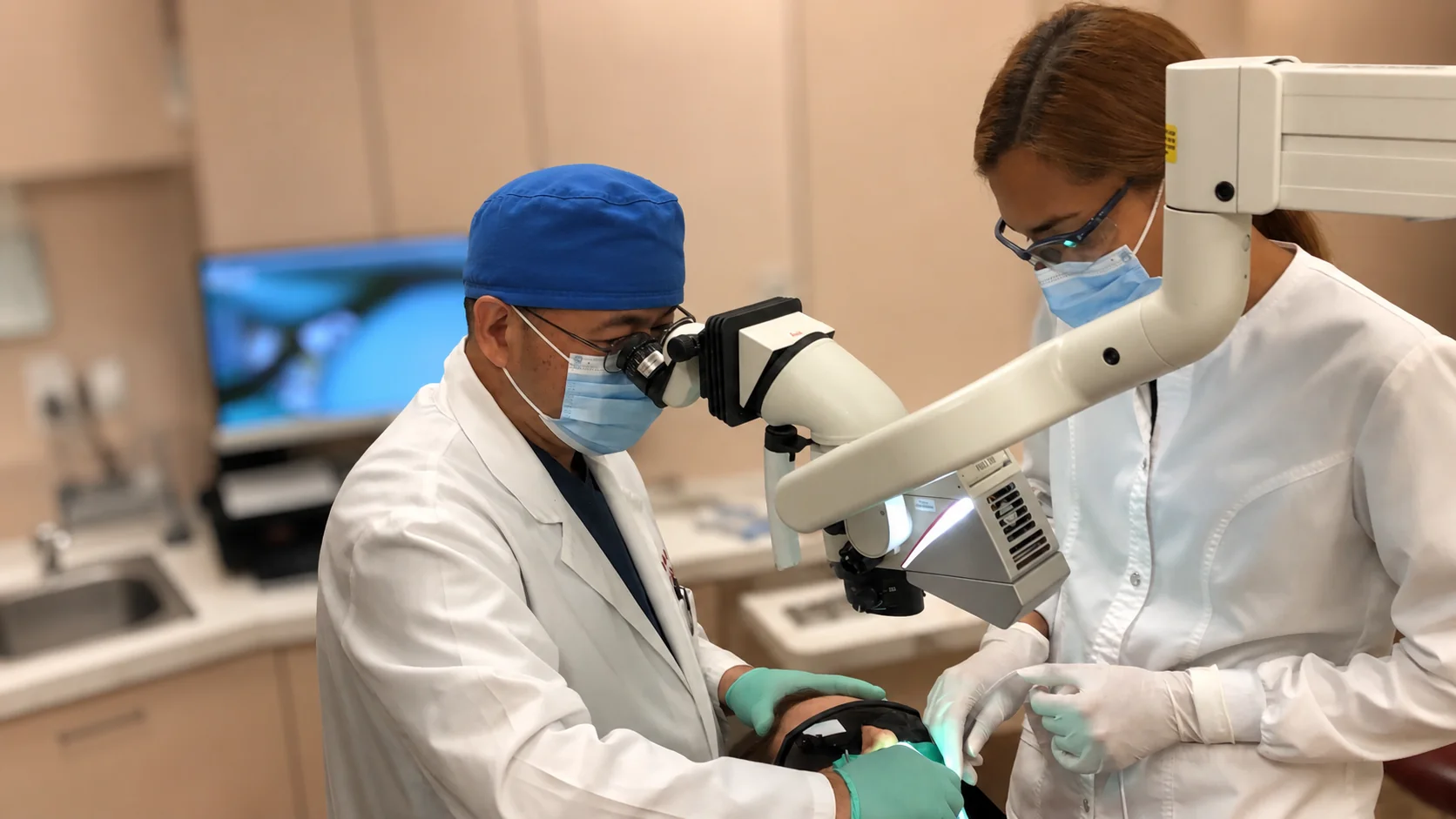
Bite Evaluation · Digital Scanning · Jaw Alignment Screening · Specialist Referral Coordination
This article is for patient education only and is not a diagnosis or guarantee of treatment outcome. Orthognathic surgery candidacy depends on clinical exam, bite analysis, orthodontic evaluation, imaging, medical history, airway assessment when indicated, and consultation with an oral and maxillofacial surgeon. SoftDental may evaluate and refer; complex jaw surgery is typically performed by a specialist. © 2026 SoftDental | Dr. Minh Nguyen DDS PA · 10028 West Road Ste. 108, Houston TX 77064 · 281-807-6111
Questions about your own teeth?
Our team is happy to answer them in person, without pressure. Call us or book a visit.
Educational information only. Not a substitute for a personal exam with a licensed dentist.