
Laser Gingivectomy: What It Is, Why It Is Done, and What Patients Should Expect
A gingivectomy is not just “cutting gums for cosmetic reasons.” Sometimes extra gum tissue traps plaque, makes brushing harder, creates deep areas that stay inflamed, covers too much of the tooth, or prevents a crown or filling from fitting correctly. Laser treatment allows Dr. Nguyen to remove or reshape selected gum tissue with precision.
What Is a Gingivectomy?
A gingivectomy is a dental procedure that removes excess, overgrown, or diseased gum tissue. It may be done for health reasons, cosmetic reasons, or both. Cleveland Clinic describes gingivectomy as surgery to remove excess or overgrown gum tissue and notes it can be used for some forms of gum disease as well as to correct a gummy smile.
The goal is not to remove healthy gum unnecessarily. The goal is to create a gumline that is easier to clean, healthier, and better shaped for the tooth or restoration.
Why Would a Patient Need Gingivectomy?
Patients may need gingivectomy for different reasons. Some are cosmetic. Others are functional or periodontal. Dr. Nguyen must first evaluate the gums, teeth, bone level, bite, home care, and X-rays before deciding if the procedure is appropriate.
Hard-to-clean gum overgrowth
Extra gum tissue can trap plaque and food, making inflammation more likely.
Gum pockets in selected cases
Removing excess tissue may help reduce areas that collect bacteria when appropriate.
Gummy smile or uneven gumline
Some patients show too much gum or have teeth that look short because gum tissue covers them.
Restoration access
Gum tissue may need reshaping so a filling, crown, onlay, or veneer margin can be placed and cleaned properly.
Medication or genetic overgrowth
Some patients develop gum enlargement from genetics, plaque inflammation, orthodontics, or certain medications.
Orthodontic gum enlargement
Braces can make plaque control harder; some patients develop enlarged gums around brackets.
Laser Gingivectomy at SoftDental
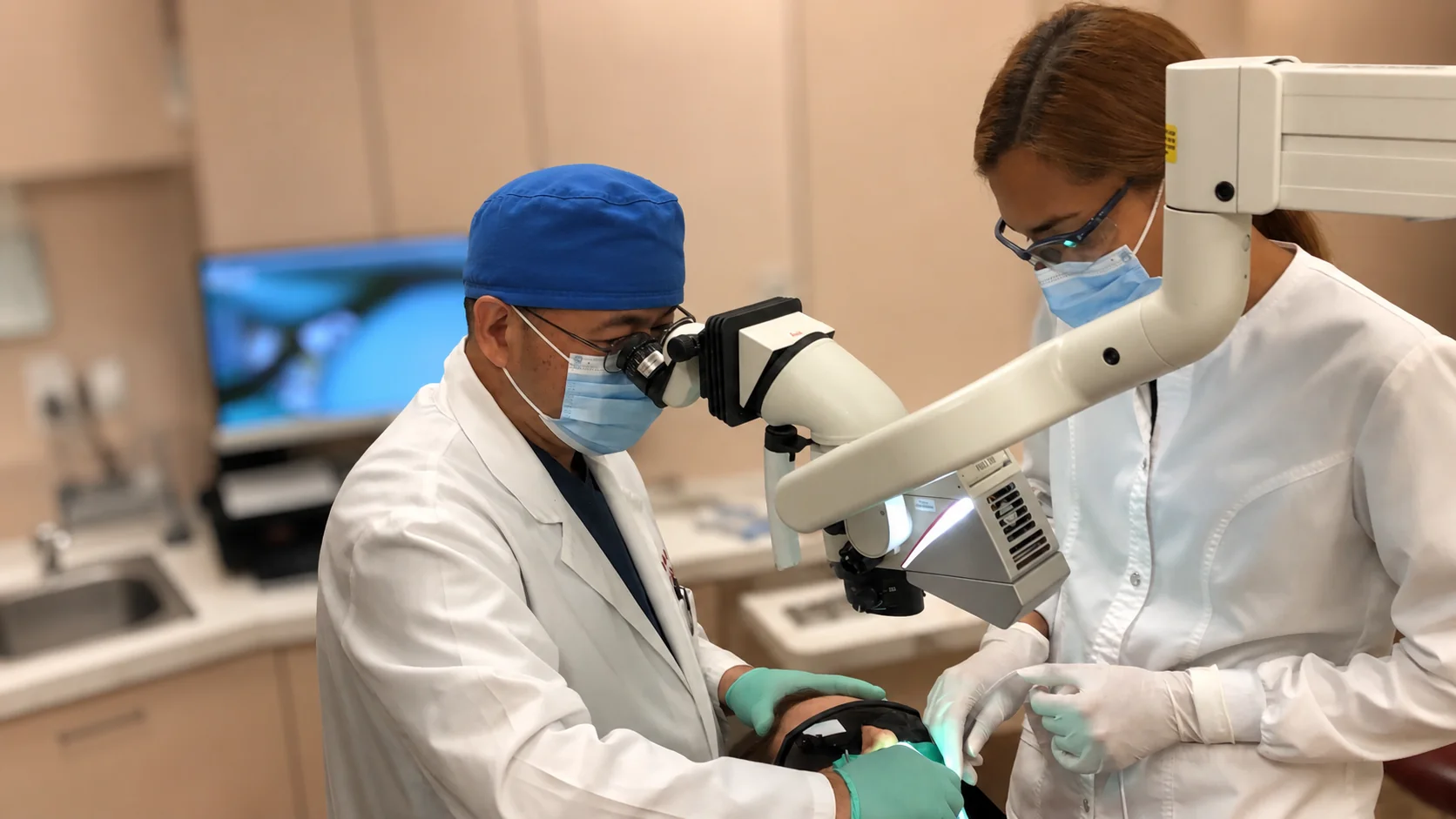
At SoftDental, Dr. Nguyen uses laser treatment for many gingivectomy procedures when appropriate. A dental laser can precisely remove and contour soft tissue. Because the laser energy helps seal small blood vessels as it works, many patients experience less bleeding during the procedure compared with traditional scalpel treatment.
Laser treatment can be helpful, but it is still a surgical procedure. Patients should expect local anesthesia, careful planning, healing time, and aftercare instructions.
Laser vs. Traditional Gingivectomy
| Feature | Laser gingivectomy | Traditional scalpel gingivectomy |
|---|---|---|
| Bleeding control | Often less bleeding because the laser can help coagulate tissue. | May involve more bleeding and need more direct pressure or sutures depending on case. |
| Precision | Allows controlled soft-tissue contouring in selected cases. | Also precise when performed properly, especially for larger surgical access cases. |
| Discomfort | Some studies suggest less postoperative pain in selected laser cases. | Can be very effective but may involve more soreness depending on the area treated. |
| Healing | May support a smoother recovery in selected cases, but healing still takes time. | Healing is predictable when technique and aftercare are appropriate. |
| Best use | Soft-tissue contouring, gum enlargement, small to moderate reshaping, selected esthetic cases. | May be preferred for certain cases requiring broader surgical access or combined bone surgery. |
| Limitations | Does not correct bone position by itself and may not be enough for every gummy smile. | More bleeding possible, but still a valid and established method. |
Visual Guide: What Gingivectomy Changes
Gingivectomy reshapes soft gum tissue. If the true problem is bone position or tooth position, additional treatment may be needed.
What Happens During Laser Gingivectomy?
Exam and diagnosis
Dr. Nguyen evaluates gum health, gum thickness, bone level, tooth shape, X-rays if needed, bite, oral hygiene, and the reason for overgrowth.
Treatment planning
The desired gumline is planned. If the goal is cosmetic, symmetry and tooth proportions are reviewed. If the goal is functional, cleaning access and restoration margins are considered.
Numbing the area
Local anesthesia is usually used so the patient should not feel sharp pain during the procedure.
Laser gum contouring
The laser removes or reshapes selected gum tissue. The laser can help reduce bleeding by sealing small blood vessels as it works.
Healing and follow-up
The gum tissue heals over time. Dr. Nguyen may schedule follow-up to check healing, gum shape, oral hygiene, and whether more treatment is needed.
Benefits of Laser Gingivectomy
Less bleeding in many cases
Laser energy can help seal small blood vessels during soft-tissue contouring.
Precise contouring
The laser allows careful shaping of selected gum tissue around teeth.
Easier cleaning
Removing excess tissue can make brushing and plaque control easier in selected cases.
Improved smile balance
Teeth may look more natural when excess gum tissue is removed carefully.
Better restorative access
Gum reshaping can help when tissue interferes with a filling, crown, onlay, or veneer margin.
Often efficient
Many soft-tissue laser procedures can be done in-office with local anesthesia.
Limitations and Risks Patients Should Know
Laser gingivectomy is useful, but it is not right for every patient. Patients deserve an honest discussion before treatment.
Gum tissue can rebound
If plaque, inflammation, medication effects, or orthodontic irritation continue, gum overgrowth may return.
Bone may be the real issue
Some gummy smiles are caused by bone or jaw position, not just extra gum tissue.
Tooth sensitivity
Exposing more tooth structure can cause temporary sensitivity in some patients.
Uneven healing
Gum tissue heals differently from person to person and may need follow-up adjustment.
Medical risks matter
Bleeding risk, diabetes control, smoking, immune conditions, and medications can affect healing.
Home care still matters
The procedure will not stay healthy if the patient does not brush, floss, and keep maintenance visits.
Recovery: What Should Patients Expect?
Recovery depends on how much tissue is removed, the location, the patient’s health, and how well aftercare instructions are followed. Many patients experience mild tenderness, swelling, or sensitivity for a few days.
| Time | Common experience | Patient focus |
|---|---|---|
| Same day | Numbness, mild oozing, gum tenderness | Avoid hot/spicy foods, do not pick the area, follow medication instructions. |
| Days 1–3 | Mild soreness, swelling, sensitivity | Soft foods, gentle brushing, avoid trauma to the gumline. |
| Week 1 | Gum tissue begins looking more settled | Keep the area clean and attend follow-up if scheduled. |
| Weeks later | Final gum shape matures | Continue hygiene and periodontal maintenance to reduce recurrence. |
Aftercare Tips After Laser Gingivectomy
Eat soft foods
Choose soft, cool, or lukewarm foods for the first day or as instructed.
Avoid irritation
Avoid spicy, acidic, crunchy, hard, or very hot foods while the gum is tender.
Brush gently
Keep the area clean, but do not scrub the treated gumline aggressively.
Rinse only as instructed
If salt-water or prescription rinse is recommended, use it gently and correctly.
Avoid smoking
Smoking delays healing and increases gum problems.
Call for warning signs
Call if bleeding, swelling, pain, bad taste, fever, or tissue changes seem abnormal.
Who Is a Good Candidate?
| May be a good candidate | May need different or additional treatment |
|---|---|
| Extra gum tissue covers healthy tooth structure. | Gummy smile caused mainly by jaw position or lip movement. |
| Gum overgrowth makes cleaning difficult. | Active uncontrolled periodontal disease needs treatment first. |
| Gum tissue interferes with a filling or crown margin. | Decay or fracture extends too far below gum/bone level. |
| Orthodontic gum enlargement after hygiene is improved. | Poor brushing and plaque buildup are still uncontrolled. |
| Patient understands healing and aftercare. | High bleeding risk or medical condition not cleared for surgery. |
Questions to Ask Before Gingivectomy
Is my problem extra gum tissue, bone position, tooth position, or inflammation?
The cause determines whether gingivectomy alone is enough.
Will this make my teeth sensitive?
Some patients may have temporary sensitivity if more tooth surface is exposed.
Can the gum grow back?
Ask whether plaque, medication, orthodontic irritation, or genetics could cause recurrence.
Do I need cleaning or periodontal treatment first?
Inflamed gums should often be stabilized before reshaping.
What should I avoid during healing?
Diet, brushing, rinsing, smoking, medication, and follow-up instructions matter.
Laser gingivectomy can improve both gum health and smile balance when the diagnosis is correct. The key is not removing gum tissue blindly — it is understanding why the tissue is there, removing only what should be removed, and helping the patient keep the gums healthy afterward.
— Dr. Minh Nguyen, D.D.S., P.A. · SoftDental HoustonSources and Further Reading
Cleveland Clinic: Gingivectomy — defines gingivectomy as surgery to remove excess or overgrown gum tissue and notes it may treat some forms of gum disease or correct a gummy smile.
American Academy of Periodontology: For Patients — explains that periodontists specialize in prevention, diagnosis, and treatment of periodontal disease, and that gum disease symptoms can include swollen gums and bleeding.
ADA MouthHealthy: Gum Disease — explains that gum disease is an infection of the tissues that surround and support the teeth.
PLOS/PMC clinical study on diode laser-assisted cosmetic smile-lift gingivectomy — evaluated postoperative bleeding and pain in diode laser-assisted gingivectomy compared with conventional approaches.
BMC Oral Health / Springer systematic review on laser gingivectomy for orthodontic-induced gingival enlargement — evaluated laser gingivectomy effects on periodontal health parameters such as bleeding, probing depth, and inflammation.
ClinicalTrials.gov / gingival hyperplasia treatment study summary — notes scalpel gingivectomy is traditional, while laser-assisted techniques have gained popularity due to potential benefits such as reduced bleeding, discomfort, and faster healing.
Too much gum tissue, uneven gumline, or hard-to-clean areas?
Start with a gum evaluation.
Dr. Nguyen can evaluate whether laser gingivectomy, periodontal cleaning, orthodontic care, crown planning, or another treatment is the right option for your gums.
Laser Gingivectomy · Gum Contouring · Gum Overgrowth Treatment · Restorative Gumline Planning
This article is for patient education only and is not a diagnosis or guarantee of treatment outcome. Gingivectomy candidacy depends on gum health, bone level, tooth shape, periodontal diagnosis, medical history, medications, smoking status, oral hygiene, and treatment goals. © 2026 SoftDental | Dr. Minh Nguyen DDS PA · 10028 West Road Ste. 108, Houston TX 77064 · 281-807-6111
Questions about your own teeth?
Our team is happy to answer them in person, without pressure. Call us or book a visit.
Educational information only. Not a substitute for a personal exam with a licensed dentist.