
Why Dental Implants Need Maintenance: Implants Do Not Last Forever Without Care
One of the most dangerous dental implant misconceptions is: “My implant is fake, so I do not need cleanings or checkups anymore.” This is wrong. The implant crown is artificial, but the gums and bone holding the implant are living tissue. If bacteria collect around an implant, inflammation can damage the bone support and put the implant at risk.
Implants Do Not Get Cavities — But They Can Still Fail
A natural tooth can get cavities. A titanium or ceramic implant cannot decay the same way. But an implant still depends on healthy gum tissue and healthy bone. Plaque and bacteria can collect around implant crowns, abutments, bridges, overdentures, and implant posts.
If inflammation stays around the implant, the tissue can progress from peri-implant mucositis to peri-implantitis. The American Academy of Periodontology explains that peri-implant mucositis is inflammation around the soft tissue without bone loss and can be reversible if caught early. Peri-implantitis involves inflammation with deterioration of the bone supporting the implant and may require surgical treatment.
What Is Peri-Implant Disease?
| Condition | What it means | Why it matters |
|---|---|---|
| Healthy implant tissue | Gum is firm, clean, not bleeding, and bone support is stable. | This is the goal of routine implant maintenance. |
| Peri-implant mucositis | Gum inflammation around the implant without bone loss. | Often reversible if detected early and cleaned properly. |
| Peri-implantitis | Inflammation around the implant with loss of supporting bone. | Can become difficult to treat and may lead to implant failure. |
| Implant failure | The implant loses stability or cannot be restored/maintained safely. | The implant may need removal, grafting, and replacement planning. |
Why Routine Implant Maintenance Matters
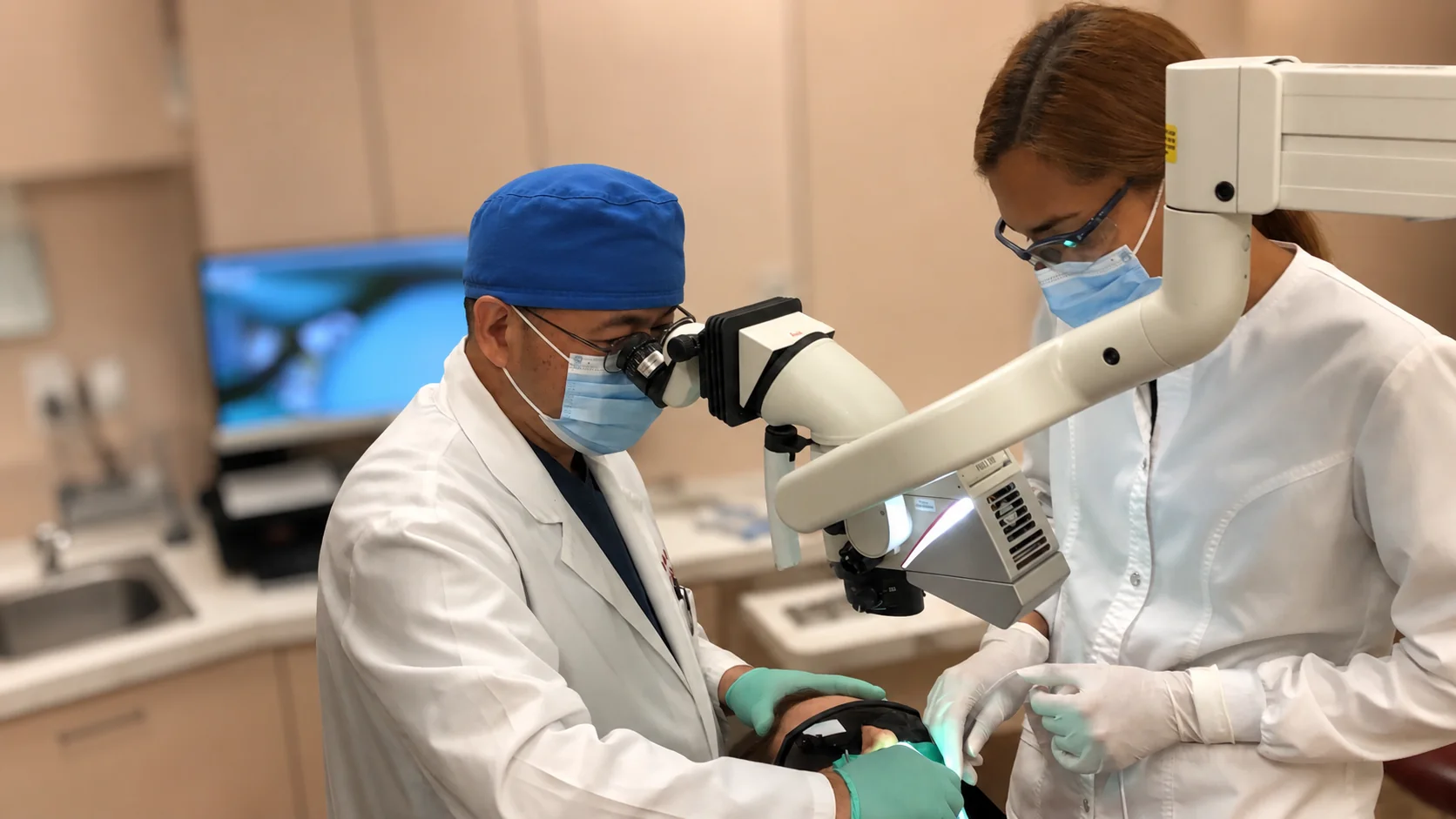
Implant maintenance is not just a “cleaning.” It is a health check for the implant system. Dr. Nguyen and the SoftDental team evaluate the gum, bone, crown, bite, hygiene access, and any signs of complications.
Checks gum inflammation
Bleeding, swelling, tenderness, and plaque around the implant can be early warning signs.
Monitors bone level
X-rays may be needed to compare bone support over time.
Checks loose parts
Implant crowns, abutments, screws, and attachments can loosen or wear.
Removes buildup
Professional tools can remove plaque and calculus patients cannot remove at home.
Checks bite overload
Grinding or heavy bite forces can stress the implant crown and bone.
Updates home care
Patients may need special brushes, floss threaders, water flossers, or implant-specific cleaning tools.
Visual Guide: What Happens When Implant Maintenance Is Skipped
Implants are held by bone. Once bone loss progresses, saving the implant becomes more difficult.
Misconception: “If It Does Not Hurt, It Is Fine.”
Peri-implant disease can be quiet at first. Patients may not feel pain while inflammation and bone loss are developing. Bleeding when brushing, bad taste, swelling, food trapping, or gum tenderness may be the first signs. Sometimes the first obvious symptom is a loose implant crown or an implant that has already lost bone support.
What Happens During an Implant Maintenance Visit?
Review symptoms and medical changes
We ask about bleeding, soreness, looseness, food trapping, smoking, diabetes control, medications, and cleaning difficulty.
Check gum tissue around the implant
The team looks for redness, bleeding, swelling, pus, tenderness, pocketing, or tissue recession.
Evaluate plaque and calculus
Implant surfaces and crowns need special cleaning because buildup can trigger inflammation.
Check bite and crown stability
Heavy bite, grinding, loose screws, worn attachments, or bulky crown contours can damage implant health.
Take X-rays when needed
Bone levels around implants are monitored with appropriate imaging when clinically indicated.
Professional implant cleaning
We remove plaque and buildup with implant-appropriate instruments and give home-care instructions.
Set the next maintenance interval
Some patients are stable at six months. Higher-risk patients may need three- or four-month implant maintenance.
How Often Do Implants Need Maintenance?
There is no one schedule for every patient. Patients with a history of gum disease, diabetes, smoking, bone loss, dry mouth, grinding, poor plaque control, or complex implant bridges often need more frequent maintenance. Many implant patients benefit from a 3–6 month maintenance schedule, depending on risk.
| Patient risk | Possible maintenance interval | Why |
|---|---|---|
| Low risk | Often every 6 months | Good hygiene, stable bone, no bleeding, no gum disease history. |
| Moderate risk | Often every 3–4 months | Some plaque, mild bleeding, deeper areas, food trapping, or prior gum issues. |
| High risk | Often every 3 months or customized | History of periodontal disease, diabetes, smoking, peri-implant inflammation, heavy bite, or complex implant restorations. |
| Active problem | Treatment visits plus maintenance | Bleeding, pus, bone loss, loose parts, pain, or implant mobility need diagnosis and active care. |
Warning Signs Around an Implant
Bleeding
Bleeding when brushing, flossing, or cleaning around the implant is not normal.
Tender gums
Soreness or tenderness around the implant may mean inflammation.
Pus or bad taste
Pus, bad taste, or drainage may indicate infection.
Food trapping
Frequent food packing can inflame the tissue and should be corrected.
Loose crown or screw
A loose implant crown or attachment needs prompt evaluation.
Gum recession
Visible threads, longer-looking crown, or gum shrinkage can be warning signs.
Bite feels high
A heavy bite can overload implant components and bone.
Implant movement
If the implant itself feels loose, call immediately. This is urgent.
Home Care: What Patients Must Do
Professional visits matter, but daily home care is also essential. The American Academy of Periodontology says implants require regular brushing, flossing, and regular professional checkups, just like natural teeth. The tool may differ depending on whether the patient has a single implant crown, implant bridge, overdenture, or full arch restoration.
| Implant type | Home-care focus |
|---|---|
| Single implant crown | Brush around the gumline, clean between implant and neighboring teeth, monitor bleeding. |
| Implant bridge | Use floss threaders, superfloss, proxy brushes, or water flosser under the bridge as instructed. |
| Implant overdenture | Clean implant posts/attachments and the denture housings daily; remove denture as instructed. |
| Full arch implant restoration | Clean under the prosthesis daily; keep professional maintenance because hidden buildup can collect underneath. |
Risk Factors That Make Implant Maintenance Even More Important
Past gum disease
Patients who lost teeth from periodontal disease are at higher risk around implants.
Diabetes
Poorly controlled diabetes can affect healing and infection risk.
Smoking
Smoking increases implant and gum complication risk.
Grinding/clenching
Heavy forces can overload implant crowns, screws, and bone.
Poor plaque control
Plaque is a main driver of peri-implant inflammation.
Food traps
Crown shape or spacing can trap food and inflame the gums.
What Can Happen If Patients Skip Implant Maintenance?
| Skipped care problem | Possible consequence |
|---|---|
| Plaque and calculus stay around implant | Gum inflammation and bleeding can develop. |
| Mucositis is not caught early | Inflammation may progress toward peri-implantitis. |
| Bone loss is not monitored | Implant support may deteriorate silently. |
| Loose crown or screw is ignored | Components can break, bite can overload the implant, and bacteria can collect. |
| Food trap is not corrected | Gums can stay inflamed around the implant. |
| Patient waits until implant is loose | The implant may already be failing and may need removal. |
Implant Maintenance Is Different From a Regular Cleaning
Implant maintenance may require different instruments, cleaning techniques, imaging, and prosthetic checks. Natural teeth have ligaments and different tissue attachment. Implants are integrated into bone differently, so inflammation can progress in a different pattern.
SoftDental’s Patient Message
We would rather catch a small bleeding area early than tell a patient later that the implant has lost too much bone. Maintenance is not about selling extra visits. It is about protecting the implant before damage becomes expensive, painful, or irreversible.
An implant can last many years, but it is not maintenance-free. The implant crown is artificial; the gum and bone around it are alive. If patients want implants to last, they must keep routine maintenance and clean around them every day.
— Dr. Minh Nguyen, D.D.S., P.A. · SoftDental HoustonSources and Further Reading
American Academy of Periodontology: Peri-Implant Diseases — explains peri-implant mucositis, peri-implantitis, bone deterioration around implants, warning signs such as red/tender gums and bleeding, and risk factors including prior periodontal disease, poor plaque control, smoking, and diabetes.
Cochrane Review: Treatment of peri-implantitis — states bacterial plaque accumulation can induce inflammatory changes around oral implants and may lead to progressive destruction and ultimately implant failure.
European Federation of Periodontology: Clinical Guidelines — provides evidence-based guidance for prevention and treatment of peri-implant mucositis and peri-implantitis during long-term implant follow-up.
Academy of Osseointegration / American Academy of Periodontology Consensus Summary Report — states supportive peri-implant maintenance is essential for long-term peri-implant tissue stability and health.
British Dental Journal: Maintenance of peri-implant health in general dental practice — reviews supportive peri-implant care and factors considered when maintaining implant tissue health.
JADA 2025 systematic review on supportive peri-implant therapy — evaluates supportive peri-implant therapy protocols for limiting peri-implant disease progression and improving clinical outcomes.
Have a dental implant?
Do not wait until it hurts or feels loose.
Schedule implant maintenance at SoftDental so Dr. Nguyen can check the gum, bone, bite, crown stability, and cleaning access before small problems become implant failure.
Implant Maintenance · Peri-Implant Disease Screening · Implant Cleaning · Cone Beam CT · Implant Crown and Bite Evaluation
This article is for patient education only and is not a diagnosis or guarantee of implant survival. Implant health depends on oral hygiene, professional maintenance, bone support, gum health, medical history, diabetes control, smoking, bite force, implant design, crown design, and patient compliance. © 2026 SoftDental | Dr. Minh Nguyen DDS PA · 10028 West Road Ste. 108, Houston TX 77064 · 281-807-6111
Questions about your own teeth?
Our team is happy to answer them in person, without pressure. Call us or book a visit.
Educational information only. Not a substitute for a personal exam with a licensed dentist.