
Dental Implants: How Painful Are They, What Happens During Surgery, and Why Cost Varies
The most common fear before a dental implant is simple: "Will it hurt?" The honest answer is that every patient is different, but most implant patients are surprised by how manageable the procedure feels. A tooth extraction often involves removing a diseased, broken, infected, or painful tooth. An implant placement is usually a planned surgical procedure in healthy, numbed tissue, guided by 3D imaging and careful measurements.
Misconception: Implant Surgery Hurts More Than Extraction
"A dental implant must be extremely painful because it goes into the bone."
The jawbone itself has fewer pain fibers than inflamed gum tissue or an infected tooth. With proper local anesthesia, careful planning, and gentle technique, many patients report implant placement is easier than the extraction that came before it.
Research comparing dental implant placement with tooth extraction has found that implant-related pain is often not worse than extraction pain and may be less intense for many patients. This fits what we hear clinically at SoftDental: patients often say the extraction was the hard part, and the implant surgery was much easier than expected.
Why Implant Placement Can Feel More Controlled
Extraction removes a problem tooth
Extractions often involve infection, fracture, swelling, mobility, or pain before treatment even begins. That inflammation can make the experience feel more intense.
Implants are planned in advance
Implant placement is measured before surgery. Dr. Nguyen evaluates bone height, bone width, sinus position, nerve location, and the final crown position.
The area is numbed carefully
Patients should feel pressure and vibration, not sharp pain. If a patient feels pain during treatment, they should raise a hand so the area can be re-numbed.
Microscope-assisted precision
At SoftDental, Dr. Nguyen performs implant surgery under a Leica microscope to improve visibility, precision, and control of the surgical field.
Before Surgery: Planning Comes First
A dental implant should not be treated like a quick screw placed into the jaw. The implant must support a future tooth, fit inside the available bone, avoid important anatomy, and withstand chewing forces for years. That is why careful planning matters.
Medical and dental review
Dr. Nguyen reviews health history, medications, diabetes control, smoking status, gum disease history, bite force, grinding, and healing risk. These factors can affect implant success.
Whole-patient evaluation3D CBCT and Anatomage planning
SoftDental uses 3D cone beam CT imaging and Anatomage software to evaluate bone level, bone width, root shape, sinus position, nerve location, and implant angulation before surgery.
3D bone mapBone and gum evaluation
Some patients have enough bone for a straightforward implant. Others need socket preservation, ridge grafting, crestal lift, or sinus lift before or during implant placement.
Foundation checkRestoration plan
The final crown matters. Dr. Nguyen considers where the tooth should emerge, how the bite will hit, and what implant system and crown material fit the long-term plan.
Plan the tooth, not only the implantDuring Surgery: What Actually Happens?
Most single dental implant surgeries are completed with local anesthesia. The patient is awake, but the area is deeply numb. The goal is controlled, precise placement with as little trauma as possible.
The implant is not planned as an isolated screw. The final tooth position, bone shape, gum tissue, nerve or sinus location, and chewing forces all matter.
Numbing
Local anesthesia is placed and tested. You should feel pressure, water, vibration, and movement, but not sharp pain.
Microscope-assisted access
Using magnification from a Leica microscope, Dr. Nguyen carefully accesses the planned area and protects the surrounding tissue.
Site preparation
The implant site is prepared gradually and precisely according to the planned size and depth. If needed, bone graft material may be placed.
Implant placement
The implant is seated into the bone. SoftDental uses Bicon and Implant Direct implant systems when clinically appropriate for the case.
Healing instructions
You receive instructions for medication, eating, cleaning, swelling control, and follow-up. The implant usually needs time to integrate with the bone before the final crown.
After Surgery: What Will I Feel?
After the numbness wears off, most patients describe soreness, pressure, or tenderness rather than severe pain. The first 24 to 72 hours are usually when swelling and soreness are most noticeable. Many patients manage well with the medication plan recommended by the doctor.
| Time | What is common | What to do |
|---|---|---|
| Same day | Numbness, light bleeding, pressure, mild swelling, tiredness. | Rest, avoid heavy exercise, follow bite pressure/gauze instructions if given, eat soft foods, do not disturb the site. |
| Day 1-3 | Soreness and swelling may peak. Mild bruising is possible. | Use medications as directed, avoid smoking, avoid straws if grafting/extraction was done, keep the area clean as instructed. |
| Week 1-2 | Gum tissue starts to feel better. Stitches may dissolve or be removed depending on the case. | Return for follow-up. Call if pain worsens instead of improving, swelling increases, or there is fever or pus. |
| Healing phase | The implant integrates with bone under the gum or healing cap. | Protect the site, keep cleanings/checkups, control diabetes if applicable, and avoid chewing hard directly on a healing implant. |
Why Implant Cost Varies From Patient to Patient
A dental implant fee is not just the price of a titanium post. The final cost depends on the diagnosis, bone foundation, surgical complexity, implant system, parts, grafting needs, and the final restoration. Two patients may both need "one implant," but their clinical situations may be completely different.
Implant brand and components
SoftDental uses Bicon and Implant Direct systems when appropriate. Different implant systems and restorative components have different design features and costs.
Bone height and width
If bone is strong and wide enough, treatment is simpler. If bone is thin or low, grafting may be needed before or during implant placement.
Bone graft material
Graft material type, amount, membrane use, and healing time affect cost. The goal is to build a stable foundation, not just fill space.
Sinus or crestal lift
Upper back teeth sit near the sinus. If there is not enough vertical bone, a crestal lift or sinus lift may be needed to create room for a stable implant.
Crown and abutment material
The implant crown, abutment, screw or connection design, shade, strength, and lab work all affect the final treatment cost.
Case complexity
A front tooth, molar, immediate implant, infected site, grafted site, or bite-grinding patient may require different planning and follow-up.
Bone Graft, Sinus Lift, and Crestal Lift: Why They May Be Needed
An implant needs enough bone around it, similar to how a fence post needs enough soil around it. If a tooth was missing for a long time, if infection destroyed bone, or if the sinus is low in the upper jaw, additional bone procedures may be needed.
| Procedure | Why it is needed | Patient-friendly explanation |
|---|---|---|
| Socket preservation graft | Used after extraction to reduce bone collapse. | Helps preserve the ridge so a future implant has a better foundation. |
| Ridge graft | Used when the jawbone is too narrow or deficient. | Builds width or shape so the implant is surrounded by enough bone. |
| Crestal lift | Used for smaller vertical bone needs under the sinus. | A conservative internal sinus elevation through the implant site in selected cases. |
| Sinus lift / sinus augmentation | Used when the upper back jaw has insufficient bone height near the sinus. | The sinus floor is gently lifted and graft material is placed to develop bone for implant support. |
Not every patient needs grafting. Some patients have excellent bone and can move forward with a straightforward implant plan. Others need staged treatment because the safest path is to build the foundation before placing the final implant-supported tooth.
Bicon and Implant Direct: Why Implant System Matters
Dental implants are not all identical. Different systems have different shapes, connection designs, component options, restorative workflows, and cost structures. SoftDental uses Bicon and Implant Direct implant systems when they match the patient's anatomy and restoration needs.
Bicon is known for its short implant options and locking-taper implant-to-abutment connection. In selected cases, shorter implant designs may help when vertical bone height is limited.
Implant Direct offers multiple implant systems and restorative components, giving clinicians different options for anatomy, bite, restoration type, and budget.
How Patients Can Make Implant Healing More Successful
An implant is strong, but it is not immune to biology. Gum disease, poor oral hygiene, smoking, uncontrolled diabetes, and heavy grinding can all increase the risk of inflammation, bone loss, or implant failure. Implant care is a long-term partnership between the patient and the dental team.
Most patients fear the implant surgery, but many later tell us the extraction was much harder. With 3D planning, careful numbing, microscope-assisted precision, and the right healing instructions, implant placement is often more comfortable than patients expect.
— Dr. Minh Nguyen, D.D.S., P.A. · SoftDental, Houston TXMissing a tooth? Start with a 3D implant evaluation.
Dr. Nguyen can evaluate your bone, explain whether you need grafting or sinus lift, compare implant options, and give you a case-specific estimate before treatment begins.
Sources & clinical references
- Pain experience after dental implant placement compared with tooth extraction. PubMed / review and clinical literature. https://pubmed.ncbi.nlm.nih.gov/34512757/
- American Academy of Periodontology. Dental Implant Procedures. https://www.perio.org/for-patients/periodontal-treatments-and-procedures/dental-implant-procedures/
- American Academy of Periodontology. Sinus Augmentation. https://www.perio.org/for-patients/periodontal-treatments-and-procedures/dental-implant-procedures/sinus-augmentation/
- CBCT assessment for dental implant surgery and 3D maxillary anatomy evaluation. Diagnostics / MDPI. https://www.mdpi.com/2075-4418/16/3/479
- Cleveland Clinic. Dental bone graft: process, purpose and healing. https://my.clevelandclinic.org/health/treatments/21727-dental-bone-graft
- Bicon Dental Implants. Official manufacturer information. https://www.bicon.com/
- Implant Direct. Official implant systems and product information. https://www.implantdirect.com/en-us
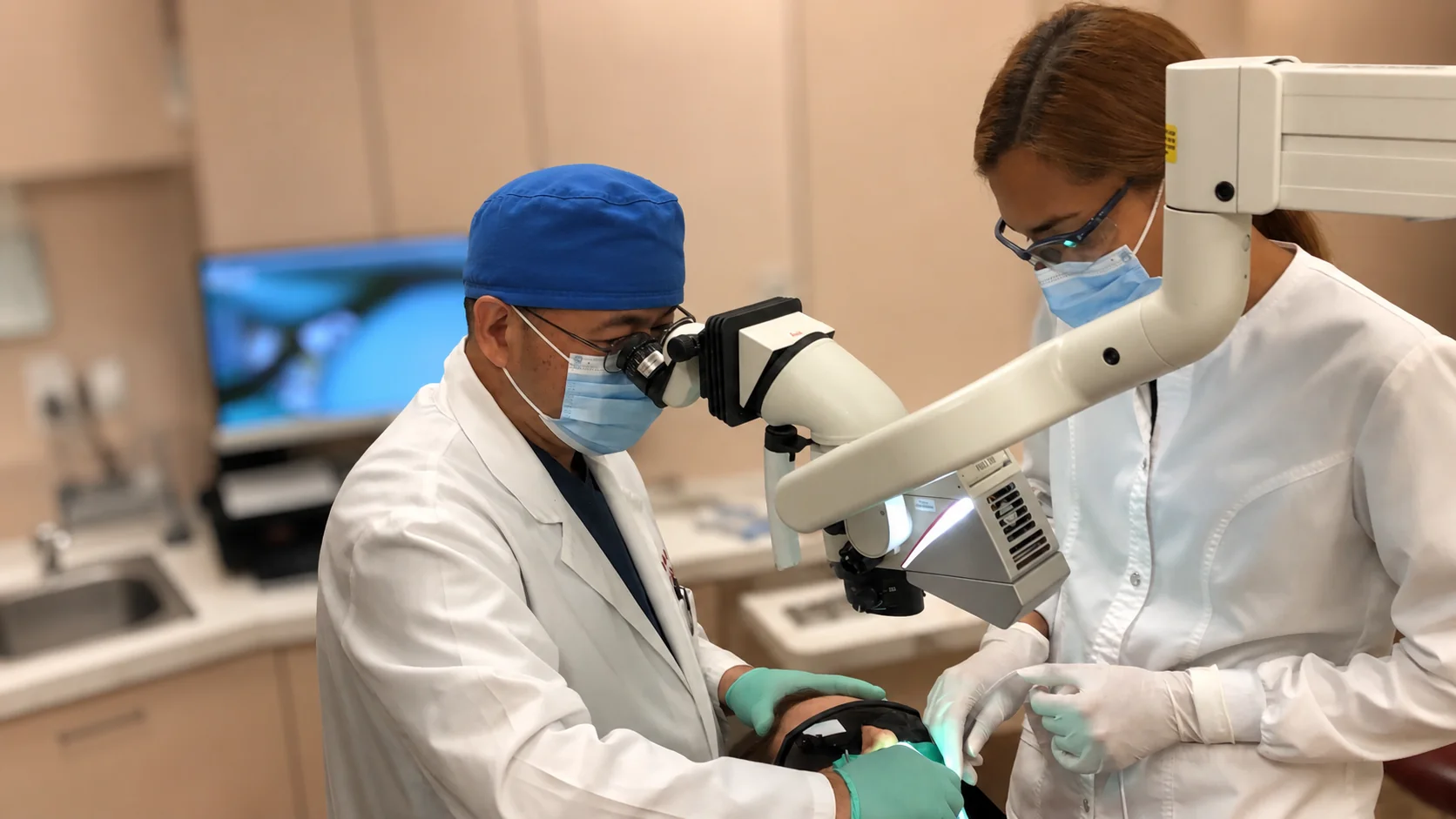
Anatomage 3D CBCT planning · Leica microscope-assisted surgery · Bicon & Implant Direct implant systems
This article is for patient education only and is not a diagnosis, treatment plan, fee quote, or guarantee of outcome. Dental implant pain, healing, cost, grafting needs, and final restoration design vary by patient. A 3D exam and consultation are required before any treatment recommendation. © 2026 SoftDental | Dr. Minh Nguyen DDS PA · 10028 West Road Ste. 108, Houston TX 77064 · 281-807-6111
Questions about your own teeth?
Our team is happy to answer them in person, without pressure. Call us or book a visit.
Educational information only. Not a substitute for a personal exam with a licensed dentist.