
Apicoectomy Post-Operative Instructions | English, Spanish & Vietnamese
These instructions are general aftercare instructions for apicoectomy, also called apical surgery or root-end surgery. If Dr. Nguyen gave you different instructions because of your tooth location, infection size, bone grafting, sinus involvement, medication, stitches, or medical history, follow the instructions given directly to you.
Apicoectomy Post-Operative Instructions
First 24 Hours
- Rest for the remainder of the day.
- Do not pull your lip or cheek to look at the surgical site. This can tear stitches and delay healing.
- Do not touch the surgical area with fingers, tongue, toothpicks, cotton swabs, or dental tools.
- Do not spit forcefully, rinse hard, or use a straw.
- Do not smoke or vape. Smoking delays healing and increases infection risk.
- Avoid strenuous exercise, heavy lifting, bending, and intense activity.
- Eat soft, cool, or lukewarm foods. Avoid chewing directly near the surgical area.
Bleeding
A small amount of oozing or pink saliva can be normal after surgery. If bleeding occurs, place clean gauze over the area if instructed and apply gentle pressure for 15–30 minutes. Do not keep pulling the lip to check the wound.
Swelling and Bruising
- Some swelling, bruising, tenderness, and tightness can be normal.
- Swelling may increase for the first 48–72 hours and then gradually improve.
- Use an ice pack on the outside of the face during the first 24 hours if instructed.
- Use 15–20 minutes on and 15–20 minutes off unless Dr. Nguyen gives different instructions.
- Sleep with your head elevated for the first few nights.
- Call if swelling gets worse after day 3 or comes with fever, pus, or trouble swallowing.
Pain and Medication
- Take medications exactly as prescribed or instructed.
- If antibiotics were prescribed, take them exactly as directed and finish the course unless Dr. Nguyen tells you to stop.
- Do not mix prescription pain medicine with alcohol, sleep medications, or other sedating medicines unless your doctor says it is safe.
- If you take blood thinners, have liver/kidney disease, stomach ulcers, medication allergies, or are pregnant, confirm medication instructions with the office or physician.
- Call if medication causes rash, itching, trouble breathing, severe diarrhea, dizziness, or other unusual symptoms.
Rinsing and Cleaning
- Do not rinse vigorously on the day of surgery unless instructed.
- Starting the next day, gentle warm salt-water rinses may be recommended. Do not swish hard.
- Let the water fall out of your mouth; do not spit forcefully.
- Brush your other teeth gently.
- Avoid directly brushing or scrubbing the surgical area until Dr. Nguyen says it is safe.
- Do not use a Waterpik, electric flosser, or strong water pressure near the surgical site until cleared.
Stitches
Stitches help the gum tissue heal. Some stitches dissolve on their own; others may need removal. Do not pull, cut, or pick at stitches. Do not stretch the lip or cheek to look at them. Call if stitches open, tissue separates, or bleeding starts again.
Eating and Drinking
Good choices
- Soft, cool, or lukewarm foods
- Eggs, yogurt, mashed potatoes
- Soft noodles, soft fish, applesauce
- Soup that is warm, not hot
- Drink plenty of water
Avoid
- Hard, crunchy, sticky foods
- Seeds, nuts, popcorn, chips
- Spicy, acidic, or very hot foods
- Alcohol
- Chewing directly near the surgical site
Activity
Keep your schedule light for the first 24–48 hours or as instructed. Avoid strenuous activity because it can increase bleeding, swelling, and throbbing.
What Is Normal vs. Not Normal?
| May be normal | Call SoftDental |
|---|---|
| Mild bleeding or pink saliva the first day | Bleeding that is heavy or does not slow with pressure |
| Mild to moderate soreness | Severe or worsening pain |
| Swelling or bruising for a few days | Swelling that worsens after day 3 or comes with fever |
| Tightness near the stitches | Stitches open, wound separates, or pus appears |
| Temporary numbness while anesthetic wears off | Numbness that does not improve or feels unusual |
When to Call SoftDental
- Bleeding does not slow after steady pressure.
- Pain is severe, increasing, or not controlled with medication.
- Swelling worsens after day 3 instead of improving.
- Fever, chills, pus, bad taste, or bad smell develops.
- Stitches open, tissue separates, or the wound starts bleeding again.
- The tooth feels very high when biting or pain is sharp when biting.
- Numbness of lip, chin, gum, or face does not improve.
- Trouble breathing or swallowing. For severe symptoms, call 911.
Instrucciones Después de Apicectomía
Primeras 24 Horas
- Descanse el resto del día.
- No levante el labio ni jale la mejilla para mirar el área quirúrgica. Esto puede romper los puntos y retrasar la cicatrización.
- No toque el área con dedos, lengua, palillos, cotonetes o instrumentos dentales.
- No escupa con fuerza, no se enjuague fuerte y no use popote/pajilla.
- No fume ni use vape. Fumar retrasa la cicatrización y aumenta el riesgo de infección.
- Evite ejercicio fuerte, levantar peso, agacharse y actividad intensa.
- Coma alimentos suaves, fríos o tibios. Evite masticar directamente cerca del área quirúrgica.
Sangrado
Un poco de sangrado o saliva rosada puede ser normal después de la cirugía. Si sangra, coloque gasa limpia sobre el área si se le indicó y aplique presión suave por 15–30 minutos. No levante el labio repetidamente para revisar la herida.
Hinchazón y Moretones
- Algo de hinchazón, moretones, sensibilidad y tensión puede ser normal.
- La hinchazón puede aumentar durante las primeras 48–72 horas y después debe mejorar poco a poco.
- Use una bolsa de hielo por fuera de la cara durante las primeras 24 horas si se le indicó.
- Use 15–20 minutos con hielo y 15–20 minutos de descanso, a menos que Dr. Nguyen indique otra cosa.
- Duerma con la cabeza elevada durante las primeras noches.
- Llame si la hinchazón empeora después del tercer día o viene con fiebre, pus o dificultad para tragar.
Dolor y Medicamentos
- Tome los medicamentos exactamente como fueron recetados o indicados.
- Si le dieron antibióticos, tómelos exactamente como se indicó y termine el tratamiento, a menos que Dr. Nguyen le diga que pare.
- No mezcle medicamento recetado para dolor con alcohol, pastillas para dormir u otros medicamentos que causan sueño, a menos que su doctor diga que es seguro.
- Si toma anticoagulantes, tiene enfermedad del hígado/riñón, úlceras, alergias a medicamentos o está embarazada, confirme las instrucciones con la oficina o su médico.
- Llame si el medicamento causa sarpullido, comezón, dificultad para respirar, diarrea severa, mareo u otros síntomas raros.
Enjuague y Limpieza
- No se enjuague con fuerza el día de la cirugía, a menos que le indiquen otra cosa.
- Desde el día siguiente, puede usar enjuagues suaves con agua tibia y sal si se recomienda. No haga buches fuertes.
- Deje que el agua salga de la boca; no escupa fuerte.
- Cepille los otros dientes suavemente.
- Evite cepillar o frotar directamente el área quirúrgica hasta que Dr. Nguyen diga que es seguro.
- No use Waterpik, irrigador dental ni presión fuerte de agua cerca del sitio quirúrgico hasta que le indiquen que es seguro.
Puntos / Suturas
Los puntos ayudan a que la encía sane. Algunos puntos se disuelven solos; otros pueden necesitar retiro. No jale, corte ni toque los puntos. No estire el labio o la mejilla para mirarlos. Llame si los puntos se abren, el tejido se separa o vuelve a sangrar.
Comida y Bebida
Buenas opciones
- Comida suave, fría o tibia
- Huevos, yogur, puré de papa
- Fideos suaves, pescado suave, puré de manzana
- Sopa tibia, no caliente
- Tome bastante agua
Evite
- Comida dura, crujiente o pegajosa
- Semillas, nueces, palomitas, chips
- Comida picante, ácida o muy caliente
- Alcohol
- Masticar directamente cerca del sitio quirúrgico
Actividad
Mantenga un horario ligero durante las primeras 24–48 horas o según las instrucciones. Evite actividad fuerte porque puede aumentar sangrado, hinchazón y dolor pulsante.
Qué Es Normal vs. Cuándo Llamar
| Puede ser normal | Llame a SoftDental |
|---|---|
| Sangrado leve o saliva rosada el primer día | Sangrado abundante o que no disminuye con presión |
| Dolor leve a moderado | Dolor fuerte o que empeora |
| Hinchazón o moretones por unos días | Hinchazón que empeora después del tercer día o con fiebre |
| Tensión cerca de los puntos | Los puntos se abren, la herida se separa o aparece pus |
| Entumecimiento temporal mientras pasa la anestesia | Entumecimiento que no mejora o se siente extraño |
Cuándo Llamar a SoftDental
- El sangrado no disminuye después de presión constante.
- El dolor es fuerte, aumenta o no se controla con medicamento.
- La hinchazón empeora después del tercer día en vez de mejorar.
- Aparece fiebre, escalofríos, pus, mal sabor o mal olor.
- Los puntos se abren, el tejido se separa o la herida vuelve a sangrar.
- El diente se siente muy alto al morder o duele fuerte al morder.
- El entumecimiento del labio, barbilla, encía o cara no mejora.
- Dificultad para respirar o tragar. Si es grave, llame al 911.
Hướng Dẫn Sau Khi Apicoectomy / Phẫu Thuật Chóp Răng
24 Giờ Đầu Tiên
- Nghỉ ngơi trong phần còn lại của ngày.
- Không kéo môi hoặc má ra để nhìn vùng phẫu thuật. Việc này có thể làm rách chỉ khâu và chậm lành thương.
- Không dùng tay, lưỡi, tăm, tăm bông hoặc dụng cụ nha khoa chạm vào vùng phẫu thuật.
- Không khạc nhổ mạnh, không súc miệng mạnh và không dùng ống hút.
- Không hút thuốc hoặc vape. Hút thuốc làm chậm lành thương và tăng nguy cơ nhiễm trùng.
- Tránh tập thể dục mạnh, khiêng nặng, cúi người và hoạt động mạnh.
- Ăn thức ăn mềm, nguội hoặc ấm nhẹ. Tránh nhai trực tiếp gần vùng phẫu thuật.
Chảy Máu
Một ít máu rỉ hoặc nước bọt màu hồng có thể bình thường sau phẫu thuật. Nếu chảy máu, đặt gạc sạch lên vùng đó nếu được hướng dẫn và giữ áp lực nhẹ trong 15–30 phút. Không kéo môi ra kiểm tra vết thương liên tục.
Sưng và Bầm
- Sưng, bầm, ê đau và cảm giác căng nhẹ có thể là bình thường.
- Sưng có thể tăng trong 48–72 giờ đầu rồi giảm dần.
- Chườm lạnh bên ngoài mặt trong 24 giờ đầu nếu được hướng dẫn.
- Chườm 15–20 phút, nghỉ 15–20 phút, trừ khi Dr. Nguyen dặn khác.
- Ngủ kê cao đầu trong vài đêm đầu.
- Gọi nếu sưng nặng hơn sau ngày thứ 3 hoặc kèm sốt, mủ hay khó nuốt.
Đau và Thuốc
- Uống thuốc đúng theo toa hoặc hướng dẫn.
- Nếu được kê kháng sinh, uống đúng hướng dẫn và uống hết liệu trình, trừ khi Dr. Nguyen dặn ngưng.
- Không dùng thuốc giảm đau theo toa chung với rượu, thuốc ngủ hoặc thuốc gây buồn ngủ khác trừ khi bác sĩ nói an toàn.
- Nếu quý vị dùng thuốc loãng máu, có bệnh gan/thận, loét dạ dày, dị ứng thuốc hoặc đang mang thai, hãy xác nhận hướng dẫn với phòng khám hoặc bác sĩ.
- Gọi nếu thuốc gây phát ban, ngứa, khó thở, tiêu chảy nặng, chóng mặt hoặc triệu chứng bất thường khác.
Súc Miệng và Vệ Sinh
- Không súc miệng mạnh trong ngày phẫu thuật, trừ khi được dặn khác.
- Từ ngày hôm sau, có thể súc nhẹ bằng nước muối ấm nếu được khuyên dùng. Không súc mạnh.
- Để nước tự chảy ra khỏi miệng; không khạc mạnh.
- Chải các răng còn lại nhẹ nhàng.
- Tránh chải hoặc cọ trực tiếp vùng phẫu thuật cho đến khi Dr. Nguyen nói an toàn.
- Không dùng Waterpik, máy tăm nước hoặc áp lực nước mạnh gần vùng phẫu thuật cho đến khi được cho phép.
Chỉ Khâu
Chỉ khâu giúp nướu lành lại. Một số chỉ tự tiêu; một số cần được lấy ra. Không kéo, cắt hoặc gỡ chỉ. Không kéo môi hoặc má ra để nhìn chỉ. Gọi nếu chỉ bung, mô nướu tách ra hoặc chảy máu lại.
Ăn Uống
Nên dùng
- Thức ăn mềm, nguội hoặc ấm nhẹ
- Trứng, sữa chua, khoai tây nghiền
- Mì mềm, cá mềm, sốt táo
- Súp ấm nhẹ, không nóng
- Uống đủ nước
Tránh
- Thức ăn cứng, giòn, dính
- Hạt, đậu, bắp rang, khoai chip
- Thức ăn cay, chua hoặc quá nóng
- Rượu
- Nhai trực tiếp gần vùng phẫu thuật
Hoạt Động
Giữ lịch sinh hoạt nhẹ trong 24–48 giờ đầu hoặc theo hướng dẫn. Tránh hoạt động mạnh vì có thể làm tăng chảy máu, sưng và đau nhức.
Điều Gì Có Thể Bình Thường vs. Khi Nào Cần Gọi
| Có thể bình thường | Gọi SoftDental |
|---|---|
| Chảy máu nhẹ hoặc nước bọt hồng ngày đầu | Máu chảy nhiều hoặc không giảm khi giữ áp lực |
| Đau nhẹ đến vừa | Đau nhiều hoặc đau tăng |
| Sưng hoặc bầm trong vài ngày | Sưng nặng hơn sau ngày thứ 3 hoặc kèm sốt |
| Căng nhẹ gần chỉ khâu | Chỉ bung, vết thương tách ra hoặc có mủ |
| Tê tạm thời khi thuốc tê chưa hết | Tê không cải thiện hoặc cảm giác bất thường |
Khi Nào Cần Gọi SoftDental
- Máu không giảm sau khi giữ áp lực đều.
- Đau nhiều, đau tăng hoặc thuốc không kiểm soát được đau.
- Sưng nặng hơn sau ngày thứ 3 thay vì giảm.
- Có sốt, ớn lạnh, mủ, vị hôi hoặc mùi hôi.
- Chỉ bung, mô nướu tách ra hoặc vết thương chảy máu lại.
- Răng cảm thấy cắn quá cao hoặc đau nhói khi cắn.
- Tê môi, cằm, nướu hoặc mặt không cải thiện.
- Khó thở hoặc khó nuốt. Nếu nặng, gọi 911.
Quick Timeline: What Is Usually Normal?
| Time | Common | Focus |
|---|---|---|
| Day 0 | Numbness, mild oozing, pressure, soreness | Rest, ice if instructed, no pulling lip, no smoking, no vigorous rinsing |
| Days 1–3 | Swelling and tenderness may increase | Soft foods, medication as directed, gentle salt-water rinses if recommended |
| Days 4–7 | Swelling should begin improving | Continue gentle cleaning; protect stitches; call if worsening |
| Follow-up | Healing check or stitch removal if needed | Keep appointment so Dr. Nguyen can confirm proper healing |
Sources and Clinical Basis
British Association of Oral Surgeons patient information explains that apicectomy treats infection at the root tip and may be considered when retreatment is not possible or practical.
University Hospitals Birmingham NHS apicectomy guidance explains that the gum is stitched back into place, local anesthesia is commonly used, and discomfort can occur after the anesthetic wears off.
Manchester University NHS apical surgery aftercare advises gentle pressure for postoperative oozing/bleeding, ice packs for swelling in the first 24 hours, salt-water mouth rinses beginning after surgery as instructed, and avoiding brushing the treated area initially.
Questions after apicoectomy?
Call before disturbing the stitches.
If bleeding continues, swelling worsens, pain is increasing, stitches open, or the tooth feels wrong when biting, contact SoftDental for instructions.
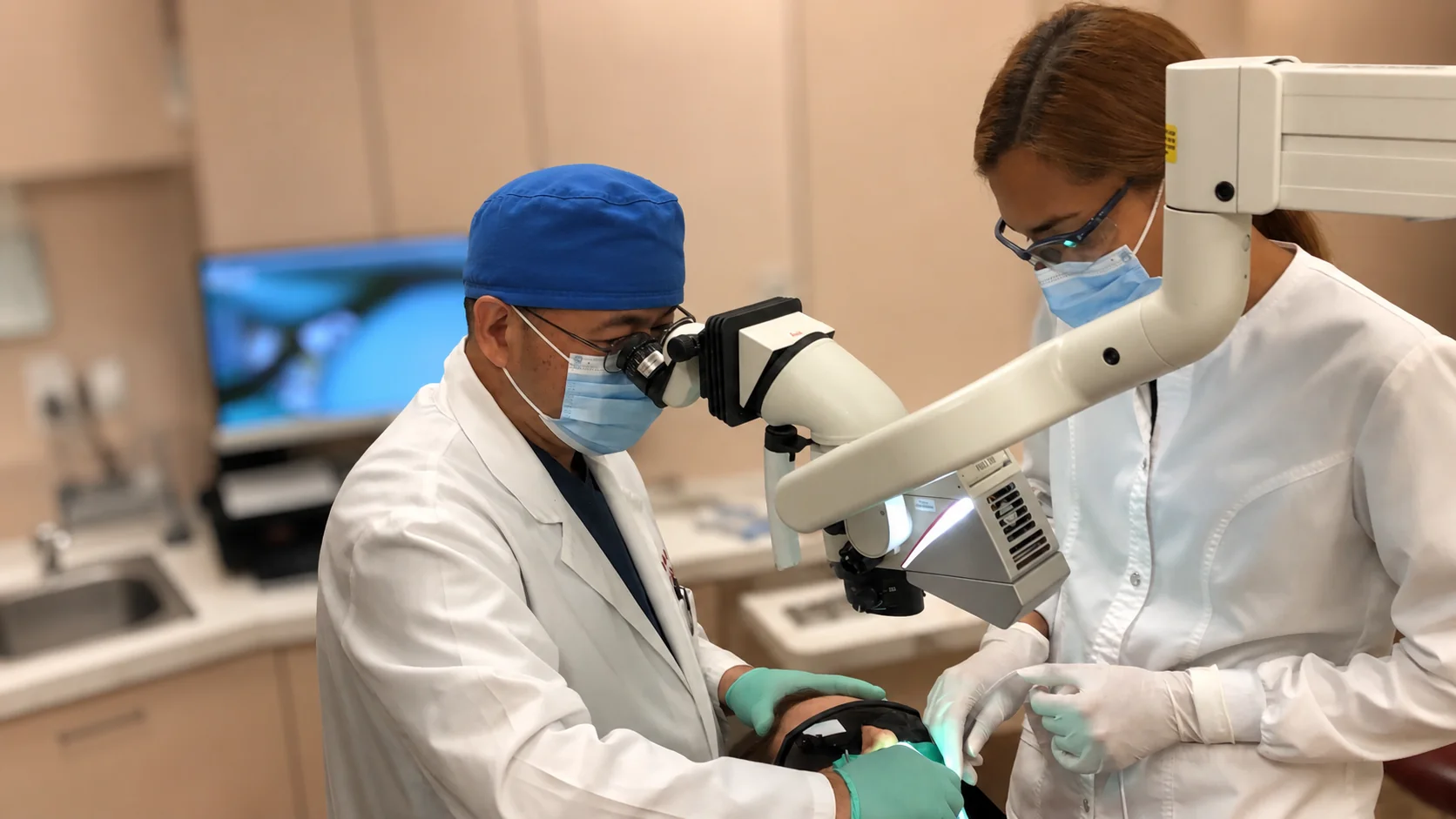
Apicoectomy · Root-End Surgery · Cone Beam CT Planning · Microscope-Assisted Endodontic Care
This page is for patient education and postoperative support only. It does not replace the specific instructions given by Dr. Nguyen or the SoftDental team. Instructions may differ depending on tooth location, infection size, bone grafting, sinus involvement, stitches, medications, medical history, and surgical complexity. © 2026 SoftDental | Dr. Minh Nguyen DDS PA · 10028 West Road Ste. 108, Houston TX 77064 · 281-807-6111
Questions about your own teeth?
Our team is happy to answer them in person, without pressure. Call us or book a visit.
Educational information only. Not a substitute for a personal exam with a licensed dentist.