
Mini Dental Implants for Loose Dentures: How They Help Denture Patients
A traditional denture sits on the gums. A mini implant-retained denture attaches to small implants placed in the jawbone. The goal is not to turn the denture into natural teeth, but to make the denture more stable, more retentive, and less likely to lift or slide during daily use.
Why Dentures Become Loose
Many denture patients blame themselves when a denture becomes loose. In reality, the mouth changes after teeth are lost. The jawbone can shrink, the gums can change shape, and the tongue and cheeks can push the denture during speaking and chewing. The lower denture is especially difficult because there is no suction like an upper denture may have.
Bone shrinkage
After teeth are removed, the ridge that supports the denture can become smaller over time.
Tongue movement
The tongue can lift or push a lower denture while talking and eating.
Chewing pressure
Hard or uneven chewing can make dentures rock or tip.
Sore spots
A loose denture can rub the gums and create painful ulcers.
Old denture fit
A denture that fit years ago may no longer match the patient’s current gum shape.
Adhesive frustration
Some patients rely on more and more denture glue but still feel insecure.
What Are Mini Dental Implants?
Mini dental implants are smaller-diameter implants. In denture cases, they may be used to help retain a removable denture. The denture is modified or made with small attachment housings that snap onto the implants. This can help reduce denture movement and improve confidence.
Mayo Clinic explains that dental implants can be a helpful choice when dentures fit poorly. Mini implants are a narrower implant option used in selected denture-stabilization cases, especially when a patient may not be a good candidate for larger traditional implants.
How Mini Implants Help Denture Patients
| Problem with regular denture | How mini implants may help |
|---|---|
| Denture lifts when talking | Attachments can help hold the denture down more securely. |
| Denture slides during chewing | Implant retention can reduce side-to-side movement. |
| Lower denture floats | Mini implants may give the lower denture anchor points. |
| Patient uses too much glue | Implant retention may reduce dependence on adhesive in selected cases. |
| Sore spots from movement | Less movement may reduce rubbing, although the denture still must fit properly. |
| Fear of laughing or eating in public | Better retention may improve social confidence and quality of life. |
Mini Implants Are Often Most Helpful for Lower Dentures
Lower dentures are commonly harder to control than upper dentures. The lower jaw has the tongue, moving floor of mouth, and less surface area for suction. Research on mini implant-retained lower overdentures has generally been more favorable than research on mini implants for upper dentures.
A systematic review summary reported lower mini-implant overdenture survival around 95.6% at a mean follow-up of 28.2 months, while maxillary mini-implant overdentures had lower reported survival in prior reviews. This does not mean every lower denture patient qualifies, but it explains why mini implants are often discussed first for loose lower dentures.
Mini Implants vs. Regular Implants for Dentures
| Feature | Mini implants | Traditional implants |
|---|---|---|
| Diameter | Narrower implant body. | Wider implant body, depending on system and case. |
| Bone needs | May work in selected narrow ridges, but still needs enough healthy bone. | Often requires more bone width but may provide stronger support options. |
| Common denture use | Often used to improve retention of removable dentures. | Can support removable overdentures or fixed implant bridges, depending on number/position. |
| Surgery complexity | May be less invasive in selected cases. | May require more planning, grafting, healing, or staged treatment. |
| Strength/loading | Narrower, so case selection and bite control are important. | Often preferred for higher-load or fixed prosthetic cases. |
| Best use | Selected denture stabilization cases, especially loose lower dentures. | Broader implant options, including stronger overdenture and fixed solutions. |
Visual Guide: Regular Denture vs. Mini Implant-Retained Denture
This is a simplified diagram. Real treatment requires exam, CBCT planning, denture evaluation, implant positioning, and bite analysis.
Who May Benefit From Mini Implants?
| May be a good candidate | May need different treatment first |
|---|---|
| Loose lower denture that lifts or slides. | Active gum infection, abscess, or untreated oral disease. |
| Patient wants more denture stability but still wants a removable appliance. | Patient wants fixed teeth that do not come out. |
| Enough bone is present for safe mini implant placement. | Bone is too thin, too soft, or too close to nerves/sinus without additional treatment. |
| Patient can clean implants and denture attachments daily. | Poor hygiene, severe dry mouth, or inability to maintain attachments. |
| Bite forces are manageable. | Severe grinding, unstable bite, or strong chewing forces that may overload small implants. |
| Medical history supports healing. | Uncontrolled diabetes, heavy smoking, immune issues, or medications affecting bone healing may need clearance/planning. |
Why Cone Beam CT Planning Matters
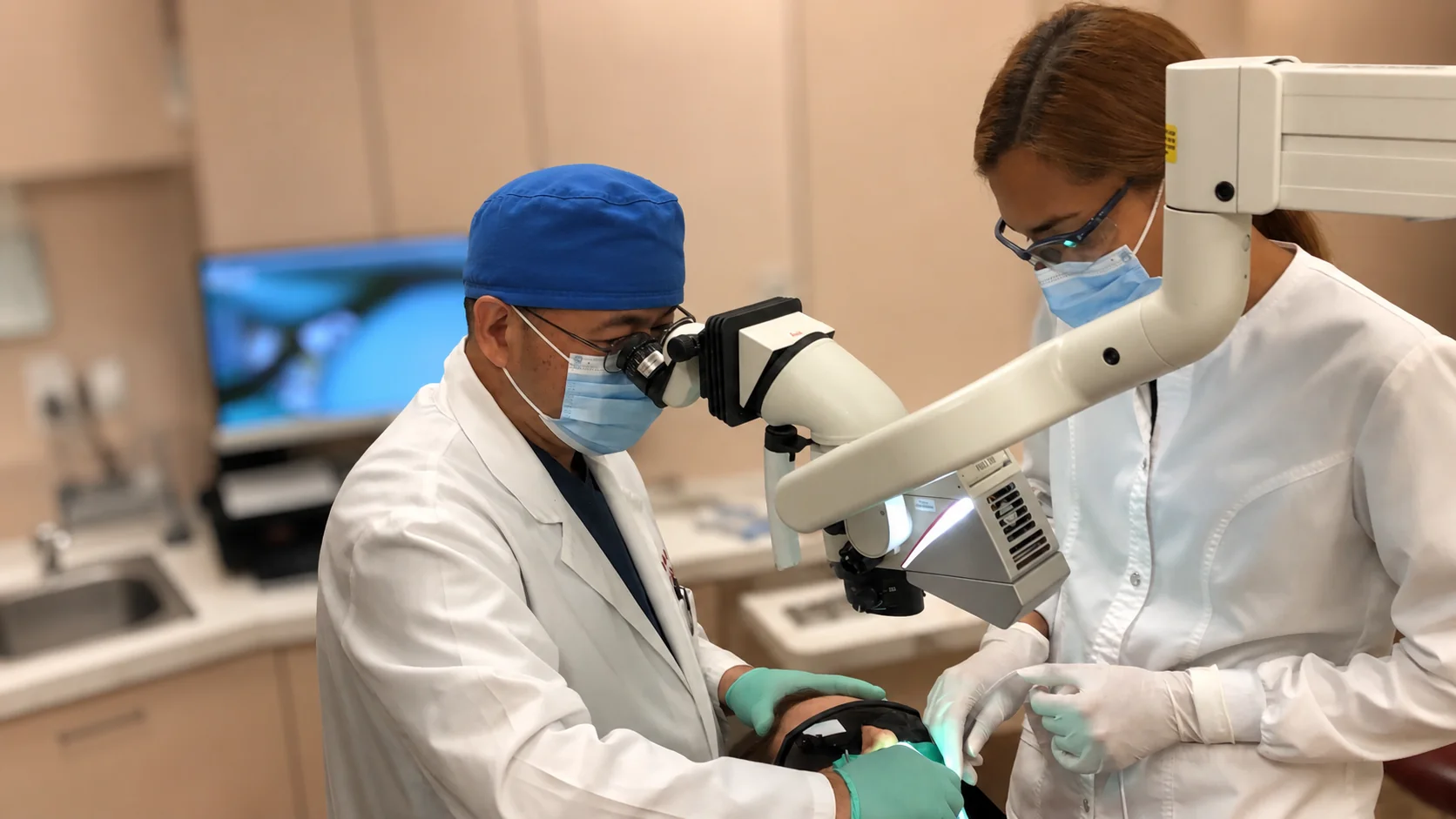
Mini implants are smaller, but they still require careful planning. Dr. Nguyen needs to know where the bone is, where the nerve is, how thick the ridge is, and how the denture will attach. A cone beam CT scan gives a 3D view of the jaw and helps avoid guessing.
Measures bone width
Mini implants still need enough bone around them.
Protects nerves and anatomy
CBCT helps locate nerves, sinus, and thin areas before surgery.
Plans implant position
Implants must line up with the denture attachment design.
Evaluates denture space
The denture needs enough thickness for housings without becoming weak.
SoftDental Workflow for Mini Implant Dentures
Denture complaint and exam
Dr. Nguyen checks where the denture is loose, sore, unstable, or causing chewing problems.
Evaluate the existing denture
Some dentures can be retrofitted; others are too worn, too thin, unstable, or poorly shaped and may need replacement.
Cone beam CT scan
CBCT helps evaluate bone height, width, density, nerves, sinus position, and safe implant locations.
Treatment planning
Dr. Nguyen decides whether mini implants, standard implants, new denture, reline, bone grafting, or another plan is best.
Mini implant placement
If appropriate, mini implants are placed in planned positions. Healing and loading instructions depend on bone and case details.
Denture attachment pickup
Attachment housings are placed in the denture so it can snap onto the mini implants.
Maintenance
Patients need cleaning, checkups, attachment replacement, and denture adjustments over time.
Benefits Patients May Notice
Better chewing confidence
The denture may move less during meals, especially lower dentures.
Clearer speaking
Less denture movement can help some patients speak with more confidence.
Less fear in public
Patients may worry less about the denture lifting while laughing or talking.
Less adhesive dependence
Some patients use less denture glue after implant retention, depending on the case.
Fewer sore spots from movement
Less rocking can reduce rubbing, although denture fit still matters.
Removable and cleanable
The denture still comes out for cleaning and maintenance.
Limitations and Risks
Mini implants can help selected patients, but patients need realistic expectations. They do not make a denture equal to natural teeth. They also do not eliminate maintenance.
| Limitation / risk | Why it matters |
|---|---|
| Still a removable denture | The denture must still be removed, cleaned, and maintained. |
| Attachment wear | Rubber inserts or attachment parts can wear and need replacement. |
| Implant inflammation | Plaque around implants can cause gum inflammation and bone loss. |
| Implant failure | Mini implants can loosen or fail, especially with poor bone, heavy bite, smoking, or poor hygiene. |
| Denture fracture | Adding housings into a thin old denture can weaken it if not planned correctly. |
| Not ideal for every upper denture | Upper jaw cases can be more complex and may need standard implants or other treatment. |
| Not a substitute for diagnosis | CBCT, exam, and denture analysis are needed before choosing this treatment. |
Cleaning Mini Implants and Dentures
Implants need daily cleaning. A denture that snaps onto implants can collect food, plaque, and bacteria around the attachment housings. If the patient does not clean well, inflammation, odor, bleeding, gum soreness, and implant problems can develop.
Brush implant posts daily
Use a soft brush around each implant and gum area.
Clean denture housings
Food and plaque can collect inside the denture attachments.
Remove as instructed
Many removable dentures should be taken out at night unless Dr. Nguyen instructs otherwise.
Replace worn inserts
If the denture stops snapping tightly, attachment inserts may need replacement.
Avoid smoking
Smoking increases implant and gum healing risks.
Keep maintenance visits
Implants and dentures need periodic checks, cleaning, and adjustment.
When to Call SoftDental After Mini Implant Denture Treatment
Questions to Ask Before Mini Implant Dentures
Is my problem the denture, the bone, or both?
Sometimes a reline or new denture is needed before implants are considered.
Do I have enough bone for mini implants?
CBCT helps answer this more accurately than guessing from a visual exam.
Are mini implants or regular implants better for me?
The answer depends on bone, bite, budget, expectations, and whether the denture will be removable or fixed.
Can my current denture be used?
Some dentures can be modified; others need replacement for strength, fit, and attachment space.
What maintenance will I need?
Ask about insert replacement, cleaning tools, follow-up visits, and denture adjustments.
Mini implants can be life-changing for the right denture patient, especially someone struggling with a loose lower denture. But the decision should come from diagnosis, not advertising: bone, bite, denture design, hygiene, and long-term maintenance all matter.
— Dr. Minh Nguyen, D.D.S., P.A. · SoftDental HoustonSources and Further Reading
Mayo Clinic: Dental implant surgery — explains dental implants can be helpful when dentures or bridgework fit poorly, or when there are not enough natural tooth roots to support dentures or bridgework.
American Academy of Implant Dentistry — explains implants can support and stabilize dentures and that patients should brush implant posts like natural teeth.
Systematic review evidence on mini-implant-retained overdentures reports more favorable survival for mandibular mini-implant overdentures than maxillary mini-implant overdentures, supporting careful case selection.
Clinical and radiographic outcomes of mini-implant-retained maxillary overdentures literature notes maxillary mini-implant overdenture outcomes are more variable and should be evaluated carefully.
JADA umbrella systematic review on mandibular overdentures supports the clinical value of implant-retained mandibular overdentures as a treatment category, although implant number and design vary by case.
Implant dentistry literature emphasizes that denture implant success depends on diagnosis, bone quality, surgical placement, prosthetic design, hygiene, attachment maintenance, and follow-up.
Loose lower denture? Tired of denture glue?
Ask if mini implants are a safe option.
Dr. Nguyen can evaluate your denture, bone, bite, and 3D anatomy to determine whether mini implants, standard implants, reline, new denture, or another solution is best.
Mini Dental Implants · Implant-Retained Dentures · Cone Beam CT Planning · Denture Stabilization · Lower Denture Solutions
This article is for patient education only and is not a diagnosis, guarantee, or promise that mini implants will work for every patient. Candidacy depends on bone height, width, density, nerve/sinus anatomy, medical history, smoking, diabetes control, bite force, denture design, hygiene, and maintenance. © 2026 SoftDental | Dr. Minh Nguyen DDS PA · 10028 West Road Ste. 108, Houston TX 77064 · 281-807-6111
Questions about your own teeth?
Our team is happy to answer them in person, without pressure. Call us or book a visit.
Educational information only. Not a substitute for a personal exam with a licensed dentist.