
Why Food Keeps Getting Stuck Between Teeth
Food trapping is not just annoying. When food repeatedly gets wedged between teeth or under the gum, it can irritate the gum, cause bleeding, bad breath, cavities, gum inflammation, and bone problems. The most important question is: does it happen once in a while, or does it happen in the same spot again and again?
Occasional Food Between Teeth vs. Repeated Food Trapping
It is normal for some foods — meat fibers, popcorn, seeds, spinach, mango, or stringy vegetables — to occasionally catch between teeth. But when food gets stuck in the exact same area every meal, something about that area may be wrong.
Most Common Reasons Food Gets Stuck
Open contact
The teeth do not touch tightly enough, so food wedges between them when chewing.
Cavity between teeth
Decay can create a rough hole or ledge that catches food before pain starts.
Crown or filling shape
A crown or filling may be too open, too flat, bulky, rough, or loose.
Gum recession
When gum tissue shrinks, black triangles and root spaces can trap food.
Bone loss / gum disease
Periodontal pockets and shifting teeth create spaces where food packs under the gum.
Teeth shifting
Missing teeth, crowding, grinding, or aging can change contacts over time.
Wisdom tooth area
Partially erupted wisdom teeth and back molars often trap food and bacteria.
Implant crown contact loss
Implant crowns can develop open contacts as natural teeth shift over time.
Open Contact: The Classic Food Trap
An open contact means the side contact between two teeth is not tight enough. Food gets pushed into that space when chewing. Research on vertical food impaction describes open contact as a common cause of food wedging between posterior teeth. Food impaction literature also lists open tooth contact, marginal ridge problems, tooth shape, occlusal wear, extrusion, and periodontal recession as causes.
| What patient notices | Possible cause | Possible solution |
|---|---|---|
| Floss slides through too easily with no “snap.” | Open contact between teeth. | Filling repair, crown adjustment/replacement, orthodontic movement, or monitoring depending on cause. |
| Food packs between molars every meal. | Posterior open contact or bite pushing food into space. | Check contact, bite, marginal ridges, crown/filling shape. |
| Gum sore or bleeding in one spot. | Food trauma and plaque retention. | Remove food trap cause and treat gum inflammation. |
| Bad smell from one area. | Food decay, cavity, deep pocket, or leaking restoration. | X-ray/exam and appropriate repair. |
Cavities Can Make Food Stick Before Pain Starts
Many patients wait for pain before they come in. But a cavity between teeth may first show up as food catching in one area. The cavity creates a rough surface, hole, or ledge where food catches and bacteria stay longer.
Crowns, Fillings, and Onlays Can Trap Food If the Contact or Shape Is Wrong
A good crown or filling should restore tooth shape and contact as closely as possible. But dental work can trap food if the contact is too open, the crown contour is too flat or bulky, the margin is rough, the filling has chipped, or the tooth has shifted after the restoration was placed.
This does not always mean the dentist did something wrong. Contacts can change over time because teeth move, bite forces change, bone changes, and adjacent teeth shift. But if the food trap is persistent, it needs to be checked.
Gum Recession and Black Triangles
Gum tissue normally fills the space between teeth. When gums recede or bone support is lost, small triangular spaces can open near the gumline. These are often called black triangles. Food and plaque can collect in these spaces, especially near front teeth or areas with bone loss.
Gum recession may happen from periodontal disease, aggressive brushing, thin gum tissue, orthodontic movement, aging, tooth position, or bite trauma. Treatment depends on the cause and severity.
Gum Disease and Bone Loss Can Create Food Traps
Healthy gums form a seal around teeth. Cleveland Clinic explains that gums help protect teeth and keep them in line by forming a tight seal. When gum disease damages that seal, pockets can form around teeth. Bone loss can also make teeth shift, creating spaces where food packs repeatedly.
Deep pockets
Food and bacteria can pack below the gumline where floss may not fully reach.
Bone loss
When bone support drops, spaces near the gumline may open.
Tooth movement
Periodontal disease can change tooth position and contacts.
Bleeding and soreness
Food impaction can irritate inflamed gums and worsen discomfort.
Visual Guide: Why Food Gets Wedged
A repeated food trap is usually mechanical: the tooth contact, gum shape, crown/filling contour, or bite is allowing food to wedge into the same area.
Implants Can Also Trap Food
Patients often think an implant crown cannot have food problems because it is not a natural tooth. But food can still trap around an implant crown, especially if the contact opens as natural teeth slowly shift. Research on implant-supported restorations notes that food impaction is frequently associated with interproximal contact loss and can cause gingival inflammation and even peri-implant bone problems.
What Not to Do
| Do not do this | Why it is risky |
|---|---|
| Do not dig aggressively with toothpicks | Can cut the gum, create recession, and make the space worse. |
| Do not snap floss hard into the gum | Can injure the papilla and worsen soreness. |
| Do not ignore bleeding | Bleeding can mean inflammation, gum disease, or food trauma. |
| Do not assume the crown is fine | A crown can have an open contact, rough margin, decay under the edge, or looseness. |
| Do not wait for pain | Cavities and periodontal pockets can progress silently. |
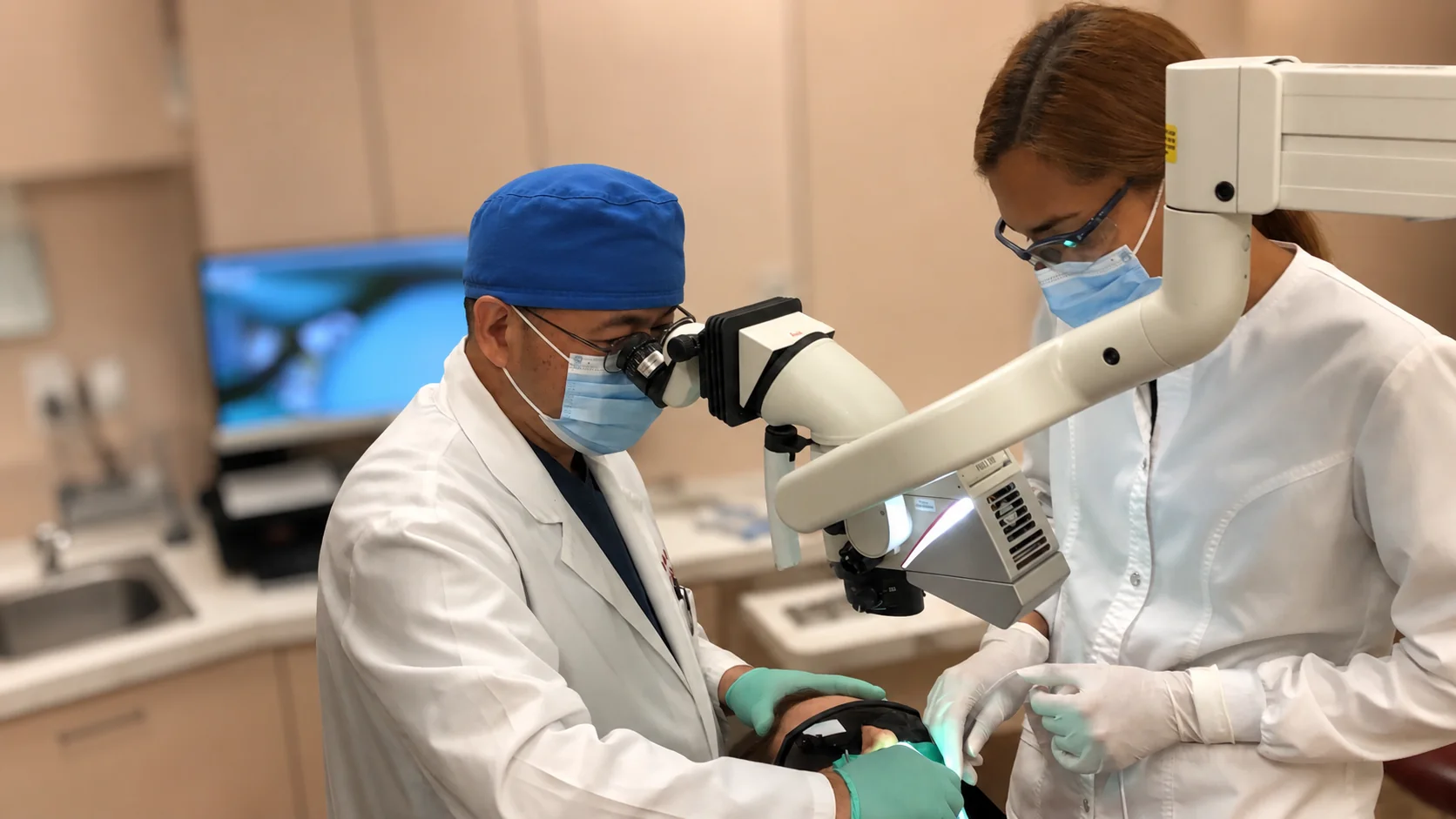
What Dr. Nguyen Checks at SoftDental
Where food is trapping
We ask whether it is one exact spot, several areas, around a crown, near an implant, or near a wisdom tooth.
Tooth contact
Floss contact, spacing, tooth movement, and open contact are checked.
X-rays for cavities or bone loss
Bitewing X-rays can help detect decay between teeth and bone changes that are not visible by looking.
Crown/filling/implant contour
Dr. Nguyen checks whether the restoration shape or margin is causing food to catch.
Gum pockets and bleeding
Periodontal measurements help identify gum disease, recession, and food trapping under the gum.
Bite forces
A plunger cusp or heavy bite may push food into the space during chewing.
Treatment Depends on the Cause
| Cause | Possible treatment |
|---|---|
| Open contact | Repair filling, replace filling/crown, orthodontic movement, or reshape contact depending on case. |
| Cavity between teeth | Filling, crown, onlay, root canal, or extraction depending on cavity depth. |
| Loose or poor crown/filling | Adjust, repair, recement, replace, or evaluate for decay under restoration. |
| Gum recession / black triangle | Cleaning instruction, bonding, orthodontic adjustment, gum treatment, or monitor if small. |
| Gum disease / pocket | Deep cleaning, periodontal maintenance, laser/adjunct therapy if appropriate, or referral in advanced cases. |
| Wisdom tooth area | Cleaning, monitoring, or wisdom tooth extraction if recurrent inflammation/decay risk. |
| Implant crown contact loss | Implant maintenance, crown/contact repair, new crown, or bite/contact adjustment. |
| Tooth shifting after extraction | Replace missing tooth, orthodontics, bridge, implant, partial denture, or bite correction. |
How Patients Can Reduce Food Trapping at Home
Home care helps, but it does not fix every food trap. If the contact is open or a crown is poorly shaped, no amount of flossing will permanently solve the mechanical problem.
Floss daily
Use gentle C-shape flossing. Do not snap hard into the gum.
Brush the gumline
Angle bristles toward the gumline to remove plaque around contacts and crowns.
Use water flosser if advised
Helpful for bridges, implants, deep spaces, braces, or larger gaps.
Use interdental brushes carefully
Good for larger spaces but can damage tight gums if forced.
Avoid sharp picking
Repeated toothpick trauma can injure gum tissue.
Keep checkups
Food traps often need dental repair, not just better home care.
When to Call SoftDental
The Bottom Line
Food stuck between teeth is common. But repeated food trapping in the same place is a sign to investigate. It can be caused by an open contact, cavity, crown or filling issue, gum recession, periodontal disease, implant contact loss, tooth shifting, or wisdom tooth area problems.
The solution is not always “floss harder.” The solution is to find the cause and fix the anatomy, infection, restoration, gum pocket, or bite problem that is allowing food to wedge into the space.
If food keeps getting stuck in the same spot, your mouth is giving you a warning. Do not keep digging at the gum every day. Let us check the contact, X-ray, crown, gum pocket, and bite before a small food trap becomes decay or gum disease.
— Dr. Minh Nguyen, D.D.S., P.A. · SoftDental HoustonSources and Further Reading
Frontiers in Dental Medicine: Classification and treatment of food impaction — describes food impaction as food trapped in interproximal spaces or near restored teeth, leading to discomfort, periodontal disorders, and tooth wear.
Oral Health and Preventive Dentistry review: Food Impaction in Dentistry Revisited — describes food impaction as forceful wedging of food debris into proximal spaces and lists open contacts, marginal ridge integrity, plunger cusps, occlusal wear, extrusion, tooth morphology, and periodontal recession as causes.
PMC clinical article on open contact food impaction — evaluates adults with vertical food impaction caused by open contact between posterior teeth.
Cleveland Clinic: Periodontal Disease — explains gums protect teeth by forming a tight seal and that periodontal problems occur when that seal becomes loose or broken.
Journal of Prosthetic Dentistry implant restoration research — notes food impaction around implant-supported restorations is frequently associated with interproximal contact loss and may cause gingival inflammation or peri-implant bone problems.
Dental literature on food impaction notes repeated food packing can contribute to discomfort, bad breath, decay, gingivitis, periodontitis, periodontal abscess, and localized inflammation.
Food stuck in the same spot every day?
Do not just floss harder — find the cause.
SoftDental can check for open contact, cavity, crown/filling problems, gum pockets, bone loss, implant crown contact changes, wisdom tooth issues, and bite-related food traps.
Food Trap Evaluation · Open Contact Repair · Crown and Filling Check · Gum Disease Evaluation · Implant Crown Maintenance
This article is for patient education only and is not a diagnosis or guarantee of treatment outcome. Food trapping treatment depends on tooth contact, cavities, crown/filling contour, gum level, bone support, bite forces, implants, wisdom teeth, oral hygiene, and patient anatomy. © 2026 SoftDental | Dr. Minh Nguyen DDS PA · 10028 West Road Ste. 108, Houston TX 77064 · 281-807-6111
Questions about your own teeth?
Our team is happy to answer them in person, without pressure. Call us or book a visit.
Educational information only. Not a substitute for a personal exam with a licensed dentist.