
Pulling All Teeth for Dentures: Why It Does Not Solve Every Dental Problem
When a patient has years of dental problems, pain, loose teeth, broken teeth, or high treatment costs, it is understandable to think: “Can we just take everything out and make dentures?” Sometimes complete dentures are the right solution. But many times, removing every tooth creates new challenges that patients did not expect.
The Misconception: Dentures Solve Everything
Complete dentures can restore a smile and help a patient chew better than having no teeth. They are a valuable treatment option. But dentures are not natural teeth. They are removable appliances that sit on the gums and bone ridge. They can move, rub, trap food, affect speech, reduce chewing power, and require maintenance as the mouth changes.
“If I remove all my teeth, I will never have dental problems again.”
You may no longer get cavities in natural teeth, but you can still have sore gums, loose dentures, bone shrinkage, infections, bad fit, broken denture teeth, chewing problems, and the need for future adjustments or replacement.
Why Dr. Nguyen Encourages Patients to Save Teeth When Possible
Natural teeth are not just for smiling. Tooth roots help support the jawbone. Teeth provide feedback when you bite. They help guide the jaw when chewing. If a few teeth are strong enough to keep, they can often help anchor a partial denture and improve stability.
Teeth can anchor a partial denture
A partial denture can use remaining teeth for support and retention. This may feel more controlled than a full removable denture that depends only on gums, suction, muscle control, and fit.
Natural teeth help chewing
Even a few stable teeth can improve biting guidance and chewing confidence. Complete dentures can help, but chewing efficiency is still reduced compared with natural teeth.
Tooth loss changes the jawbone
After teeth are removed, the bone ridge changes over time. As the ridge shrinks, a denture that once fit well may loosen and need adjustment, reline, or replacement.
Extraction is permanent
Once a tooth is removed, it cannot be put back. That is why a careful exam, X-rays, gum evaluation, and bite evaluation matter before choosing full-mouth extraction.
Partial Denture vs. Complete Denture: What Is the Difference?
| Feature | Partial Denture | Complete Denture |
|---|---|---|
| What it replaces | Some missing teeth while some natural teeth remain. | All teeth in the upper arch, lower arch, or both. |
| How it stays in | Often uses clasps, rests, precision fit, and remaining teeth for support. | Relies on gum/bone shape, suction, saliva, muscle control, fit, and sometimes adhesive or implants. |
| Stability | Can be more stable when anchor teeth are strong and well-positioned. | Upper dentures often have better suction than lower dentures. Lower complete dentures are commonly harder to control. |
| Chewing | May allow better chewing if natural teeth remain functional. | Improves chewing compared with no teeth, but chewing force and food variety may still be limited. |
| Bone and mouth changes | Remaining teeth can help preserve some function and support. | After all teeth are removed, the gum and bone ridge continue changing, which can loosen the denture over time. |
| Maintenance | Needs cleaning of the denture and careful cleaning around anchor teeth. | Needs daily denture cleaning, gum cleaning, overnight storage, and periodic fit checks. |
What Happens After Losing All Teeth?
Many patients are surprised that the hardest part of dentures is not only the day teeth are removed. The bigger issue is what happens after the mouth heals and continues changing. The gums shrink. The bone ridge remodels. The tongue, cheeks, and lips must learn how to help hold the denture in place.
Natural teeth have roots in bone and provide chewing feedback. A complete denture sits on the gum and bone ridge. As the ridge changes, the denture may become loose and need professional adjustment.
Difficulties Patients May Face With Dentures
Dentures can be life-changing for the right patient, but they require realistic expectations. The first few weeks often involve adjustment. Some patients need several visits for sore spots, bite corrections, and fit improvements.
Sore spots and rubbing
A new denture may press on certain gum areas. This is common and usually requires professional adjustment rather than forcing the patient to “just get used to it.”
Chewing limitations
Steak, nuts, crusty bread, raw vegetables, and sticky foods may be difficult. Patients often need to cut food smaller and chew on both sides evenly.
Speech changes
Some words may sound different at first. Reading out loud and practicing slowly can help the tongue adapt to the new shape in the mouth.
Lower denture movement
Lower complete dentures are often harder because the tongue moves constantly and there is less surface area for suction than the upper jaw.
Bone and gum shrinkage
The mouth changes after extractions. A denture that fits today may need a reline or replacement later as the tissue and bone ridge remodel.
Daily care is still required
Dentures must be removed, cleaned, soaked properly, and checked. The gums, tongue, and any remaining teeth still need daily care.
When Complete Dentures May Be the Right Choice
There are situations where removing remaining teeth and making a complete denture is appropriate. For example, teeth may be severely infected, fractured below the gumline, extremely loose from bone loss, or impossible to restore safely. The goal is not to keep every tooth forever. The goal is to make the healthiest, most stable, most realistic plan for the patient.
Evaluate which teeth are hopeless
Dr. Nguyen checks cavities, fractures, infection, gum support, bone loss, mobility, and X-rays before recommending extraction.
Diagnosis firstIdentify useful teeth for a partial
If certain teeth are strong enough, they may help anchor a partial denture and improve function.
Save strategic teethDiscuss complete denture expectations
Before full extraction, the patient should understand healing time, immediate denture limitations, relines, sore spots, speech changes, food changes, and follow-up visits.
No surprisesConsider implant support when appropriate
Some patients may benefit from implants to help retain a denture. This depends on bone, health history, budget, hygiene, smoking status, and treatment goals.
Optional stability upgradeHow to Make Dentures Work Better
Dentures should be treated like a medical device, not a one-time purchase. The mouth changes. The denture wears. The bite can shift. Regular dental checkups help catch sore spots, oral cancer signs, gum problems, denture damage, and fit problems before they become bigger issues.
My goal is not to tell every patient, “Save every tooth.” My goal is to help patients understand the value of the teeth that can still help them. If a few strong teeth can anchor a partial denture, improve chewing, and make the transition easier, we should consider that before removing everything.
— Dr. Minh Nguyen, D.D.S., P.A. · SoftDental, Houston TXThinking about dentures? Get a full evaluation first.
Before deciding to remove all teeth, let Dr. Nguyen evaluate which teeth can be saved, which teeth should be removed, and whether a partial denture, complete denture, or implant-supported option gives you the best long-term result.
Sources & clinical references
- American Dental Association. Denture Care and Maintenance. View source →
- ADA MouthHealthy. Dentures. View source →
- American College of Prosthodontists. Position Statement: The Frequency of Denture Replacement. View source →
- CDC/NCHS FastStats: Oral and Dental Health. View source →
- CDC archived oral health information for older adults: tooth loss, dentures, and nutrition. View source →
- Prithviraj DR, et al. Complete Denture Masticatory Efficiency: A Literature Review. View source →
- Glidewell Dental. Complete Dentures: Troubleshooting Common Complaints. View source →
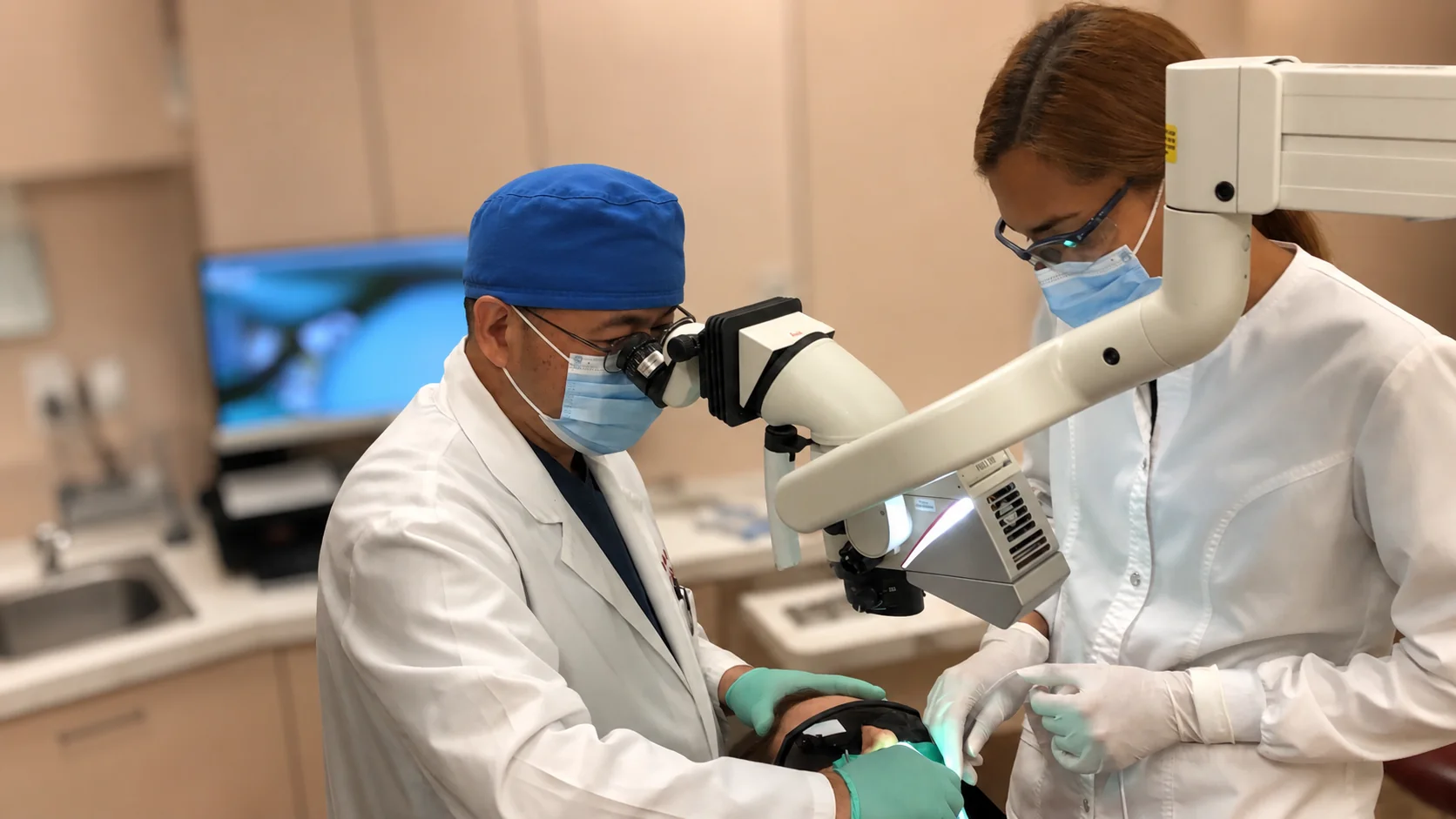
Partial Dentures · Complete Dentures · Tooth-Saving Treatment Planning · Restorative Dentistry
This article is for patient education only and is not a diagnosis or treatment recommendation. Denture treatment options depend on oral exam findings, X-rays, gum health, bone level, medical history, hygiene, bite, and patient goals. © 2026 SoftDental | Dr. Minh Nguyen DDS PA · 10028 West Road Ste. 108, Houston TX 77064 · 281-807-6111
Questions about your own teeth?
Our team is happy to answer them in person, without pressure. Call us or book a visit.
Educational information only. Not a substitute for a personal exam with a licensed dentist.