
Cone Beam CT at SoftDental: Why 3D Dental Imaging Helps Patients See the Whole Picture
Patients often ask, “Why do I need a 3D scan if I already had dental X-rays?” The answer is simple: some dental problems are hidden in depth. A flat X-ray can show a shadow. Cone beam CT can show the position, shape, width, height, and relationship of the problem to nearby bone, roots, sinuses, and nerves.
What Is Cone Beam CT?
Cone beam computed tomography, commonly called CBCT or cone beam CT, is a special type of dental imaging that creates a three-dimensional scan of the mouth and jaw. Instead of giving only a flat two-dimensional image, CBCT lets the dentist review the area from different angles: front to back, side to side, and top to bottom.
At SoftDental, Dr. Nguyen uses CBCT with Anatomage diagnosis software to evaluate the patient’s overall dental health. This can help explain bone level, missing teeth, root shape, infections, implant space, sinus position, wisdom teeth, jawbone anatomy, and other findings that may affect treatment planning.
Why CBCT Is Widely Used in Modern Dentistry
CBCT has become common in dentistry because modern dental treatment often requires knowing more than whether a tooth hurts. Dentists need to know where the infection is, how much bone is present, where the sinus sits, how close the nerve is, whether an implant will fit, and whether a root canal tooth has unusual anatomy.
Better root and tooth detail
CBCT can help show root shape, hidden anatomy, infections near root tips, fractures, and complex endodontic findings when a regular X-ray does not provide enough information.
Bone evaluation
For implants, dentures, periodontal problems, extractions, and grafting, 3D imaging helps evaluate bone height, width, density, and shape.
Implant planning
CBCT helps measure the implant site and review nearby nerves, sinuses, and bone before surgery. This is critical for selecting implant size, position, and whether grafting is needed.
Sinus and airway review
For upper back teeth and implants, the sinus location matters. CBCT can help determine if a sinus lift or crestal lift may be needed.
Hidden infection detection
Some infections, cyst-like areas, or bone defects may be difficult to see on flat images. CBCT can help reveal the size and location more clearly.
Patient understanding
Patients can see the issue on the screen, understand why treatment is recommended, and make a more informed decision instead of guessing based only on symptoms.
Myth: “If My Tooth Does Not Hurt, I Do Not Need 3D Imaging.”
“No pain means everything is fine.”
Dental infections, bone loss, failing root canals, impacted teeth, and implant bone problems can exist before pain becomes severe. Pain is not always an early warning system.
3D imaging can find important information earlier.
CBCT is not needed for every patient, but when the exam or treatment plan calls for it, the scan can help Dr. Nguyen identify anatomy and risks that a regular X-ray may not fully show.
What CBCT Can Help Dr. Nguyen Evaluate
| Dental concern | What CBCT may help show | Why it matters |
|---|---|---|
| Dental implants | Bone height, bone width, sinus position, nerve location, available implant space | Helps plan implant size, angulation, grafting, and whether sinus or crestal lift may be needed. |
| Root canal problems | Root canals, curved roots, missed canals, infection around root tips, unusual anatomy | Helps diagnose complex cases and plan treatment with more detail. |
| Extractions or wisdom teeth | Root position, proximity to nerves or sinus, bone shape, impacted teeth | Helps identify surgical risks and plan a safer approach. |
| Periodontal disease | Pattern of bone loss, bony defects, implant-supporting bone, furcation involvement | Helps explain why teeth may feel loose or why deep cleaning/periodontal maintenance matters. |
| Sinus-related dental questions | Upper molar roots, sinus floor, possible sinus proximity | Helps determine whether symptoms may involve tooth roots, sinus anatomy, or both. |
| Full-mouth treatment planning | Overall teeth, bone, missing spaces, infections, restorability, implant options | Helps build a clearer long-term plan instead of treating one emergency at a time. |
How SoftDental Uses Anatomage Diagnosis Software
At SoftDental, the scan is not taken just to “have another X-ray.” Dr. Nguyen reviews the cone beam CT in Anatomage diagnosis software, which allows the dental team to view the mouth in 3D and explain the patient’s findings in a more visual way.
This is especially helpful for patients who want to understand why they need a root canal, why an implant may need grafting, why a tooth may not be savable, why bone loss matters, or why treatment should be done in a certain sequence.
A regular X-ray can be enough for many routine visits. Cone beam CT is used when 3D information can improve diagnosis, explanation, or treatment planning.
Is Cone Beam CT Safe?
CBCT uses X-ray radiation, so it should be used thoughtfully. The benefit is that it can provide important 3D information when clinically justified. Modern dental imaging follows the principle of using the lowest reasonable exposure needed to answer the clinical question.
Dr. Nguyen does not recommend CBCT just because technology is available. He recommends it when the scan can help diagnose a problem, reduce uncertainty, plan treatment, or explain the patient’s overall dental condition.
SoftDental’s Discounted CBCT Fee
Regular CBCT fee: $340
Dr. Nguyen’s discounted fee: $135
Dr. Nguyen wants patients to understand their dental health before committing to major treatment. For clinically appropriate cases, SoftDental discounts the cone beam CT fee from $340 to $135 so patients can receive a more complete diagnostic review without a large financial barrier.
Fee information is for patient education and may change. Insurance coverage varies by plan. Please confirm fees, insurance estimates, and clinical need with SoftDental before treatment.
What Happens During a CBCT Visit?
Clinical exam and reason for the scan
Dr. Nguyen first evaluates your symptoms, dental history, X-rays, gums, bite, missing teeth, pain area, or treatment goals. The scan is recommended only when 3D information may help.
Quick scan
The CBCT machine rotates around the head to capture the 3D image. The scan itself is usually quick and noninvasive.
Anatomage 3D review
Dr. Nguyen reviews the image using Anatomage diagnosis software to evaluate teeth, roots, jawbone, sinuses, implant sites, infections, and other relevant anatomy.
Patient education and treatment options
The team explains what the scan shows, why it matters, and what treatment choices are reasonable. The goal is informed decision-making, not pressure.
When CBCT May Be Especially Helpful
CBCT does not replace a good clinical exam. It supports it. The best diagnosis comes from combining the patient’s symptoms, medical history, clinical exam, periodontal findings, regular X-rays, and 3D imaging when appropriate.
My goal is not to sell a scan. My goal is to help the patient see what I see. When patients understand their bone, roots, infection, sinus, and treatment options in 3D, they can make better decisions for their long-term dental health.
— Dr. Minh Nguyen, D.D.S., P.A. · SoftDental, Houston TXNeed a clearer answer about your teeth, bone, or implants?
Ask SoftDental whether a cone beam CT scan is appropriate for your case. Dr. Nguyen can review your 3D image with Anatomage software and explain your overall dental health in plain language.
- U.S. Food & Drug Administration. Dental Cone-beam Computed Tomography. https://www.fda.gov/radiation-emitting-products/medical-x-ray-imaging/dental-cone-beam-computed-tomography
- Anatomage / Invivo dental software information. https://anatomage.co.jp/anatomage-dental/
- DEXIS Invivo 6 by Anatomage product information. https://dexis.com/en-us/software-invivo-6
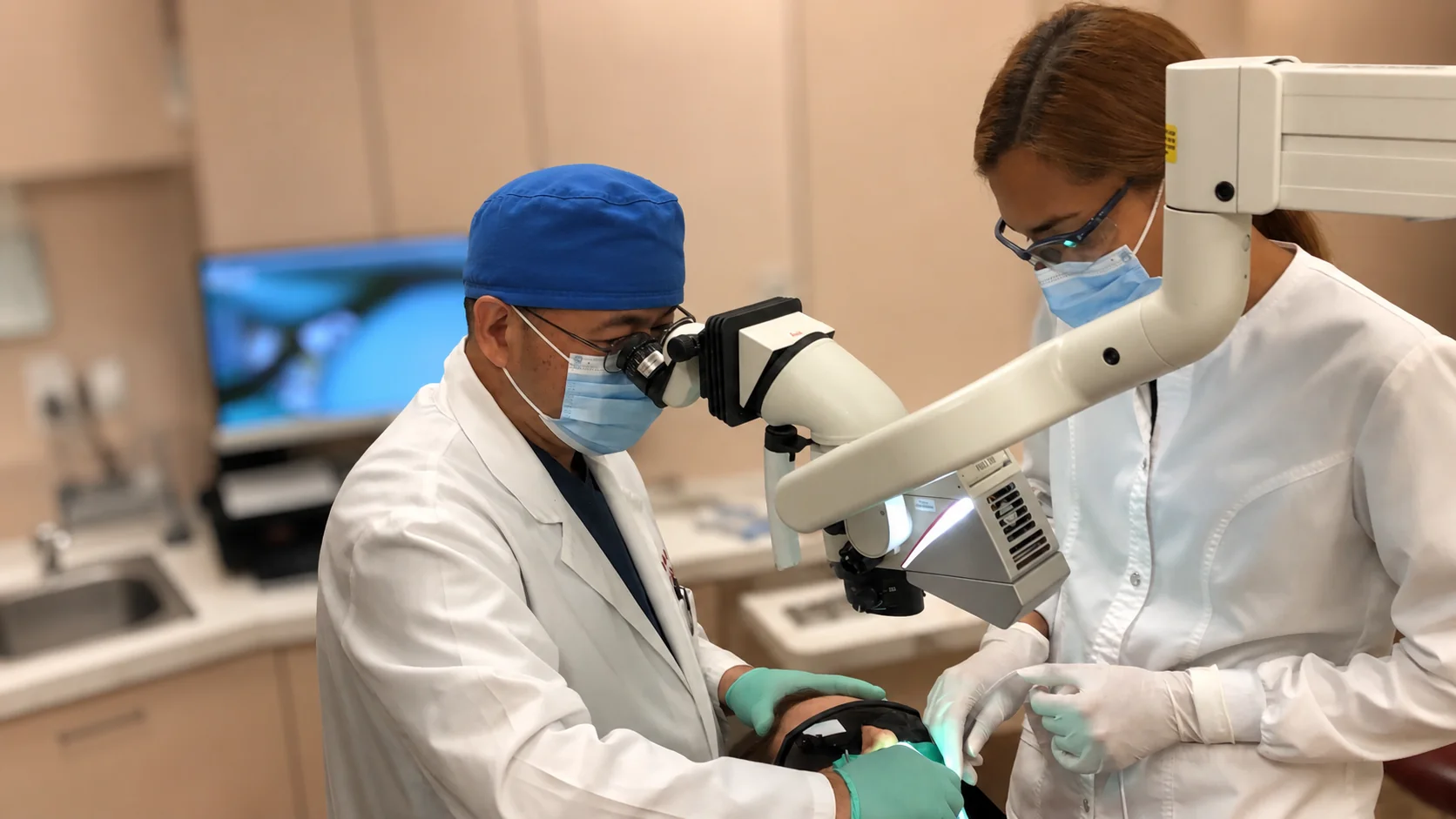
Cone Beam CT · Anatomage Diagnosis Software · iTero Digital Scanner · Leica Microscope
This article is for patient education only and is not a diagnosis or guarantee of treatment outcome. CBCT recommendations depend on the patient’s clinical exam, health history, dental condition, and treatment plan. Fees, discounts, and insurance benefits may change and should be confirmed with SoftDental before treatment. © 2026 SoftDental | Dr. Minh Nguyen DDS PA · 10028 West Road Ste. 108, Houston TX 77064 · 281-807-6111
Questions about your own teeth?
Our team is happy to answer them in person, without pressure. Call us or book a visit.
Educational information only. Not a substitute for a personal exam with a licensed dentist.