Every week, patients come to Dr. Nguyen's chair and say the same thing. Their back tooth has been bothering them for months. It aches when they chew on it. They want it gone. "Just pull it, Doc. Get it over with." It is one of the most common requests in dentistry — and one of the most consequential decisions a patient can make based on incomplete information.
The Most Common Dental Misconception
The belief that tooth extraction is a simple solution — cheaper, faster, and final — is deeply rooted in patient culture. And it makes sense on the surface. The tooth is causing pain. The tooth is the problem. Remove the tooth, remove the problem. But this reasoning treats the tooth as an isolated object, like a flat tire you swap out and forget. Your teeth are not isolated objects. They are a living, interdependent system — and every single one of them, especially your back molars, is holding up far more than you realize.
"Just pull the tooth and my problem is solved."
The tooth is the problem. Removing it removes the pain. Extraction is cheaper than a root canal or crown. The space will close up or not matter. The other teeth will be fine. I can chew without it.
Extraction removes pain but starts a cascade: bone loss within weeks, adjacent teeth tipping, opposing teeth over-erupting, bite collapse, face shape changes, digestive compromise, and higher dementia risk — all costs that dwarf the original dental bill.
The extraction itself may cost $150–$600. But the long-term consequences — bone grafting, implants, orthodontics to correct shifted teeth, treatment for the TMJ pain that develops — can run $3,000 to $10,000 or more over the following five to ten years. Extraction is not the cheap option. It is the expensive option with a delayed bill.
What Your Molars Actually Do
Most people think of teeth as tools for chewing. Molars are that — but they are also structural pillars, brain stimulators, digestive organs, and facial scaffolding. Understanding their full role changes how you think about keeping them.
Your jaw can generate up to 300 pounds per square inch of chewing force. Molars and premolars absorb roughly 90% of it. Incisors and canines cut and guide — but the molars do the actual grinding work that turns food into digestible particles. Lose the molars, and your entire chewing system has to compensate in ways it was never designed for.
Beyond chewing force, molars serve several other critical roles that most patients have no idea about:
The Chain Reaction: What Happens After Extraction
The extraction appointment ends in minutes. The biological and structural cascade it triggers lasts the rest of your life. Here is what the research shows, step by step, starting from the moment the tooth is removed.
🦴 Jawbone begins to shrink — immediately
The molar's roots were the only thing sending chewing-force signals into the surrounding bone. The moment that root is gone, the bone below it receives no stimulus. The body reads this as "this bone is no longer needed" and begins resorbing it — breaking it down and reabsorbing the calcium elsewhere. There is a 25% decrease in the width of jawbone during the first year after tooth loss. This bone loss is not temporary. It is irreversible without grafting. A narrowed, shrunken jawbone causes gum tissue to sag, makes future implant placement more complex, and eventually compromises the teeth neighboring the gap.
25% bone width lost in year one↔️ Adjacent teeth start to tip and drift
Your teeth maintain their position partly through the physical pressure of neighboring teeth pushing against each other. When a molar disappears, the tooth directly in front of it — typically the second premolar or first molar — begins to tip backward into the gap. Missing teeth negatively impact oral health, leading to over-eruption, rotation, or drifting of adjacent teeth, which can result in tooth loss, uneven wear, temporomandibular joint disorder, and facial midline shift. This is not a slow, barely-noticeable shift. Within six to twelve months, neighboring teeth can tilt 15 to 25 degrees — creating new cleaning problems, bite problems, and putting them at risk for their own fracture.
Tipping begins within months⬆️ The opposing tooth erupts into the gap
Teeth require contact with the opposing arch to stay in their correct position. When a lower molar is removed, the upper molar that used to chew against it begins to drift downward — a process called super-eruption or over-eruption. Without the usual occlusal contact, the mechanoreceptors in the periodontal ligament become inactive, which normally signal to the body to keep the tooth in place. Over time, the opposing molar can drop so far out of position that it either needs to be significantly reshaped, or it too must eventually be removed. One missing tooth creates a second missing tooth.
Super-eruption begins within 6 months🫀 Your digestion begins to suffer
This is the consequence most patients never consider. The loss of molar teeth decreases the ability to triturate food and results in delayed gastric emptying and impaired digestive function. When molars are lost, the food you swallow is not adequately ground into small enough particles. Fragments of food that are too large to be digested completely can result in bacterial overgrowth in the colon, leading to indigestion, bloating, and constipation. Your stomach and intestines were designed to process food that was already properly masticated. When that does not happen, digestion becomes less efficient — and your nutrition suffers even when your diet does not change.
Nutrient absorption decreases😔 Your face begins to age faster
When several teeth are missing, especially back molars that support facial height, the lower jaw can rotate upward. This process — sometimes called facial collapse — may make the chin appear closer to the nose and deepen wrinkles around the mouth. The jawbone shrinks vertically, causing the lower half of the face to look shorter and compressed. The muscles around the lips lose their tooth-supported scaffolding and begin to sag. Patients with multiple missing molars can appear 5 to 10 years older than their age. This is not a vanity concern — it is a structural one, driven by bone loss and jaw collapse.
Visible aging within 2–5 years🧠 The risk to your brain is real — and dose-dependent
This finding has surprised even many dental professionals. Research published through 2025 shows that each lost tooth was associated with a 1.4% increase in the risk of cognitive impairment and a 1.1% increase in the risk of dementia. People missing 20 or more teeth had a 31% higher risk of cognitive impairment. Posterior tooth and occlusal support loss — specifically losing molars — significantly increases dementia risk, and this effect was shown to be dose-dependent. A landmark 2025 study from Hiroshima University found that mice who lost their molars showed measurable cognitive decline even when their nutrition was perfectly maintained — suggesting the act of chewing itself, independent of diet, stimulates the brain.
31% higher dementia risk with 20+ missing teeth💰 The true financial cost arrives — years later
The extraction itself is inexpensive. But the extraction is never the end of the story. Bone grafting to rebuild the shrunken ridge costs $400–$3,000. A dental implant to replace the extracted tooth costs $3,000–$6,000. Orthodontic treatment to correct the shifted teeth can cost $4,000–$8,000. Treatment for the TMJ disorder that develops can add another $1,000–$5,000. Root canals and crowns on the over-stressed adjacent teeth that crack from carrying extra load add to the bill. Extraction costs $150–$600 but requires tooth replacement costing $500–$6,000 to prevent long-term complications. In most cases, saving a tooth is better than pulling it — the long-term costs of tooth replacement almost always exceed the cost of saving the tooth.
Total long-term cost: 3–10× the original billThe Real Cost Comparison
When patients compare "pull the tooth" versus "save the tooth," they usually compare two numbers: the extraction fee and the root canal plus crown fee. That comparison ignores 90% of the actual financial story. Here is the honest full-picture comparison.
| Decision Point | Save the Tooth (Root Canal + Crown) | Extract — Then What? |
|---|---|---|
| Upfront procedure cost | $1,500–$2,500 (procedure + crown) | $150–$600 (extraction) |
| Bone preservation | Natural root maintains bone density | Bone loss begins immediately — 25% in year one |
| Replacement needed? | No — the tooth is still there | Yes — implant ($3,000–$6,000) or bridge ($2,000–$5,000) |
| Bone graft (if needed for implant) | Not needed | Often required: $400–$3,000 |
| Effect on adjacent teeth | None — stable neighbors | Tipping, rotation, new decay, possible crowns |
| Effect on opposing tooth | None — proper occlusion maintained | Super-eruption — may require extraction eventually |
| Chewing function | Fully restored — natural tooth function | Compromised — patients avoid chewing on that side for years |
| Facial structure | Preserved | Gradual collapse and aging with multiple losses |
| 5-year total realistic cost | $1,500–$2,500 | $5,000–$15,000+ |
| Long-term health risks | Minimal — treated tooth often lasts lifetime | Digestive compromise, TMJ disorder, accelerated cognitive risk |
Save the Tooth First. Always.
There is a saying in dentistry: your natural tooth is always the best implant. It is not poetic — it is biomechanical fact. No crown, bridge, or implant replicates the full function of a healthy natural tooth: the periodontal ligament that cushions bite forces, the proprioception that tells your brain exactly how hard you are biting, the hydraulic shock absorption, the bone stimulation. Dr. Nguyen's approach begins and ends with one question: Can this tooth be saved?
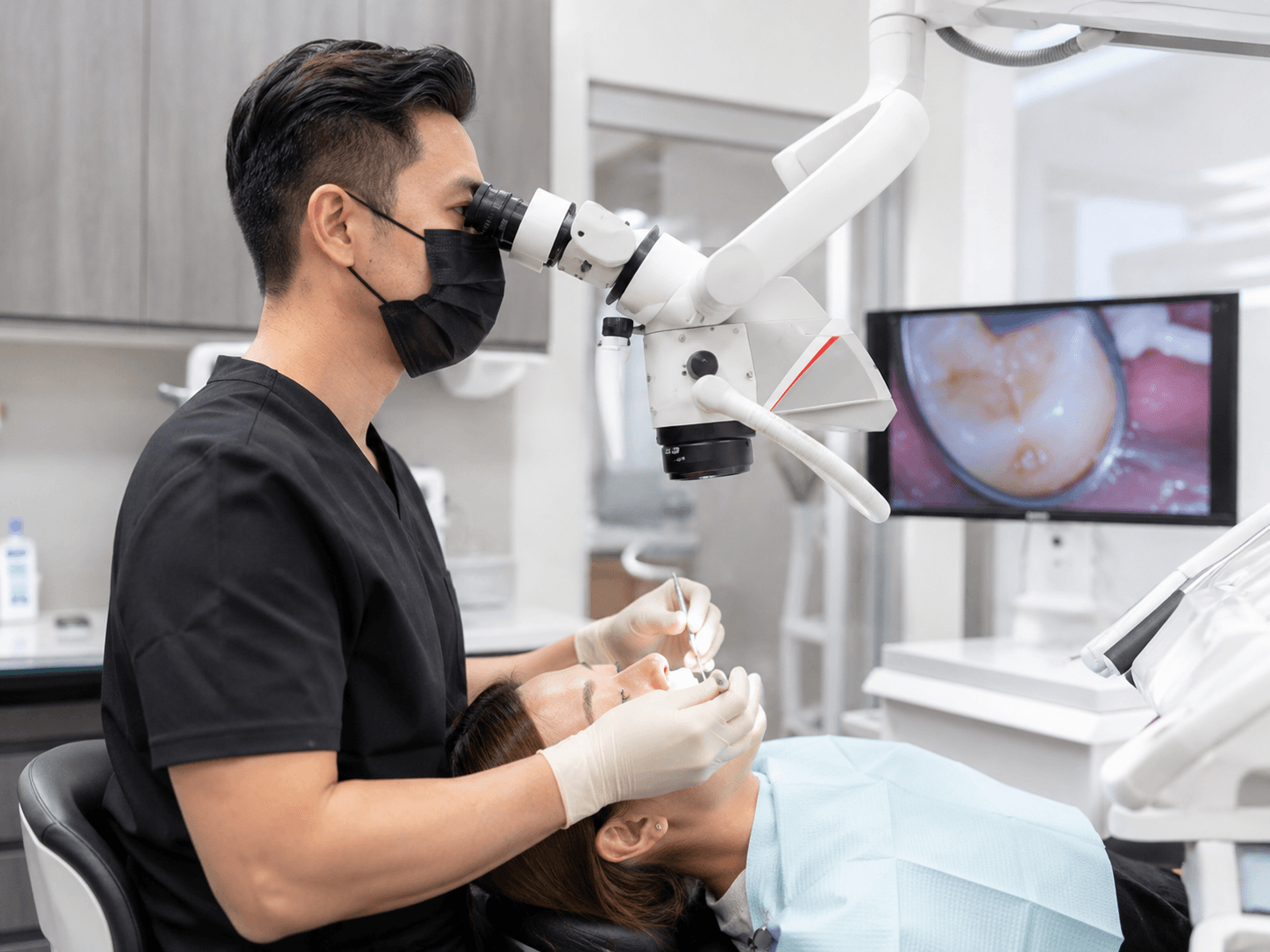
🔬 Leica M320 Microscope
Magnification at 10–25× reveals canal anatomy, cracks, and decay that are invisible to the naked eye — making accurate diagnosis the foundation of every decision.
📡 Anatomage 3D CBCT
Three-dimensional imaging shows the true extent of infection, bone levels, root morphology, and proximity to nerves — before treatment begins, not during.
🦷 Crown Lengthening
When a tooth has broken at the gumline, Dr. Nguyen can surgically expose more tooth structure — saving a tooth that most dentists would extract without this step.
🏭 Same-Day eMax Crown
If a tooth needs a crown after root canal, Dr. Nguyen can mill it in-house using MCXL + 3Shape CAD — same day, precise fit, no temporary crown.
🌿 Bone Grafting
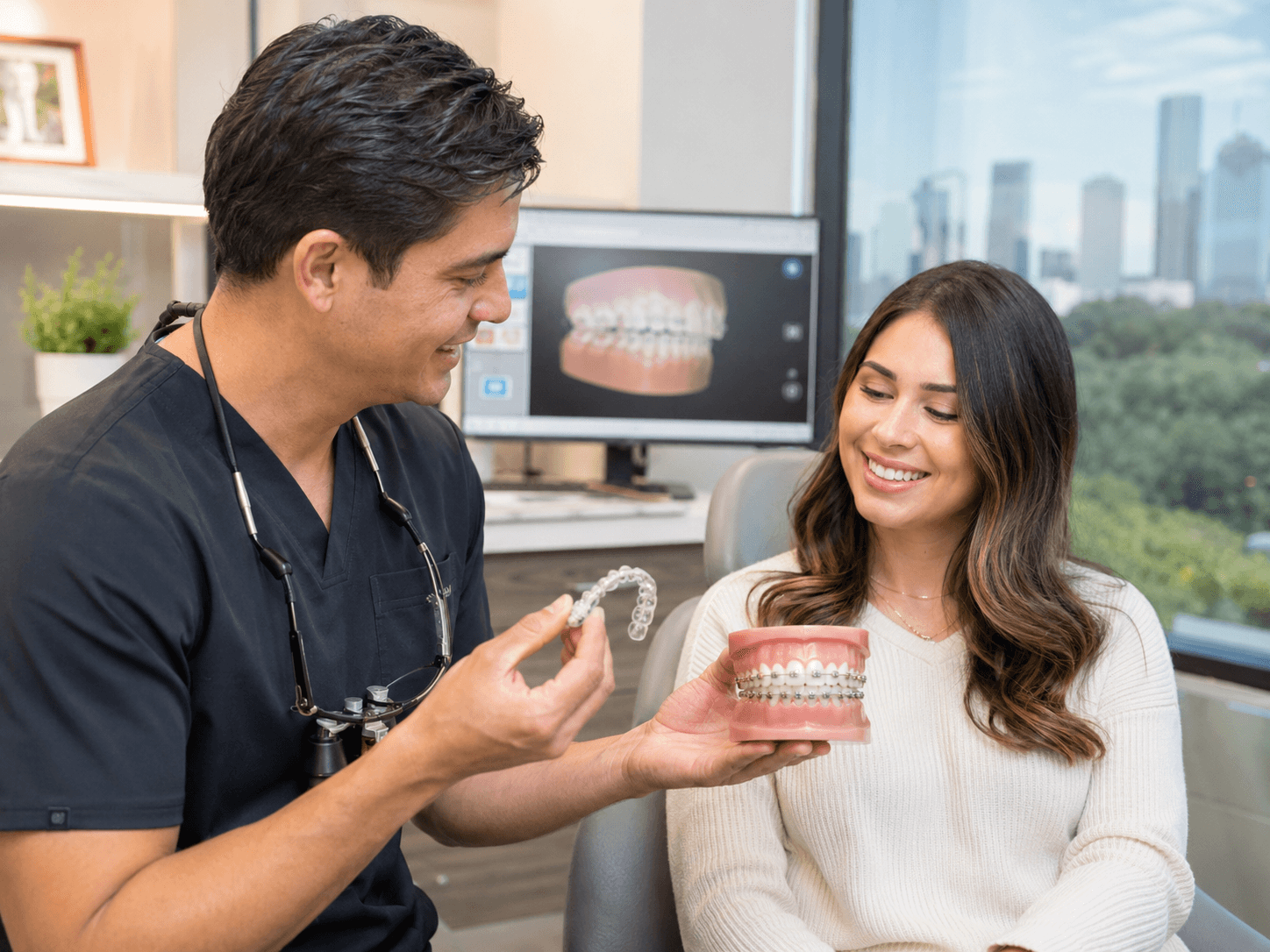
When extraction truly is the only option, immediate bone grafting preserves the ridge — making future implant placement simpler, cheaper, and more predictable.
🤝 Honest conversation
If a tooth truly cannot be saved, Dr. Nguyen will tell you clearly — with the evidence, the options, and the full long-term picture. Honesty is part of the treatment plan.
When Extraction Is the Right Answer
In the interest of full honesty: extraction is sometimes the correct choice. Not every tooth can or should be saved. Dr. Nguyen recommends extraction when:
- The tooth is fractured vertically below the gumline and cannot support a crown
- Bone loss from infection has destroyed more than 50% of the supporting bone
- The tooth has an untreatable root fracture confirmed by 3D imaging
- The infection is severe and has spread beyond what root canal can resolve
- The cost of saving the tooth is genuinely beyond what is financially possible — with a commitment to bone grafting at the time of extraction to protect the site
- The tooth is a wisdom tooth causing recurrent problems with no functional role
These are real clinical situations. But they describe a small fraction of the patients who come in requesting extraction for a painful tooth. In the majority of cases, the tooth is very saveable — and the patient just does not know it yet.
Every time a patient says "just pull it," I hear it as a request born from pain, frustration, and a genuine wish for it to be over. I understand that completely. My job is to look them in the eye and tell them: I hear you, this hurts, and I want this to stop too. And then I want to show them what pulling that tooth will actually cost — not today, but over the next ten years. That conversation changes everything.
— Dr. Minh Nguyen, D.D.S., P.A. · SoftDental, Houston TXWhat to Do When a Molar Hurts
If a back tooth is causing pain, do not delay — and do not make the decision alone. Here is what good dental care for a painful molar actually looks like.
Call your dentist — today
Pain in a molar is a sign the nerve or supporting bone is under stress. Early treatment almost always means simpler, cheaper options. Waiting turns a filling into a root canal. Waiting longer turns a root canal into an extraction.
Ask for a thorough diagnosis first
Before any treatment decision, the tooth deserves a proper evaluation — X-ray (or 3D CBCT if needed), vitality testing, examination of bone levels, and a frank conversation about what options exist and what each one costs in the long run.
Ask "Can this tooth be saved?"
Not "how much is a root canal?" — but specifically: "Is this tooth saveable, and what would that look like?" If your dentist recommends extraction without a clear explanation of why saving is not possible, it is reasonable and appropriate to ask for that explanation.
If extraction is necessary — graft immediately
If the tooth truly cannot be saved, insist on a bone graft at the same appointment as the extraction. This preserves the ridge for a future implant and dramatically reduces the amount of bone resorption. Do not skip this step to save money — it costs far more to rebuild bone later than to preserve it now.
Replace the tooth — do not leave a gap
If the tooth is extracted and not replaced, the cascade begins. An implant is the gold standard — it replaces the root, stimulates the bone, and functions like a natural tooth. A bridge or partial denture are alternatives for patients where an implant is not possible.
Prevention is still the best strategy
Twice-yearly professional cleanings, daily flossing, fluoride toothpaste, limiting acidic drinks, and addressing grinding with a night guard — these are the decisions that keep molars for life and make the "just pull it" conversation unnecessary.
Your molar is hurting.
Do not make a lifelong decision in a moment of pain.
Let Dr. Nguyen examine it properly — with 3D imaging, microscope evaluation, and an honest conversation about every option — before you decide.
This article is for patient education and general information purposes only. Individual dental situations vary significantly. All treatment decisions should be made in partnership with your dentist following a proper clinical examination and diagnosis. Statistics cited from peer-reviewed clinical literature and published clinical data through 2025. A successfully treated tooth with a crown can last a lifetime with proper care and maintenance. © 2026 SoftDental | Dr. Minh Nguyen DDS PA · 10028 West Road Ste. 108, Houston TX 77064 · 281-807-6111