
Oral Cancer Warning Signs and “Extra Tooth” Growths After Extraction
Many patients become scared when they feel something hard growing in the mouth or see tissue grow back after a tooth was extracted. That fear is understandable. The important message is this: do not assume it is cancer, but do not ignore it. A dentist needs to examine the area, take imaging if needed, and decide whether it is normal healing, a bone fragment, an extra tooth, infection, a cyst, benign tissue, or something that needs biopsy.
Oral Cancer Can Look Like a Common Dental Problem
Oral cancer can start on the lips, tongue, gums, cheeks, floor of the mouth, roof of the mouth, tonsil area, or throat. It may look like a sore, ulcer, white patch, red patch, swelling, lump, thickened area, or tooth-related problem. Cleveland Clinic explains that oral cancer can look like common mouth problems, but the difference is that suspicious changes do not go away.
That is why dentists take persistent mouth changes seriously. A sore or lump that does not heal, a patch that changes color, a growth that enlarges, or tissue that returns after removal should be checked.
Warning Signs Patients Should Not Ignore
Sore that does not heal
An ulcer or raw area that stays longer than two weeks needs evaluation.
Red or white patch
White, red, mixed red-white, or velvety patches can be warning signs.
Loose tooth without clear cause
Unexplained mobility, pain, or bone change should be checked.
Bleeding lump or growth
A tissue growth that bleeds easily or enlarges should not be ignored.
Numbness or tingling
Unexplained numbness of the lip, chin, tongue, or mouth can be serious.
Ear pain or swallowing pain
Oral/throat cancer can sometimes cause ear pain, voice change, or swallowing difficulty.
Hard lump in the mouth
Some hard lumps are benign bone, but new or changing hard areas need examination.
Growth that comes back
Recurring tissue or a lump that returns after extraction or removal may need imaging or biopsy.
“I Feel an Extra Tooth Growing After Extraction.” What Could It Be?
After extraction, patients sometimes feel something sharp, hard, or tooth-like under the gum. Sometimes it is harmless healing. Sometimes it needs removal. The only way to know is an exam and imaging.
| Possible cause | What it may feel/look like | What Dr. Nguyen may do |
|---|---|---|
| Bone spicule / bone fragment | Sharp white or hard piece poking through gum after extraction. | Examine, X-ray if needed, smooth/remove if painful or persistent. |
| Retained root tip or tooth fragment | Hard tooth-like piece, tenderness, delayed healing, infection risk. | X-ray/CBCT, monitor or remove depending on risk and symptoms. |
| Normal healing bone edge | Firm ridge or rough area that gradually smooths. | Monitor if not painful, infected, or suspicious. |
| Torus / exostosis | Hard bony lump on palate, jaw, or near teeth; usually slow-growing. | Confirm benign pattern; remove only if it causes problems or affects denture fit. |
| Supernumerary tooth | True extra tooth; may erupt or stay impacted in bone. | X-ray/CBCT to locate it; remove if it causes crowding, infection, cyst, or other issues. |
| Gum overgrowth or healing tissue | Soft tissue bump, red tissue, “meat” growing over the socket. | Check for irritation, infection, granuloma, poor healing, or need for biopsy. |
| Cyst, infection, or tumor | Lump, swelling, drainage, pain, numbness, bone expansion, or recurring growth. | Imaging, referral, biopsy, pathology, or surgical treatment if needed. |
Bone Fragments After Extraction: Common but Still Worth Checking
After an extraction, small pieces of bone may work their way through the gum as the socket heals. These are often called bone spicules, bone sequestra, or bone fragments. They can feel like a sharp tooth edge. Some resolve on their own; others irritate the cheek or tongue and need removal or smoothing.
Patients should not try to dig out bone fragments at home. Picking at the site can cause infection, bleeding, delayed healing, or tissue damage.
What About a True Extra Tooth?
Some patients really do have an extra tooth. The condition is called hyperdontia, and the extra teeth are called supernumerary teeth. Cleveland Clinic explains that adults normally have 32 permanent teeth, and people with more than 32 teeth have hyperdontia. Extra teeth may erupt into the mouth or remain impacted in the jawbone.
A supernumerary tooth may cause crowding, delayed eruption, infection, cyst formation, food trapping, bite problems, or cosmetic concerns. Treatment depends on location, symptoms, risk to nearby teeth, and whether removal is safer than monitoring.
Visual Guide: Hard Growths vs. Soft-Tissue Warning Signs
The mouth can form many kinds of bumps. The problem is not simply “hard vs. soft.” The warning signs are persistence, growth, bleeding, color change, pain, numbness, and recurrence.
Why a Growth That Comes Back Matters
If tissue or a lump keeps returning after extraction or removal, Dr. Nguyen may need to investigate the cause. Recurrent growth can happen from irritation, infection, bone fragments, cysts, poor healing, dentures rubbing, a retained root, or a benign growth. But cancer and precancerous changes must also be considered when the pattern is suspicious.
Memorial Sloan Kettering explains that biopsy is the first step in diagnosing mouth cancer. A biopsy means removing a small sample of tissue and sending it to a pathology lab to identify what it is.
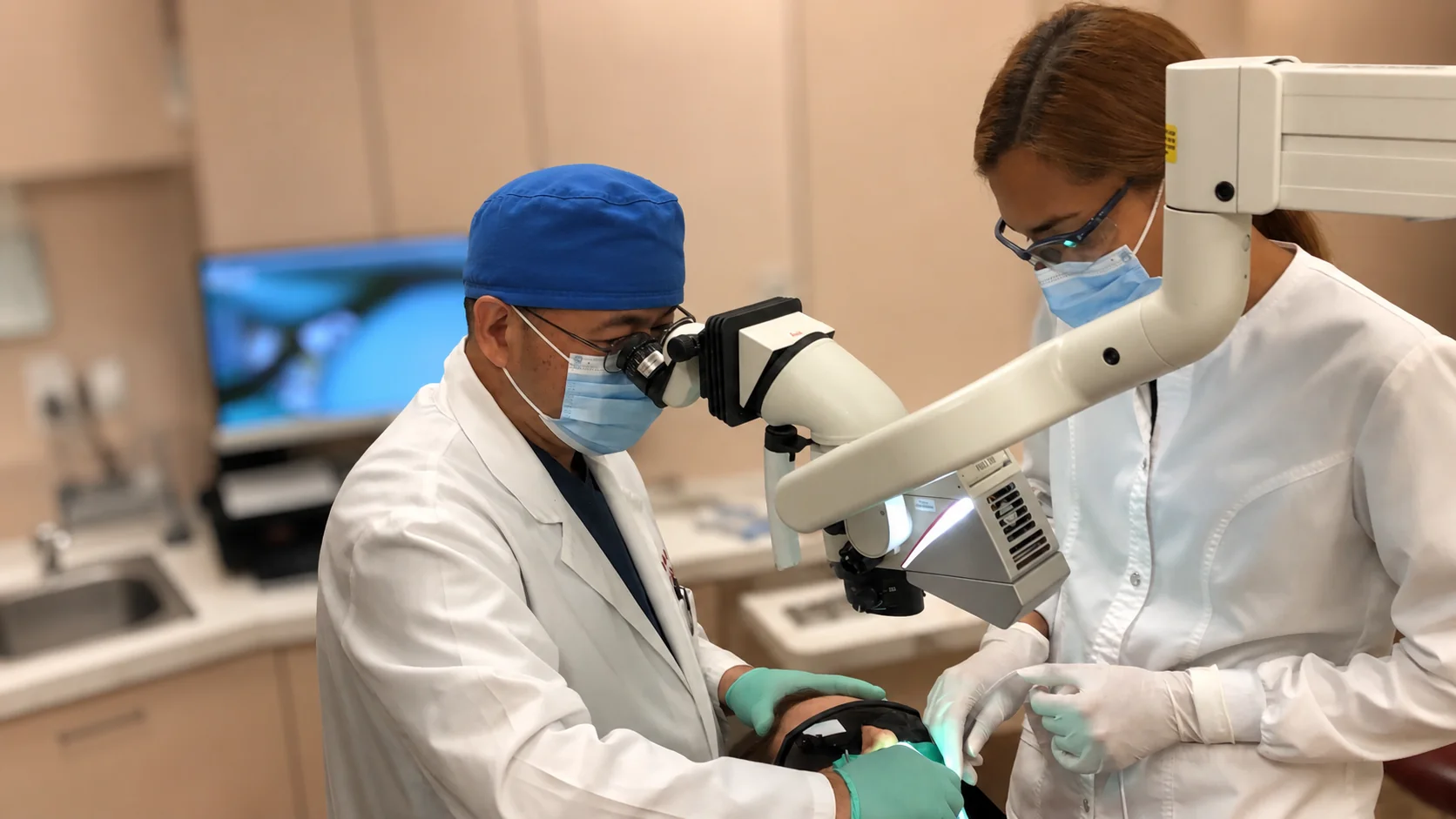
What Dr. Nguyen May Do During the Exam
Ask about timing
When did the growth appear? Did it start after extraction? Is it getting larger? Did it return after removal?
Check pain, bleeding, color, and texture
Red, white, dark, ulcerated, bleeding, firm, or rapidly changing areas need closer evaluation.
Take X-rays or cone beam CT if needed
Imaging helps identify bone fragments, retained roots, cysts, extra teeth, jawbone changes, and surgical anatomy.
Remove irritants when appropriate
Sharp bone, broken teeth, rough dentures, or traumatic bite forces may need correction.
Refer or biopsy when suspicious
If the lesion is suspicious, does not heal, grows, or returns, referral to an oral surgeon/oral pathologist or biopsy may be needed.
Oral Cancer Risk Factors
Oral cancer can happen to people without obvious risk factors, but some factors increase risk. The American Cancer Society and NCI identify major risks such as tobacco and alcohol use. HPV infection is also important for cancers in the throat/tonsil/base-of-tongue region.
Tobacco
Cigarettes, cigars, pipes, chewing tobacco, and other tobacco products increase oral cancer risk.
Alcohol
Heavy alcohol use increases risk, especially when combined with tobacco.
HPV
HPV is associated with some throat/oropharyngeal cancers.
Sun exposure
Long-term sun exposure can increase lip cancer risk.
Age and history
Risk tends to rise with age, but younger patients can still develop oral/oropharyngeal cancer.
Persistent irritation
Chronic trauma should be corrected, even though not every irritated area becomes cancer.
What Patients Should Never Do at Home
| Do not do this | Why it is risky |
|---|---|
| Do not cut a growth yourself | Can cause bleeding, infection, scarring, and delay diagnosis. |
| Do not pull out a bone/tooth-like piece | It may be attached to bone, root, or tissue and may need imaging first. |
| Do not burn it with chemicals | Can damage tissue and hide the true appearance of a serious lesion. |
| Do not keep applying numbing gel for weeks | Pain relief can mask a worsening problem. |
| Do not assume “no pain” means safe | Some oral cancers and cysts are painless early. |
When to Call SoftDental
How to Check Your Mouth at Home
A home self-check does not replace a dental exam, but it can help patients notice changes earlier.
Use good light and a mirror
Look at lips, cheeks, gums, tongue, under the tongue, roof of mouth, and throat area.
Look for color changes
White patches, red patches, dark spots, mixed red-white areas, or ulcers should be monitored.
Feel for lumps
Use clean hands to gently feel the cheeks, lips, tongue, floor of mouth, and neck.
Track the date
If it does not heal within two weeks or is getting worse, schedule an exam.
Do not self-diagnose
Photos online cannot tell you what your lesion is. A dental exam and sometimes pathology are needed.
A mouth growth that comes back should not be ignored. It may be simple healing bone, but it may also be infection, a cyst, a retained fragment, or a lesion that needs biopsy. The safest answer is not fear — it is diagnosis.
— Dr. Minh Nguyen, D.D.S., P.A. · SoftDental HoustonSources and Further Reading
ADA MouthHealthy: Oral Cancer — explains dentists are often the first health professionals to notice signs of oral cancer and lists warning signs patients should discuss with a dentist.
National Institute of Dental and Craniofacial Research: Oral Cancer — describes oral cancer risk factors, signs and symptoms, and the importance of early detection.
Cleveland Clinic: Oral Cancer — explains oral cancer can look like common mouth problems such as sores or white patches, but suspicious changes do not go away.
Mayo Clinic: Mouth Cancer — lists warning signs including a non-healing sore, white or red patches, loose teeth, growth or lump, mouth pain, ear pain, and difficulty chewing or swallowing.
National Cancer Institute: Lip and Oral Cavity Cancer Treatment — states signs include a sore or lump on the lips or in the mouth and that tests examine the mouth and throat for diagnosis/staging.
AAOMS Oral Lesion Position Paper — emphasizes the dental team's role in early detection and that a thorough oral, head, and neck exam is important for malignant and premalignant lesions.
Cleveland Clinic: Hyperdontia — explains that extra teeth are called supernumerary teeth and may erupt into the mouth or remain impacted in the jawbone.
New growth, “extra tooth,” or sore that will not heal?
Do not wait and do not remove it yourself.
SoftDental can examine the area, take imaging if needed, and help determine whether it is healing bone, an extra tooth, infection, cyst, benign growth, or a lesion that needs referral or biopsy.
Oral Cancer Screening · Cone Beam CT · Tooth Extraction Follow-Up · Oral Lesion Evaluation · Biopsy Referral
This article is for patient education only and is not a diagnosis. Not every mouth growth is cancer, but persistent, changing, bleeding, painful, hard, numb, ulcerated, or recurring lesions should be examined. Diagnosis may require dental exam, X-rays, cone beam CT, referral, biopsy, and pathology. © 2026 SoftDental | Dr. Minh Nguyen DDS PA · 10028 West Road Ste. 108, Houston TX 77064 · 281-807-6111
Questions about your own teeth?
Our team is happy to answer them in person, without pressure. Call us or book a visit.
Educational information only. Not a substitute for a personal exam with a licensed dentist.