
Dental Misconception: Insurance Decides What Treatment I Need
One of the most common dental insurance misunderstandings is: “If my insurance does not cover it, I must not need it.” That is not true. Dental insurance is a benefit contract. It helps pay for certain services under specific rules. It is not a dental diagnosis.
The Difference Between Diagnosis and Benefits
A dental diagnosis comes from a dentist evaluating your mouth. Dr. Nguyen looks at the tooth, gums, X-rays, bone level, cavities, infection, bite, cracks, pain, medical history, and long-term risk. A treatment plan is based on what is clinically needed to protect your teeth and health.
Dental insurance is different. The American Dental Association explains that dental plans include benefit limitations such as annual maximums, exclusions, frequency limits, waiting periods, and managed-care cost controls. The ADA also states that a dental plan administers a “benefit” to the patient and is not intended to cover all charges.
Why Insurance Denials Confuse Patients
When insurance denies a crown, deep cleaning, nightguard, CBCT, implant, bone graft, or periodontal maintenance, patients often feel like the office did something wrong or the treatment is unnecessary. In reality, denial can happen because of plan rules — not because the diagnosis is wrong.
Exclusions
The plan may simply not cover implants, nightguards, bone grafts, cosmetic services, or certain materials.
Frequency limits
The plan may only cover X-rays, cleanings, crowns, or exams after a certain time interval.
Annual maximum
Once the yearly benefit is used, the plan may stop paying until the next benefit year.
Waiting periods
Some plans do not cover major services until the patient has been enrolled long enough.
Downgrades
The plan may pay toward a cheaper alternate benefit, even if the dentist recommends a stronger option.
Documentation rules
The plan may request narratives, X-rays, charting, or photos before considering payment.
A Denial Is Not a Diagnosis
Insurance companies review claims according to contract rules. They are not sitting in the chair examining your tooth the way Dr. Nguyen does. They may not know how the tooth feels when biting, how deep the crack is clinically, how much pain you have, whether the filling is failing, or whether delaying treatment could lead to root canal or extraction.
| Insurance response | What patients may think | What it often really means |
|---|---|---|
| Denied | “I do not need it.” | The plan does not pay for it under its rules or needs more documentation. |
| Downgraded | “The cheaper treatment is better.” | The plan is paying toward a lower-cost alternate benefit. |
| Not covered | “The office is overcharging.” | The service may be excluded from your plan even if clinically appropriate. |
| Applied to deductible | “Insurance paid nothing.” | The claim may count toward your deductible before the plan starts paying. |
| Annual maximum met | “Insurance refused treatment.” | The plan has already paid up to the yearly limit. |
| Waiting period | “The treatment is optional.” | The plan may not cover that category until a required enrollment period passes. |
Common Example: Crown vs. Filling
A patient may have a tooth with a large old filling, cracks, weak cusps, or heavy bite pressure. Dr. Nguyen may recommend a crown because a regular filling may not protect the remaining tooth structure. Insurance may say it will only pay toward a filling or may request more documentation.
That does not automatically mean a filling is the best treatment. It may mean the plan has strict criteria before paying for a crown. If the patient chooses only what insurance pays, the tooth may crack later and require root canal, crown lengthening, extraction, implant, bridge, or denture.
Common Example: Deep Cleaning
Scaling and root planing is recommended when gum disease is present below the gumline. If insurance does not cover it, covers only part of it, or applies limitations, that does not mean the patient only needs a regular cleaning. A regular cleaning cannot remove tartar and bacteria from deep periodontal pockets.
If periodontal disease is ignored because of insurance limitations, patients may continue losing bone support around the teeth. Eventually, teeth can become loose or need extraction.
Common Example: Implant, Bone Graft, or CBCT
Many dental plans limit or exclude implants, bone grafts, sinus lifts, and cone beam CT scans. That does not mean the services are unnecessary. It means the plan may not be designed to pay for advanced implant planning or reconstruction.
Implant treatment depends on bone, gum health, infection control, sinus and nerve anatomy, bite forces, and future crown design. Dr. Nguyen may use CBCT to evaluate the jaw in 3D because safety and planning matter more than whether a plan considers the scan payable.
Visual Guide: Dentist vs. Insurance
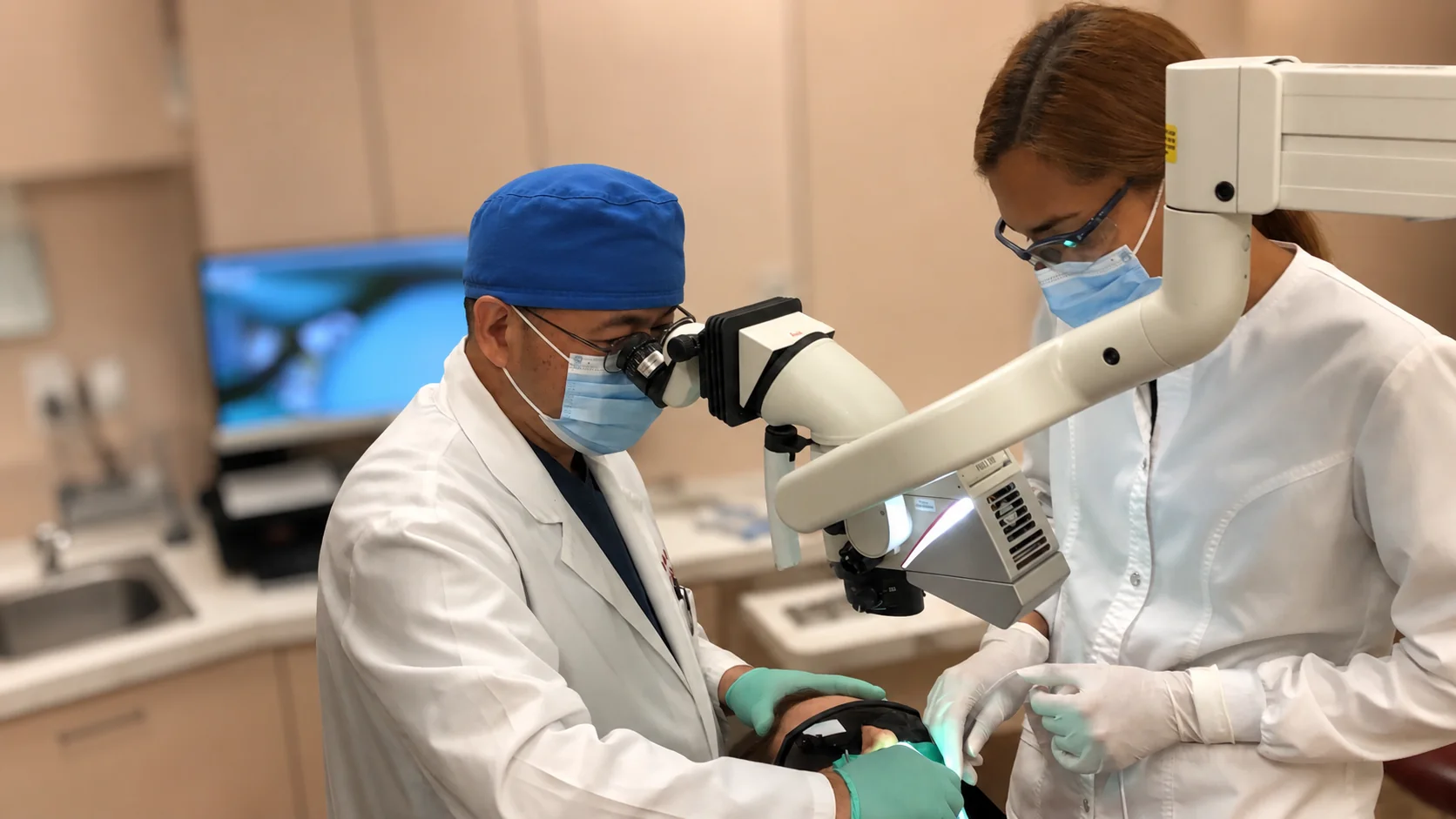
Insurance can help with payment, but it does not replace diagnosis by a dentist.
PPO, HMO, Fee Schedule, Marketplace Plans: Why They Are Not the Same
Different plans have different rules. The National Association of Insurance Commissioners explains common dental coverage types, including dental PPO, dental HMO, indemnity insurance, and discount/savings plans. The ADA describes PPO plans as indemnity plans combined with a network of dentists contracted with an insurance company to deliver specified services for set fees and contract provisions.
| Plan type | How it usually works | Patient misunderstanding |
|---|---|---|
| PPO | Usually gives access to a network and may allow out-of-network care, with deductibles, coinsurance, annual maximums, and plan rules. | “PPO means everything is covered.” It does not. |
| HMO / DHMO | Usually requires using contracted providers and may have fixed copays and stricter network/referral rules. | “Low premium means better coverage.” Not always; provider choice and services may be limited. |
| Fee schedule plan | Plan pays or allows up to a set fee schedule for covered services. | “The fee schedule is the same as what treatment costs.” It may not be. |
| Marketplace / Affordable Care Act plan | Adult dental coverage may be separate, limited, or variable depending on plan and state rules. | “Health insurance automatically includes strong dental coverage.” Often it does not. |
| Discount dental plan | Not insurance; usually gives access to discounted fees with participating providers. | “Discount plan pays claims.” It usually does not pay claims like insurance. |
Why Patients Still Have Copays
Many traditional PPO dental plans are built around preventive/basic/major categories. A common structure is preventive services covered at a higher percentage, basic services at a lower percentage, and major services around 50% — but every plan is different. Plans may also include deductibles, waiting periods, exclusions, frequency limits, and annual maximums.
Delta Dental explains that an annual maximum is the maximum dollar amount a dental plan will pay toward services during a benefit year. Once that maximum is reached, the patient is responsible for additional costs until the plan resets.
Why SoftDental Only Accepts PPO Plans
At SoftDental, our office accepts PPO dental insurance plans. We do not accept HMO, DHMO, DMO, or Medicaid/Demo-style plans. PPO plans usually allow patients more flexibility in choosing providers, but they still have benefit limitations. Being “in network” or “having benefits” does not mean every treatment is free.
Insurance Estimates Are Not Guarantees
Dental offices often verify benefits before treatment, but benefit verification is not a guarantee of payment. Insurance companies may process claims differently after reviewing documentation, eligibility, history, frequency limits, downgrades, missing tooth clauses, waiting periods, or coordination of benefits.
| Before treatment | After claim processing |
|---|---|
| Office verifies benefits based on available information. | Insurance reviews the actual claim and documentation. |
| Estimate is created using plan information given by insurance. | Final payment may differ from estimate. |
| Patient receives expected copay estimate. | Patient may owe more or receive credit depending on final insurance payment. |
| Pre-authorization may be requested if needed. | Pre-authorization is still not always a final guarantee of payment. |
How to Make Smart Treatment Decisions With Insurance
Ask what is clinically urgent
Infection, pain, abscess, deep decay, broken teeth, gum disease, and loose teeth usually need priority.
Ask what can be phased
If cost is a concern, some treatment can be staged. Dr. Nguyen can help separate urgent care from long-term planning.
Use preventive benefits
Even if major work is difficult financially, exams, cleanings, X-rays, and periodontal maintenance help prevent bigger problems.
Understand downgrades and exclusions
Ask whether your plan is denying treatment, downgrading to an alternate benefit, or applying a maximum/limitation.
Do not delay infection because of coverage
Untreated infection can become more painful, more expensive, and more dangerous over time.
Ask for documentation
For certain services, X-rays, photos, periodontal charting, or narratives may help support the claim or appeal.
What If You Cannot Afford Everything at Once?
Tell us honestly. Avoid disappearing because you are embarrassed about cost. Many patients cannot complete all recommended treatment immediately. The safer approach is to prioritize.
First priority
Infection, swelling, severe pain, abscess, non-restorable teeth, and active gum disease.
Second priority
Deep cavities, cracked teeth, failing crowns, root canal needs, and periodontal treatment.
Third priority
Staged crowns, implants, bridges, partial dentures, and bite stabilization.
Always protect
Cleanings, exams, X-rays, home care, and preventive visits to avoid bigger bills.
SoftDental’s Honest Message
We understand dental care can be expensive, and insurance can be confusing. Our job is to help patients understand both sides: what the mouth needs clinically and what the insurance plan may help pay. But we cannot ethically say a tooth does not need treatment just because a plan refuses payment.
Insurance is a financial benefit. It is not a dentist. It does not diagnose your infection, crack, cavity, gum disease, bone loss, or pain. The safest treatment decision starts with the mouth, not the insurance chart.
— Dr. Minh Nguyen, D.D.S., P.A. · SoftDental HoustonSources and Further Reading
American Dental Association: Dental Insurance — explains that a dental plan administers a benefit and is not intended to cover all charges.
ADA MouthHealthy: Types of Dental Plans — explains PPO plans and other plan structures, including network contracts and plan provisions.
Delta Dental: Dental Insurance Explained — explains that the annual maximum is the maximum dollar amount a dental plan will pay toward services during a benefit year.
KFF Health News: Even With Dental Insurance, You Still Could Face a Large Bill — reports that dental coverage may still leave patients with significant out-of-pocket costs and that cost remains a barrier for some insured adults.
Confused by your dental insurance?
Start with diagnosis, then understand benefits.
SoftDental can evaluate your mouth, explain what treatment is clinically needed, estimate PPO benefits when available, and help you prioritize care based on urgency, health, and budget.
PPO Insurance Estimates · Dental Treatment Planning · Claim Documentation · Preventive Care · Financial Education
This article is for patient education only and is not legal, insurance, or financial advice. Dental insurance benefits vary by employer, plan, contract, state, eligibility, claim history, deductibles, exclusions, annual maximums, waiting periods, and frequency limits. Estimated benefits are not guarantees of payment. © 2026 SoftDental | Dr. Minh Nguyen DDS PA · 10028 West Road Ste. 108, Houston TX 77064 · 281-807-6111
Questions about your own teeth?
Our team is happy to answer them in person, without pressure. Call us or book a visit.
Educational information only. Not a substitute for a personal exam with a licensed dentist.