
Why Cracked Teeth Should Not Be Ignored
A cracked tooth is not always dramatic. It may not look broken. It may not hurt all day. It may only hurt when you bite a certain way or drink something cold. That is exactly why cracked teeth are easy to ignore — and why they can become expensive and difficult to save later.
What Is a Cracked Tooth?
A cracked tooth means part of the tooth structure has fractured. Cleveland Clinic explains that cracked teeth may be tiny or severe enough to split the tooth, and cracks can happen from grinding, injury, aging, or chewing forces. The American Association of Endodontists explains that cracked teeth have different types and that early treatment helps patients avoid extraction.
Some cracks are superficial enamel lines. Others run deeper into dentin, pulp, gumline, or root. The deeper the crack, the more serious the treatment becomes.
Why Cracked Teeth Are Often Missed
Cracked tooth pain can be unpredictable. A patient may chew on one side for months and say, “It only hurts sometimes.” The crack may be too small to see easily. Sometimes even X-rays do not clearly show the crack because the fracture line is thin or runs in a direction that is hard to capture.
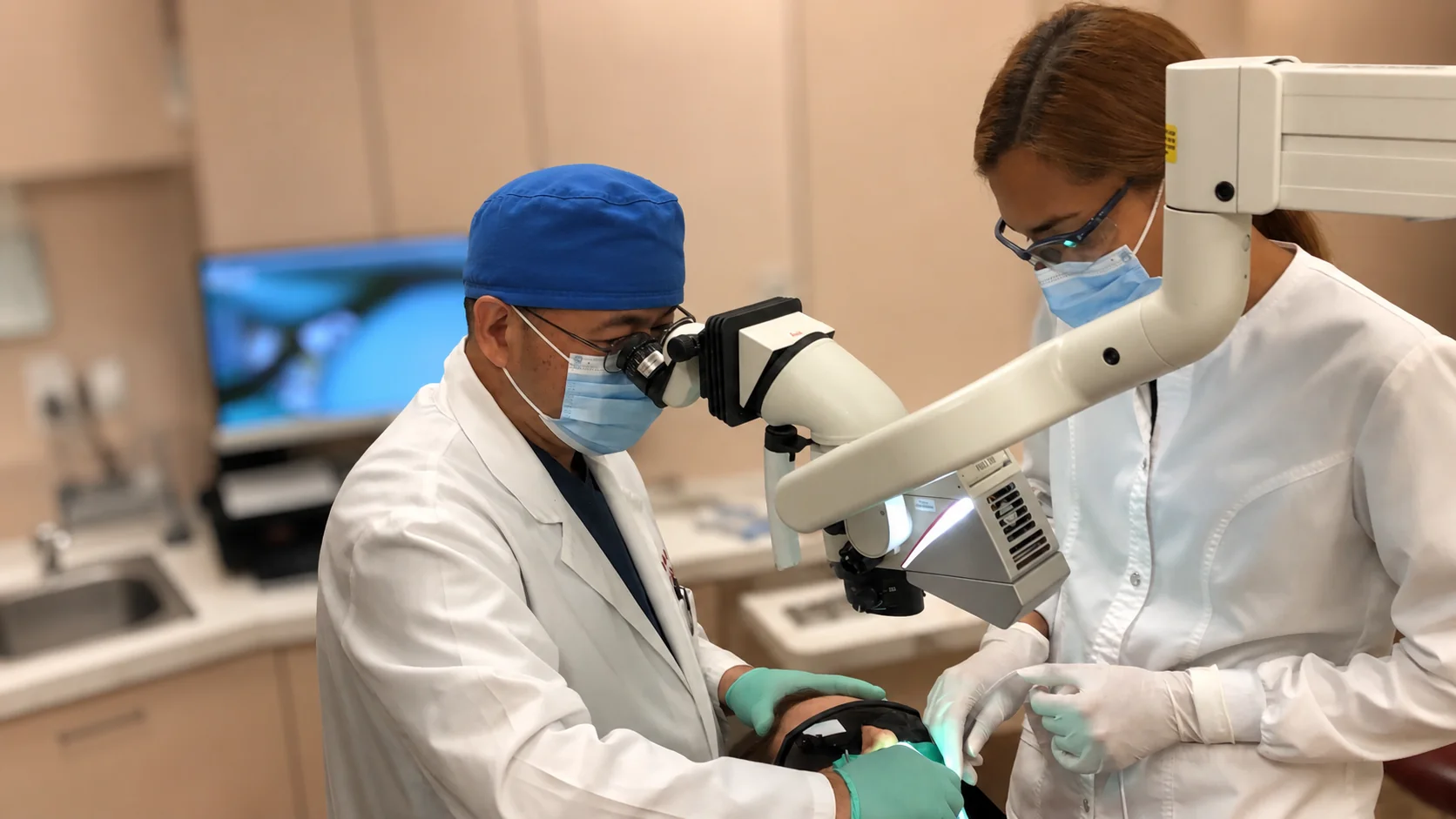
Frontiers in Oral Health describes cracked tooth syndrome as a diagnostic challenge because symptoms can be ambiguous, which can delay proper treatment. That is why Dr. Nguyen may use bite testing, magnification, light, X-rays, cone beam CT in selected cases, and clinical judgment to locate the problem.
Pain comes and goes
The tooth may hurt only when biting in one direction or releasing pressure.
Crack may be tiny
Some cracks are hard to see without magnification or special testing.
X-rays may look normal
A crack can be present even if the X-ray does not clearly show it.
Sensitivity may be temporary
Cold sensitivity can improve and then return, causing patients to delay care.
No visible hole
A cracked tooth may not look like a cavity or broken tooth to the patient.
Waiting can spread the crack
Chewing forces can deepen or lengthen the fracture over time.
Common Symptoms of a Cracked Tooth
Cleveland Clinic lists cracked tooth symptoms such as sharp pain when biting, pain and swelling, and sensitivity to temperature. AAE patient education also describes pain with chewing or temperature changes and explains that treatment depends on the type and location of the crack.
| Symptom | What it may mean | Why you should not ignore it |
|---|---|---|
| Sharp pain when biting | The crack may flex under pressure. | Repeated chewing can spread the crack. |
| Pain when releasing the bite | The cracked pieces may move apart and irritate the nerve. | This is a classic cracked-tooth pattern. |
| Cold sensitivity | The crack may expose dentin or irritate the pulp. | Lingering sensitivity may mean nerve inflammation. |
| Heat sensitivity | The tooth nerve may be inflamed or infected. | May require root canal evaluation. |
| Swelling or gum pimple | Possible infection or abscess. | Needs prompt care; infection can spread. |
| Food trapping | A crack, broken cusp, open contact, or failing restoration may catch food. | Food and bacteria can worsen decay/inflammation. |
| No pain, visible crack | The crack may be shallow — or the nerve may not be responding. | Needs evaluation before it worsens. |
Types of Cracks: Some Are Minor, Some Are Serious
Not every line on a tooth is an emergency. But patients should not self-diagnose. Cleveland Clinic classifies cracked teeth into categories such as craze lines, fractured cusp, cracked tooth, split tooth, and vertical root fracture. Treatment depends on depth and direction.
| Type | What it means | Typical concern |
|---|---|---|
| Craze lines | Very thin enamel cracks. | Often cosmetic and painless, but should be monitored. |
| Fractured cusp | A chewing corner of the tooth is cracked or broken. | Often needs filling, onlay, or crown depending on size. |
| Cracked tooth | A crack runs from the chewing surface toward the root. | May need crown, root canal, or extraction if deep. |
| Split tooth | The tooth is separated into segments. | Often poor prognosis; extraction may be needed. |
| Vertical root fracture | A crack starts in the root and moves upward. | Often difficult to save and may show infection later. |
Visual Guide: How a Crack Can Spread
This diagram is simplified. Real cracks can travel in different directions and may be hard to see without clinical testing.
Why “No Pain” Does Not Mean the Tooth Is Safe
Some cracked teeth do not hurt at first. A shallow crack may not reach the nerve. In other cases, the tooth nerve may already be damaged and not sending normal pain signals. Cleveland Clinic notes that some cracked teeth may be small and may not affect the tooth immediately, while badly cracked teeth may become dental emergencies.
What Can Happen If a Cracked Tooth Is Ignored?
| What starts small | What can happen later |
|---|---|
| Small crack in enamel/dentin | Crack gets deeper with chewing forces. |
| Occasional bite pain | Tooth becomes painful to chew on every day. |
| Cold sensitivity | Nerve becomes inflamed and may need root canal. |
| Bacteria enter the crack | Infection, abscess, gum pimple, swelling, or bone infection can develop. |
| Cusp fracture | Large piece of tooth breaks off; crown/onlay may be needed. |
| Crack reaches root | Tooth may no longer be restorable and may need extraction. |
How Dr. Nguyen Diagnoses a Cracked Tooth
Cracks can be difficult to diagnose, so SoftDental uses a careful step-by-step approach. Depending on the case, Dr. Nguyen may use visual exam, bite testing, cold testing, X-rays, magnification, microscope evaluation, and cone beam CT when needed.
Listen to the symptom pattern
Does it hurt biting down, releasing, chewing on one side, drinking cold, or eating sweets?
Check old fillings and weak cusps
Large fillings, root canal teeth, and worn teeth are more vulnerable to cracks.
Use bite testing
Specific biting tests can help isolate the cracked cusp or tooth.
Use X-rays and clinical tests
X-rays help detect decay, bone changes, infection, and other causes of pain, even if the crack itself is not visible.
Use magnification or microscope
Magnification and lighting help Dr. Nguyen inspect fine lines, cracks, margins, and fractures more carefully.
Discuss prognosis honestly
Some cracked teeth can be saved. Some deep vertical cracks have a poor prognosis and may need extraction.
Treatment Options for Cracked Teeth
Treatment depends on where the crack is, how deep it goes, whether the nerve is involved, how much tooth remains, and whether the crack extends below the gumline.
| Condition | Possible treatment | Goal |
|---|---|---|
| Minor craze line | Monitor, polish, bonding, or cosmetic care if needed. | Confirm it is superficial and not structural. |
| Small chip or shallow crack | Bonding or filling. | Seal and smooth the area. |
| Fractured cusp | Onlay or crown, sometimes filling if minor. | Protect weakened chewing surfaces. |
| Cracked tooth without nerve infection | Crown/onlay protection and bite adjustment. | Hold the tooth together and reduce crack movement. |
| Crack reaching the pulp | Root canal treatment plus crown. | Remove infected/inflamed nerve tissue and protect the tooth. |
| Split tooth or deep root crack | Extraction may be necessary. | Remove non-restorable tooth and plan replacement. |
Why a Crown Is Often Recommended
A crown or onlay can cover and protect the tooth so the cracked pieces flex less during chewing. It does not “erase” the crack, but it can reduce stress and help prevent the tooth from breaking apart if the crack is not too deep.
Why Root Canal May Be Needed
If the crack reaches the pulp — the nerve and blood supply inside the tooth — bacteria and inflammation can cause severe pain or infection. A root canal may be needed to remove infected or inflamed pulp tissue. After root canal, the tooth often needs a crown to protect the weakened structure.
AAE explains that cracked teeth are treated based on crack type and symptoms, and that endodontists help patients avoid extraction when possible.
When Extraction May Be the Safest Option
Dr. Nguyen always wants to save teeth when reasonably possible. But if a crack runs too far below the gumline, splits the tooth, or extends down the root, the tooth may not be restorable. In that case, extraction and replacement planning may be safer than repeated treatment on a hopeless tooth.
Who Is at Higher Risk for Cracked Teeth?
Grinding and clenching
Nighttime bruxism puts heavy repeated stress on teeth.
Chewing ice or hard foods
Ice, bones, hard candy, and popcorn kernels can crack teeth.
Large old fillings
Teeth with large fillings have less natural structure left to resist fracture.
Uneven bite
A high spot or bite imbalance can overload one cusp repeatedly.
Aging teeth
Teeth endure years of chewing forces, fillings, and micro-stress.
Using teeth as tools
Opening packages, biting nails, or chewing pens can start cracks.
How Patients Can Protect Teeth From Cracking
| Protective habit | Why it matters |
|---|---|
| Wear a nightguard if recommended | Reduces damage from grinding and clenching. |
| Do not chew ice, bones, hard candy, or popcorn kernels | Hard objects can fracture cusps and crowns. |
| Do not use teeth as tools | Opening packages or biting tags can crack enamel and fillings. |
| Replace failing large fillings when needed | Weak teeth may need onlays or crowns before they split. |
| Fix high bite spots | Uneven forces can overload one tooth. |
| Keep routine dental visits | Small cracks, worn teeth, and failing restorations are easier to manage early. |
When to Call SoftDental
The Bottom Line
A cracked tooth is not something to “watch forever” at home. Some cracks are minor, but others can spread into the nerve or root. The earlier Dr. Nguyen evaluates the tooth, the more options patients usually have to save it.
Ignoring a cracked tooth does not make it stronger. It gives the crack more time and more chewing pressure to spread.
A cracked tooth can be quiet until it is not. If you feel bite pain, cold sensitivity, or see a crack, do not wait for the tooth to split. Early diagnosis is how we protect the tooth before the only option becomes extraction.
— Dr. Minh Nguyen, D.D.S., P.A. · SoftDental HoustonSources and Further Reading
American Association of Endodontists: Cracked Teeth — explains cracked tooth symptoms, types, treatment, and how endodontic care can help patients avoid extraction.
Cleveland Clinic: Cracked Tooth — explains types of cracked teeth, common symptoms such as bite pain and temperature sensitivity, causes including grinding/injury/aging, and the risk of abscess if untreated.
Bite pain, cold sensitivity, or a visible crack?
Do not wait for the tooth to split.
SoftDental can evaluate the tooth, check the bite, take X-rays, use magnification, and explain whether the tooth needs bonding, filling, onlay, crown, root canal, extraction, or monitoring.
Cracked Tooth Evaluation · Dental Crowns · Onlays · Root Canal Diagnosis · Microscope-Assisted Dentistry · Nightguards
This article is for patient education only and is not a diagnosis or guarantee of treatment outcome. Cracked tooth prognosis depends on crack depth, crack direction, nerve involvement, gumline/root extension, bite force, tooth structure, decay, restorations, hygiene, grinding, and timing of treatment. © 2026 SoftDental | Dr. Minh Nguyen DDS PA · 10028 West Road Ste. 108, Houston TX 77064 · 281-807-6111
Questions about your own teeth?
Our team is happy to answer them in person, without pressure. Call us or book a visit.
Educational information only. Not a substitute for a personal exam with a licensed dentist.