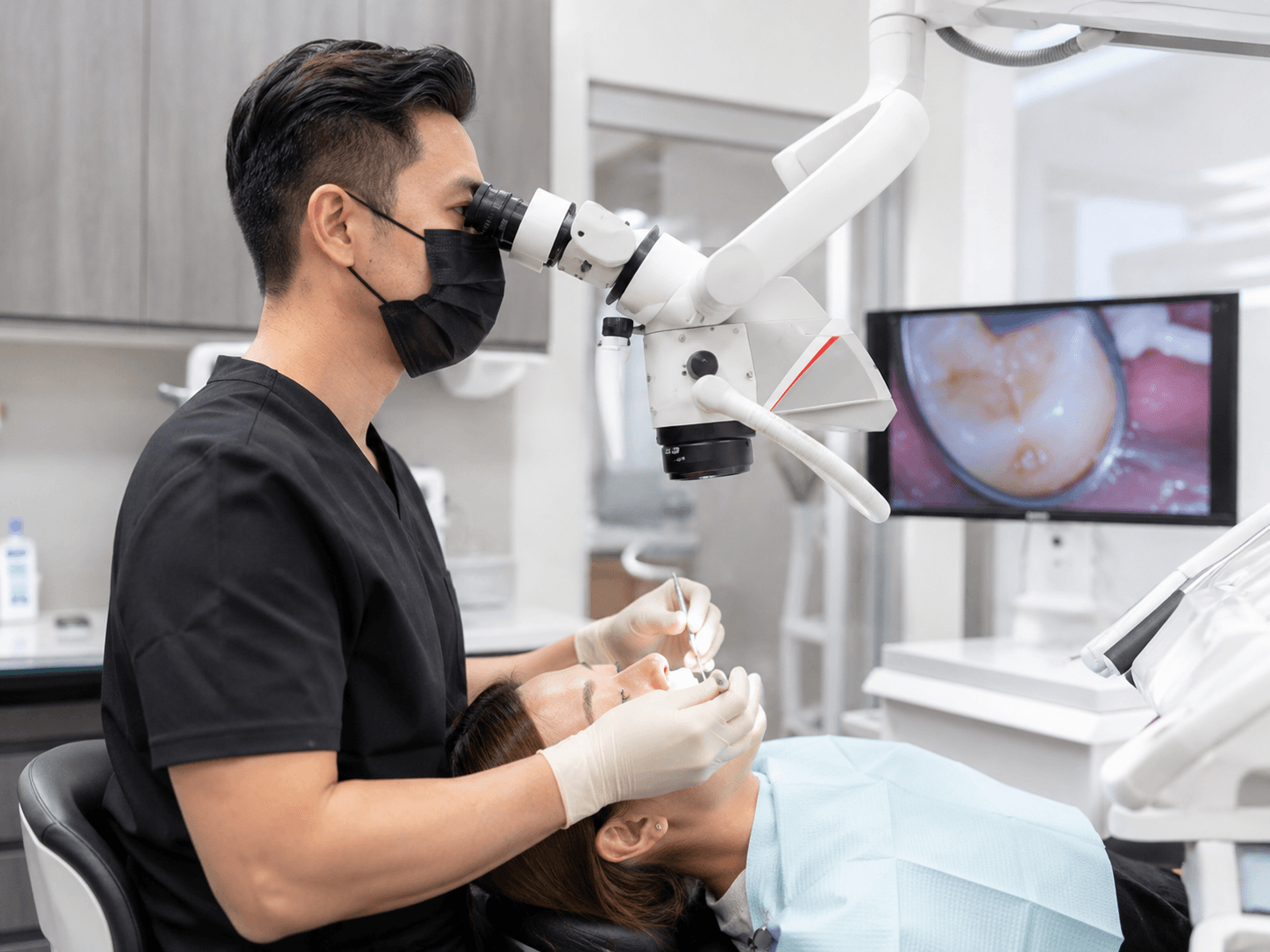
Most patients think of dentistry and cardiology as two completely separate worlds. One doctor looks in your mouth. The other listens to your heart. They use different instruments, work in different buildings, and submit to different insurance systems. The connection between the two feels abstract at best. And yet the science published through 2025 tells a different story — one in which the bacteria in your gums are traveling through your bloodstream, inflaming your arteries, disrupting your blood sugar, endangering your pregnancy, and increasing your risk of Alzheimer's disease. The mouth is not separate from the body. It is the front door to it.
Why Almost Everyone Believes This Myth
The belief that oral health and cardiovascular health are unrelated is not unreasonable — it is just outdated. For most of the 20th century, dentistry and medicine operated in separate silos. Dentists treated the mouth. Physicians treated the body. The idea that bacteria confined to the gum tissue could influence the heart, arteries, or brain seemed implausible.
But the evidence has been accumulating for decades — and in 2025, it is now strong enough that the American Heart Association considered it worthy of a formal updated scientific statement. The oropharyngeal infection-cardiovascular connection has long been associated with cardiovascular disease, specifically valvular disease and endocarditis. However, the relationship between periodontal disease — with its associated infection and inflammation — and cardiovascular disease has historically been overlooked. That oversight is now being corrected at the highest levels of medical authority.
How Gum Disease Reaches Your Heart
Understanding the connection requires understanding how gum disease works at a biological level. Periodontitis is not simply "gum inflammation." It is a chronic bacterial infection of the structures that support your teeth — the gums, the periodontal ligament, and the alveolar bone. In an active infection, periodontal pockets — spaces between the gum and tooth root — are filled with colonies of gram-negative bacteria. These pockets bleed easily. And every time they bleed, bacteria and their toxic byproducts enter the bloodstream.
All three pathways — direct bacterial entry into the bloodstream, systemic inflammatory cytokine release, and shared risk factor amplification — converge on the same endpoint: damaged arteries, unstable plaques, and cardiovascular events. The American Heart Association's 2025 statement synthesized evidence for all three mechanisms.
The inflammatory mechanism is particularly well-understood. Periodontal disease creates a burden of bacterial pathogens, antigens, endotoxins, and inflammatory cytokines that contribute to the process of atherogenesis and thromboembolic events. Lipopolysaccharide — a toxic component of the outer membrane of gram-negative bacteria — stimulates host cells to produce powerful pro-inflammatory cytokines including tumor necrosis factor alpha, interleukin-1, and interleukin-6. These inflammatory mediators damage the endothelial cells that line blood vessels, promote atherosclerotic plaque formation, and increase the risk of clot formation — the direct trigger of heart attacks and strokes.
The AHA Updated Its Position.
Here Is What It Now Says.
The American Heart Association's December 2025 scientific statement — "Periodontal Disease and Atherosclerotic Cardiovascular Disease" — represents the most comprehensive synthesis of evidence on this topic ever published by a major medical organization. It updates the previous 2012 statement and incorporates new evidence from Mendelian randomization studies, intervention trials, and systemic marker research.
🫀 Heart attack and stroke risk
There is increasing evidence that gum disease is associated with increased risk of cardiovascular events — including heart attack, stroke, atrial fibrillation, and heart failure.
🔴 Artery wall thickening
Periodontal disease increased the odds of thickened carotid intima-media thickness — a direct measure of artery wall damage — by 42%. Severe gum disease increased the odds by 70%.
⚡ Independent association confirmed
New evidence indicates an independent association between periodontal disease and cardiovascular disease through direct and indirect mechanisms — beyond shared risk factors like smoking and diabetes.
💊 Treatment may help
Effective prevention and treatment of gum disease could potentially decrease the burden of cardiovascular disease. Periodontal therapy lowers systemic inflammatory markers and improves vascular parameters.
🦷 Dentist as cardiovascular partner
The statement explicitly calls for strengthened interdisciplinary collaboration between dental and cardiovascular care providers — recognizing the dental office as a front-line cardiovascular screening opportunity.
📊 Disparity highlighted
The statement notes that gum disease disproportionately affects underresourced populations — the same populations with higher cardiovascular mortality — making oral care a health equity issue.
The Most Striking Finding: Oral Bacteria Inside Your Arteries
Of all the evidence linking oral and cardiovascular health, one finding is particularly arresting: the DNA of periodontopathic bacteria has been physically detected inside atherosclerotic plaques in coronary and carotid arteries — retrieved from the very lesions that cause heart attacks and strokes. This is not a statistical association. It is bacteria from your mouth, found in your heart's arteries.
🦠 Porphyromonas gingivalis
The primary pathogen of chronic periodontitis has been identified as the most abundant oral species detected in coronary and femoral arteries. Its DNA is commonly found in atheromatous plaques of individuals with periodontal diseases. It contributes to atherosclerosis through lipopolysaccharide endotoxins and its ability to translocate from the oral cavity directly into systemic blood vessels.
Source: Mougeot et al., published findings from metagenomics analysis of 42 atherosclerotic patients. Porphyromonas gingivalis is the most abundant species detected in coronary and femoral arteries.
🧬 Five bacteria unique to coronary plaques
Research confirmed the presence of 23 oral commensal bacteria within atherosclerotic plaques in patients undergoing carotid endarterectomy and cardiac catheterization. Of these, five — including Porphyromonas gingivalis, Campylobacter rectus, and Prevotella intermedia — are unique to coronary plaques and not found in other non-cardiac organs. These bacteria form biofilm deposits within arterial plaques, which may contribute to plaque rupture risk.
Source: npj Biofilms and Microbiomes — systematic review of oral bacteria in atherosclerotic plaques of coronary artery disease patients.
A 2025 study published in a peer-reviewed journal found that Porphyromonas gingivalis aggravates atherosclerotic plaque instability by promoting lipid-laden macrophage necroptosis — meaning the bacteria does not just reach the arterial plaques, it actively destabilizes them. An unstable plaque is a rupture waiting to happen. A rupture in a coronary artery is a heart attack. The biological pathway from gum infection to cardiac event now has molecular-level evidence.
Flossing Once a Week Was Associated With a 44% Lower Risk of Cardioembolic Stroke
Presented at the American Stroke Association's International Stroke Conference in February 2025, this 25-year study of over 6,000 participants found that regular dental flossing was associated with significantly lower rates of ischemic stroke and atrial fibrillation. The findings were independent of regular brushing and routine dental visits. "We knew that flossing regularly will lower the body's level of inflammation, and the level of oral infection, but now, based on this study, we know it will reduce the rate of stroke, atrial fibrillation, and cardioembolic stroke," said study lead Dr. Souvik Sen of the University of South Carolina.
Oral Health and Every Major Systemic Disease
The cardiovascular connection is the most headline-worthy — but it is far from the only systemic link that research has now established. Individuals with oral diseases are between 1.7 and 7.5 times more likely to develop systemic diseases or suffer adverse health outcomes, according to a comprehensive review synthesizing findings from 252 studies. Here is what the 2025 evidence shows, condition by condition.
❤️ Heart Disease & Atherosclerosis
Strong Association🧠 Stroke & Atrial Fibrillation
Strong Association🩸 Type 2 Diabetes
Bidirectional / Confirmed🫁 Respiratory Disease
Well Documented🧩 Dementia & Alzheimer's Disease
Growing Evidence🤰 Adverse Pregnancy Outcomes
Documented Risk🫘 Chronic Kidney Disease
Emerging Evidence🦴 Rheumatoid Arthritis
Association EstablishedI have patients who take meticulous care of their heart — they exercise, eat well, take their statins, see their cardiologist every six months. And then they skip their dental cleaning for two years because they don't feel anything in their mouth. I understand the priorities. What I want them to understand is that the fire in their gums is feeding the fire in their arteries. Those are not two separate problems. They are one problem with two addresses.
— Dr. Minh Nguyen, D.D.S., P.A. · SoftDental, Houston TXWhat This Means For You — Right Now
The oral-systemic connection is not just an academic finding. It has direct, practical implications for how you manage your health — and it requires coordinated action between your dental and medical care teams.
Regular cleanings are cardiovascular care
A professional cleaning removes the calculus and bacterial biofilm that drive the chronic infection in your gums. For patients with diagnosed periodontitis, more frequent cleanings — every 3–4 months — are not just a dental preference. They are a systemic health intervention.
Floss — specifically for cardioembolic stroke risk
The 2025 study showed that the risk reduction from flossing was independent of brushing and dentist visits. Flossing addresses the specific areas — between teeth and under the gumline — where the most pathogenic bacteria colonize. It is the single most accessible cardiovascular protection habit available at zero cost.
Tell your physician about your gum disease
If you have been diagnosed with periodontitis, your physician needs to know. It is now recognized as an independent cardiovascular risk factor by the American Heart Association. Your medical risk assessment should include your oral health status — and it often does not, because the two systems are still too siloed in clinical practice.
Diabetic? Gum treatment may improve your HbA1c
Evidence from 30 randomized trials confirms that treating periodontitis reduces HbA1c by approximately 0.43 percentage points. For a patient with type 2 diabetes already on medication, gum treatment may be the equivalent of adding a second diabetes drug — without side effects or cost. Discuss this with both your dentist and your endocrinologist.
Pregnant? Get your gums checked first trimester
Gum disease during pregnancy is associated with a twofold increased risk of preterm birth. Early first-trimester screening and treatment of active gum disease is safe, effective, and potentially life-changing for mother and baby. Do not wait until your third trimester — and do not skip the dentist because you assume gum health is secondary to obstetric care.
Protect your brain — keep your molars
Posterior tooth loss and loss of occlusal support significantly increase dementia risk in a dose-dependent pattern. Every molar you save — with a root canal, crown, or implant — is a molar that keeps stimulating the jawbone, keeps triggering chewing-related brain activity, and keeps lowering your cognitive decline risk. The dentist's chair is now also a brain health clinic.
Your mouth is connected to everything.
Let's make sure it is healthy.
A gum evaluation at SoftDental is also a cardiovascular screening opportunity. Dr. Nguyen will assess your gum health, bone levels, and periodontal status — and help you understand what it means for your whole body.
This article is for patient education only. It does not constitute medical or dental advice. The associations described between periodontal disease and systemic conditions are based on observational and interventional research; causal relationships in many areas are still under investigation. Patients with cardiovascular disease, diabetes, or other systemic conditions should discuss oral health as part of their overall care with both their dentist and their physician. Statistics cited from peer-reviewed clinical literature and official organizational statements published through June 2026. The 2025 flossing-stroke study data are preliminary research presented at a conference; full peer-reviewed publication was pending at time of writing. © 2026 SoftDental | Dr. Minh Nguyen DDS PA · 10028 West Road Ste. 108, Houston TX 77064 · 281-807-6111