Dental implants have one of the highest long-term success rates of any medical procedure — well over 95% with proper care. But that remaining percentage matters, especially if it is your implant that fails. The good news is that most implant failures are preventable once you understand what causes them.
First, the good news
A dental implant is a titanium post placed into your jawbone that fuses with your bone through a process called osseointegration. When this fusion succeeds and the implant is properly maintained, it can last the rest of your life. Studies show with proper care, dental implants can last more than 20 years, and roughly 95% of dental implants succeed with proper long-term hygiene.
Implants are not like car parts that simply wear out on a timer. They do not decay the way natural teeth do. A well-placed implant in a healthy mouth, cleaned and monitored consistently, has an excellent track record. The failures that do happen almost always have a cause — and a cause means there was a warning, a moment when things could have been caught and reversed.
That is what this article is about. Not to scare you — but to give you the knowledge to protect what is a significant investment in your health and your smile.
Two Types of Implant Failure: Early and Late
Researchers divide implant failure into two categories based on when it happens. Understanding which type you are dealing with helps you understand the cause — and whether the implant can be saved.
- Happens during osseointegration — the bone-fusion process
- Implant never fully bonds with the jawbone
- Often noticed as implant movement or persistent pain
- Main causes: infection, poor bone quality, smoking, uncontrolled diabetes
- Rate in clinical studies: 0.5% to 5.2% of implants placed
- Happens after the implant has successfully healed and integrated
- Bone loss develops gradually around a previously stable implant
- Often caused by peri-implantitis or chronic bite overload
- Can occur even 10–15 years after successful placement
- Rate in clinical studies: 0.5% to 7.8% of implants
Left: Early failure — the implant never fused with bone (osseointegration failed) and remains mobile. Right: Late failure — the implant was stable for years, but bacterial infection destroyed the surrounding bone (peri-implantitis).
The Core ReasonsWhy Implants Fail
Research involving hundreds of thousands of implants, published through 2025, consistently points to the same causes. Implant failure is categorized as multifactorial — early failures are predominantly linked to smoking, uncontrolled diabetes, poor bone quality, periodontitis, and surgical errors, while late failures are associated with biomechanical overload, peri-implantitis, malpositioning, and systemic medication effects. Here is each cause explained in plain language.
🦠 Peri-Implantitis — The #1 Cause of Late Failure
Peri-implantitis is a bacterial infection in the gum and bone tissue surrounding a dental implant — essentially, gum disease of the implant. Plaque and bacteria accumulate around the implant crown at the gum line. Over time, the bacteria destroy the bone that holds the implant in place. Current data shows about 21–25% of implant patients develop this condition, making it the leading cause of late implant failure. It often progresses faster than gum disease around natural teeth because implants lack the protective periodontal ligament that helps natural teeth resist bacterial invasion.
The problem is that it starts silently. Many early cases feel like mild pressure, tenderness when cleaning, or no pain at all — relying on pain as your signal can delay treatment significantly.
🚬 Smoking — More Than Double the Risk
Smoking is one of the most clinically significant risk factors for implant failure at every stage. A meta-analysis of 21 cohort studies showed that smoking was associated with more than double the risk of early dental implant failure compared to non-smoking, with an odds ratio of 2.59. For upper jaw implants, the risk was even higher.
Smoking reduces blood flow to the gums, slows the healing process, and doubles the overall risk of implant failure. Nicotine constricts the blood vessels that bring the oxygen and nutrients bone cells need to integrate with the implant surface. The result is a healing environment that is fundamentally compromised from the first day.
🦴 Poor Bone Quality or Insufficient Bone Volume
An implant needs sufficient bone volume and adequate bone density to osseointegrate successfully. Your jawbone needs adequate density and volume to hold an implant securely. Poor bone quality from previous tooth loss, gum disease, or osteoporosis makes it harder for the implant to integrate. When bone is too soft or thin, it cannot provide the stability the implant needs.
The upper jaw (maxilla) naturally has softer, more porous bone than the lower jaw — which is why upper jaw implants have a somewhat higher failure rate. The Anatomage 3D Cone Beam CT scan Dr. Nguyen uses before every implant case gives precise measurements of bone width, height, and density at the exact site of planned implant placement. When bone is insufficient, a bone graft is performed first — often 3–6 months before the implant — to build an adequate foundation.
🩸 Uncontrolled Diabetes and Systemic Health Conditions
Uncontrolled diabetes is one of the most well-documented systemic risk factors for implant failure. High blood sugar impairs the body's immune response, slows wound healing, and reduces the quality of new bone formation around the implant. Systemic conditions such as diabetes and osteoporosis appear in approximately 60 research studies as significant contributors to implant failure, along with medication exposure such as bisphosphonates and SSRIs.
The key word is "uncontrolled." Diabetic patients whose blood sugar is well-managed have implant success rates approaching those of non-diabetic patients. The disease itself is not necessarily a barrier — unmanaged disease is. Other conditions that affect bone metabolism, immune function, or healing (including osteoporosis, rheumatoid arthritis, and certain cancers) also require careful evaluation before implant placement.
🦷 Untreated or History of Gum Disease (Periodontitis)
There is a well-established link between periodontitis (gum disease) and implant failure. The bacteria responsible for gum disease around natural teeth are the same bacteria that cause peri-implantitis around implants. Patients who have lost teeth to gum disease and want implants face a higher risk of peri-implantitis if the underlying bacterial environment has not been properly treated and managed.
Getting an implant without first treating active gum disease is like painting over rust — the problem underneath continues to progress and eventually affects the new work. At SoftDental, active periodontal disease must be resolved before implant placement is scheduled.
⚙️ Bite Overload and Grinding (Bruxism)
Implants rely on bone for their support — and bone has limits. When an implant crown is placed at the wrong height (too "high" in the bite), or when a patient grinds their teeth heavily at night, the forces transmitted through the implant can exceed what the bone can handle. Over time, this mechanical overload causes gradual bone loss around the implant — even without any infection present.
Night grinding (bruxism) is especially damaging because the forces generated during sleep grinding can far exceed normal chewing forces — sometimes up to 10 times greater. Patients who grind need a custom night guard to protect both implants and natural teeth.
🪥 Poor Oral Hygiene After Placement
This is the most controllable cause on the entire list — and the one most within your power to prevent. Unlike natural teeth, implants do not have the periodontal ligament that helps fight off infection, making daily plaque control even more important than for natural teeth. Bacterial buildup that leads to problems starts within hours, which means your daily habits have an immediate impact.
Many patients assume that because the implant crown is not a real tooth, it cannot get infected. The crown cannot decay — but the gum tissue and bone around it absolutely can be damaged by bacteria. Plaque that is not removed daily hardens into calculus, which creates an environment where peri-implantitis can take hold quietly over months or years.
💊 Certain Medications That Affect Bone or Healing
Medication exposure, including bisphosphonates and SSRIs, appears in 24 published studies as a contributor to implant failure. Bisphosphonates (used to treat osteoporosis — brand names include Fosamax, Boniva, Zometa) are particularly important because they alter the way bone remodels around an implant and can cause a serious complication called osteonecrosis of the jaw in rare cases. Long-term steroid use, some immunosuppressants, and certain antidepressants can also affect bone metabolism and healing.
This is not a reason to avoid implants — it is a reason for full disclosure and thorough pre-treatment planning. Dr. Nguyen evaluates medication history at every implant consultation.
Warning Signs: What to Watch For
Most implant problems give you warning before they become irreversible. The challenge is that the early signs are easy to dismiss as minor or temporary. Peri-implantitis often begins silently, making early warning signs essential to recognize. Here is what to take seriously.
Bleeding When You Brush or Floss
It is not considered normal for the tissues around implants to bleed when you brush and floss — it may be a sign of bacterial accumulation. Even occasional bleeding deserves evaluation, not monitoring.
Call us — do not waitRed, Puffy, or Swollen Gums Around the Implant
Healthy tissue around implants should look pale pink and firm. If gums appear puffy, red, or shiny around the implant, inflammation is present.
Schedule an exam soonPersistent Bad Taste or Bad Breath
A bad taste in the mouth or chronic bad breath (halitosis) can be the result of bacterial buildup — a precursor to peri-implantitis that should not be ignored.
Watch and schedule a checkThe Implant Crown Looks "Taller" or Longer
If your implant crown appears longer than it used to, it usually means the gum tissue has receded — and the implant post below is being exposed. This is a sign of tissue and possible bone loss.
Call us promptlyAny Wobbling or Movement
An implant should be completely immobile. Any looseness whatsoever is a red flag — a properly integrated implant does not move, ever.
Emergency appointmentPus or Discharge at the Gum Line
Patients often describe a gross taste or noticing discharge when they press the gumline. This is a stronger warning sign than bleeding alone and moves you up the priority list for an appointment.
Same-week appointmentHow to Make Your Implant Last a Lifetime
Here is the complete, honest guide to protecting your implant — grounded in what the research actually shows makes the difference between implants that fail and implants that last 20, 30, and 40 years.
Brush Correctly — Twice, Every Day
Use a soft-bristled toothbrush at a 45-degree angle to the gum line. Clean above and below the crown margin where it meets the gum. An electric toothbrush is excellent for consistency and pressure control. Use non-abrasive toothpaste — whitening gels with harsh abrasives can scratch implant surfaces over time.
Floss or Water-Floss Daily
Regular floss with a threader, implant-specific floss (Super Floss), or a Waterpik are all effective. Four non-negotiable habits: gentle twice-daily brushing, once-daily cleaning between implants, regular dental checkups, and avoiding damaging habits like smoking and chewing ice. The Waterpik is especially useful for cleaning the area just below the crown margin.
Never Skip Professional Cleanings
Your hygienist uses implant-safe instruments to remove calculus in areas your toothbrush cannot reach. Even with perfect at-home care, professional cleanings play a critical role in implant success — your hygienist uses tools designed to protect the implant surface while removing hard deposits you cannot reach at home. Every 3–6 months depending on your risk level.
Wear a Night Guard If You Grind
Grinding at night produces forces that can exceed the bone's tolerance — gradually loosening the implant or causing bone loss without any infection involved. A custom night guard from SoftDental costs far less than implant retreatment and protects both your implant and your natural teeth simultaneously.
Quit Smoking — Completely If Possible
Quitting smoking is essential, as smoking reduces blood flow to the gums, slows healing, and significantly increases the risk of implant failure. If quitting is not immediately possible, at minimum do not smoke for 2 weeks before surgery and 8 weeks after. Long-term, every cigarette you smoke is an ongoing risk to the bone around your implant.
Support Bone Health with Your Diet
A balanced diet rich in calcium, vitamin D, and antioxidants supports bone health around the implant. Calcium (dairy, leafy greens, almonds) and Vitamin D (fatty fish, egg yolks, sun exposure) are the two most important. Avoid sugary drinks and snacks that promote bacterial growth in the mouth.
Protect Your Implant from Hard Foods
Do not bite into ice, hard candy, or very hard bread crusts with the implant crown. Do not open packages with your teeth. Hard, sticky, or overly crunchy foods can put excessive pressure on the implant crown, which may chip or loosen over time. The implant post is strong — the crown on top is what needs protection.
Manage Your Systemic Health
If you have diabetes, work with your physician to keep blood sugar well-controlled — both before surgery and long-term. Keep Dr. Nguyen informed of any new medications, health conditions, or changes in your health history. This information is never irrelevant to your implant's long-term health.
| Habit / Factor | Implant at Risk | Implant Built to Last |
|---|---|---|
| Brushing frequency | Irregular or skipped | Twice daily, every day, correct technique |
| Flossing | Rarely or never | Daily — threader, Waterpik, or Super Floss |
| Professional cleanings | Only when something hurts | Every 3–6 months — never skipped |
| Smoking | Active smoker | Non-smoker or quit before/after surgery |
| Grinding at night | Unaddressed, no night guard | Custom night guard worn every night |
| Diabetic control | HbA1c poorly controlled | Well-managed, physician-monitored |
| Response to warning signs | Waits for pain before calling | Calls at first sign of bleeding or swelling |
| Pre-surgical planning | Placed without 3D imaging | 3D Cone Beam CT scan — bone measured precisely |
| Diet | High sugar, low calcium | Calcium and Vitamin D-rich, limits sugar |
| Bite check after restoration | Not verified after crown | Bite carefully adjusted — no implant overloaded |
How Dr. Nguyen Protects Your Implant
At SoftDental, implant success is not left to chance. Before placing any implant, Dr. Nguyen uses the Anatomage 3D Cone Beam CT scanner to see your jawbone in three dimensions — measuring exact bone width, height, density, and the precise location of your nerve canals. Virtual implants are placed on your actual anatomy in the software before surgery begins, so the position, angle, and depth are planned and confirmed.
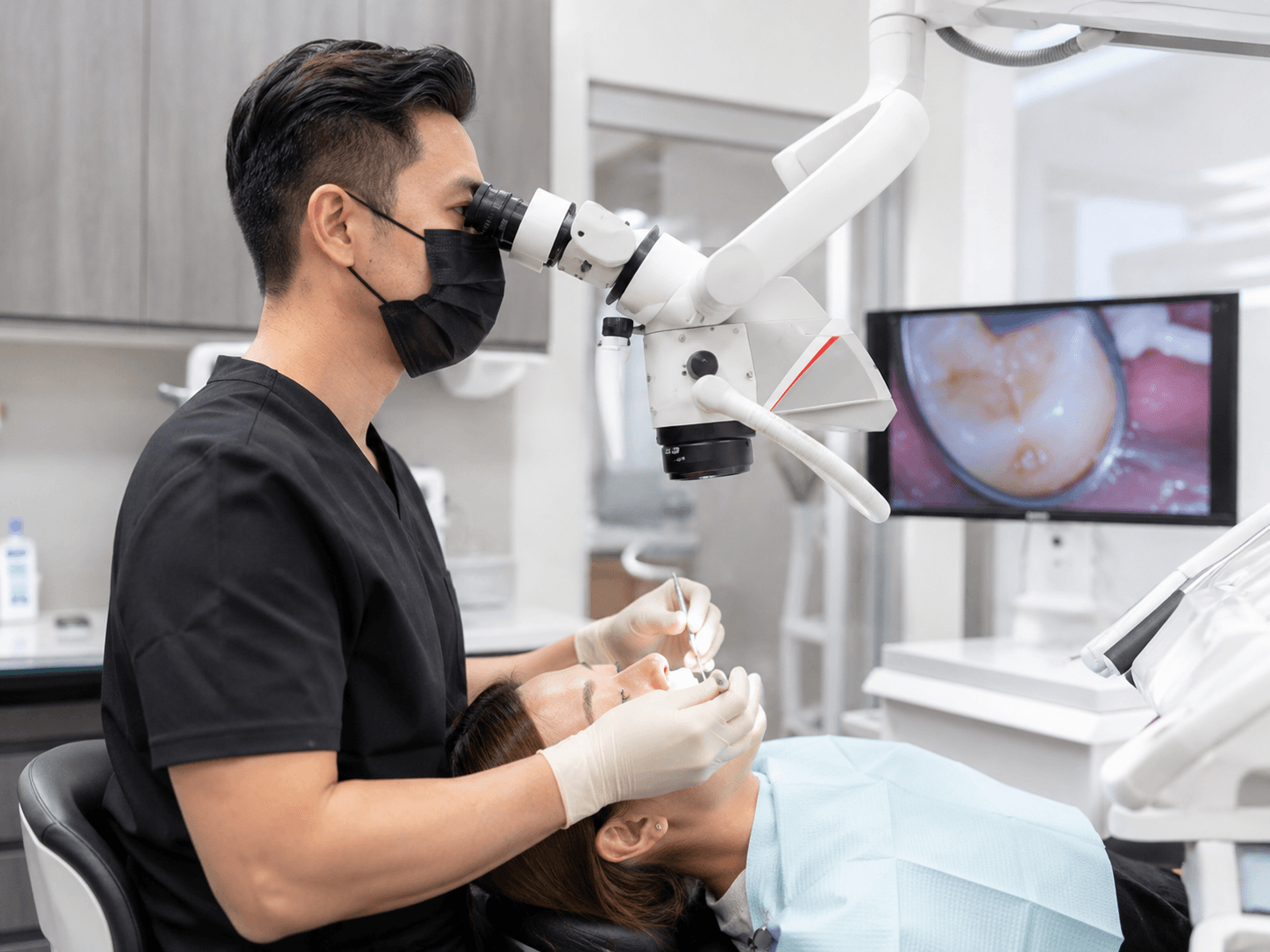
During placement, Dr. Nguyen uses the Leica dental operating microscope for surgical cases requiring enhanced precision. After placement, your crown is designed by Dr. Nguyen personally using 3Shape CAD software — so bite contacts are verified digitally before the final restoration is ever fabricated. An improperly designed crown that overloads the implant is a preventable failure cause that careful design eliminates.
Long-term, we partner with you through regular follow-up appointments and prompt attention to any concerns you bring to us. No warning sign is too small to discuss.
The patients who lose implants are not careless people. They are people who did not know what to watch for, or who waited too long when early warning signs appeared. That is why education matters as much as skill. A well-placed implant and a well-informed patient — that combination is nearly unbeatable.
— Dr. Minh Nguyen, D.D.S., P.A. · SoftDental, Houston TXYour implant deserves a lifetime of care.
Whether you are considering an implant, already have one, or noticed something that concerns you — we are here. Schedule a consultation or a maintenance visit at SoftDental today.
This article is for patient education purposes only and does not constitute medical or dental advice. Individual implant outcomes vary based on patient health, oral hygiene, and other factors. All statistics cited are from peer-reviewed clinical research published through 2025. © 2026 SoftDental | Dr. Minh Nguyen DDS PA · 10028 West Road Ste. 108, Houston TX 77064 · 281-807-6111