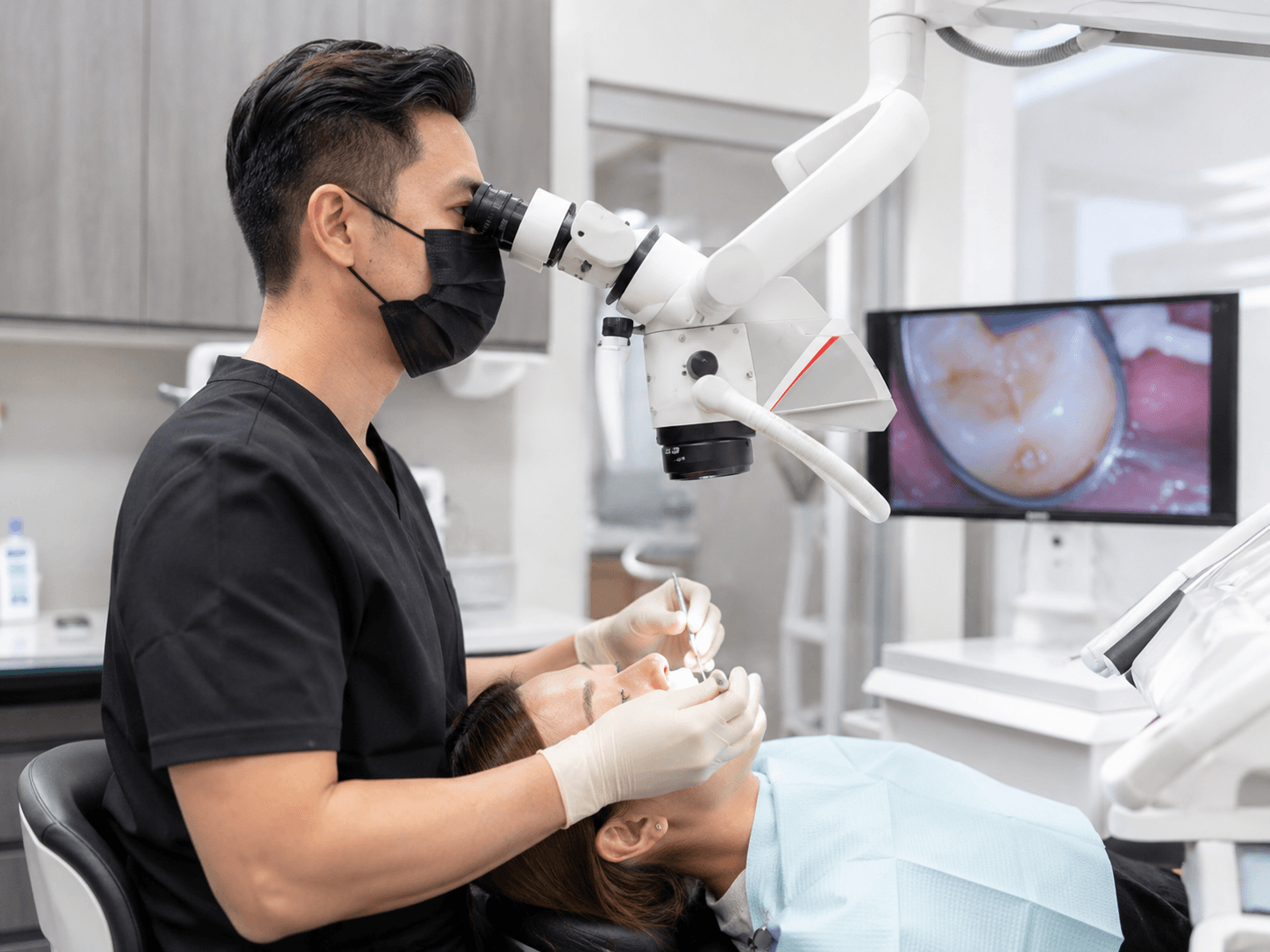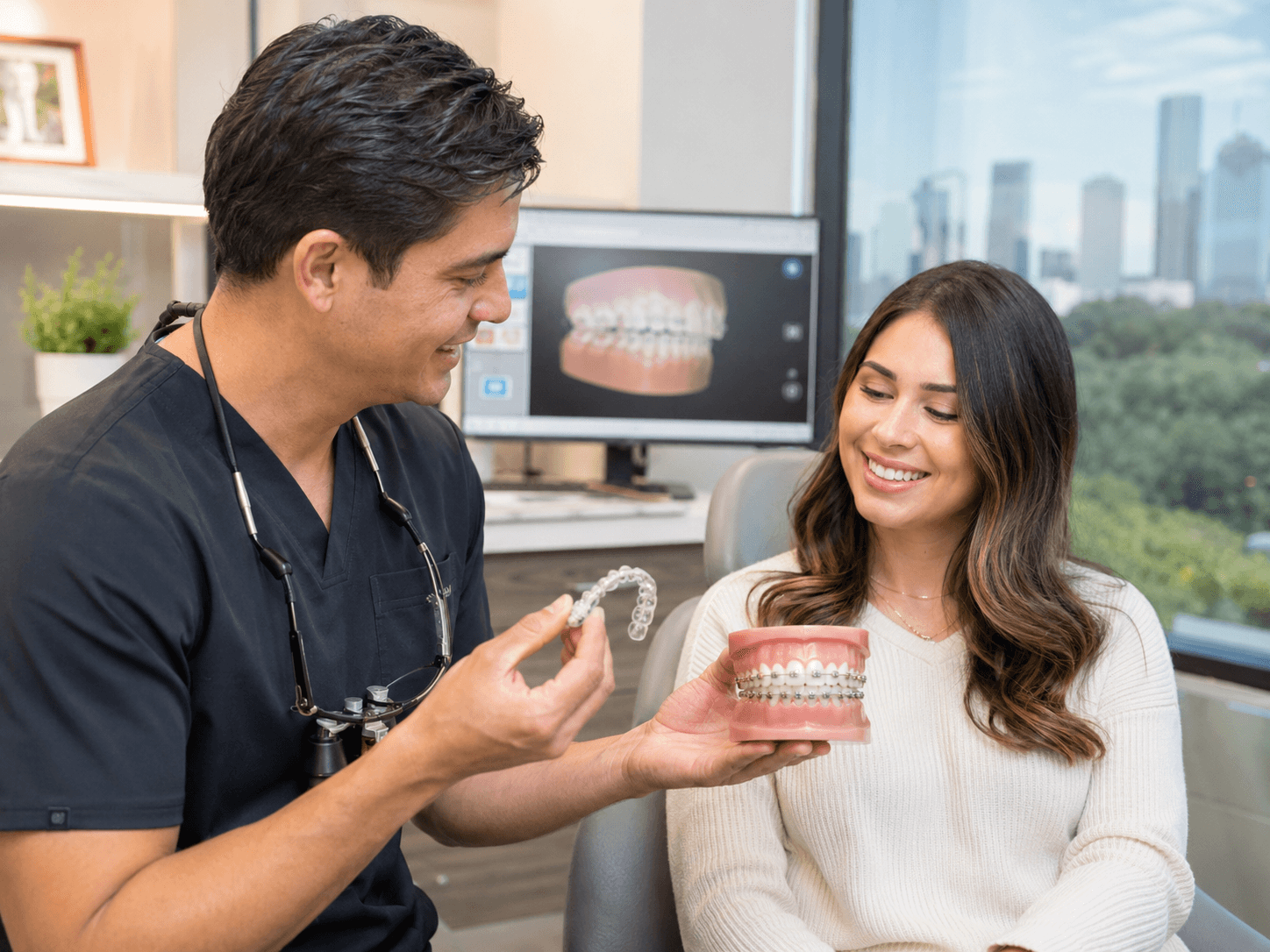
Both composite and porcelain veneers can improve a smile. The question is — for how long, and at what cost to your teeth and gum health along the way? After many years of treating cosmetic patients, Dr. Nguyen's recommendation is consistent: for most adults seeking a lasting smile transformation, porcelain is the right choice.
What Is Each Material?
Composite veneers are made from the same tooth-colored resin used in regular dental fillings. A dentist applies the resin directly to your tooth surface, shapes it by hand, and polishes it — often in a single visit. It requires little or no tooth preparation.
Porcelain veneers are thin ceramic shells custom-fabricated — either in a dental laboratory by a skilled ceramist or milled from a solid ceramic block in our in-office MCXL lab. They are bonded to the front surface of your tooth permanently. The material closely mimics the optical properties of natural tooth enamel.
- Made from tooth-colored resin — same as fillings
- Applied and shaped by hand directly on the tooth
- Often completed in a single visit
- Lower initial cost
- Lasts 4–7 years on average
- More porous — susceptible to staining
- Loses polish and shine over time
- Cannot replicate enamel's natural translucency
- Made from ceramic — the same family as natural enamel
- Custom fabricated to your exact anatomy
- 2–3 visits (or same-day with our MCXL lab)
- Higher initial investment
- Lasts 15–20+ years with proper care
- Non-porous — highly stain-resistant
- Maintains gloss and translucency for decades
- Matches natural light reflection of real enamel
The Clinical Problems with Composite Veneers
Composite has an important place in dentistry — for small chips, minor repairs, and temporary solutions. But as a long-term cosmetic veneer material, it has documented clinical limitations that patients deserve to understand before committing.
Staining and Discoloration
Composite resin is more porous than porcelain and absorbs pigment from coffee, tea, red wine, and food. Within 1–3 years, most composite veneers begin to yellow or gray — especially near the margins. The staining is in the material itself and cannot be polished away permanently.
Short Lifespan — Real Total Cost
Composite veneers typically require replacement or significant maintenance every 3–5 years. A patient who chooses composite at a lower upfront cost often spends more total money over 15 years than a patient who chose porcelain once. Porcelain is typically more cost-effective long term due to fewer replacements.
Surface Degradation Over Time
The surface of composite veneers degrades with exposure to oral fluids, acids, and wear. The smooth, polished surface becomes rougher over time — and a rough surface attracts more bacteria and stain. Porcelain's glazed ceramic surface does not degrade the same way.
Higher Bacterial Plaque Attraction
Clinical research shows porcelain has high resistance to microbial plaque and is associated with reduced gum inflammation compared to composite. Composite's more porous surface retains more bacterial biofilm — which over time can contribute to gum inflammation around the veneer margins.
Cannot Match Porcelain's Optical Quality
Composite lacks the internal translucency and optical depth of natural enamel or porcelain. In certain lighting — daylight, flash photography, bright office lighting — composite veneers look flat and opaque in a way that porcelain does not. Porcelain transmits light the way real enamel does.
Repeated Replacement Damages Tooth Structure
Each time a composite veneer is replaced, some enamel is lost in the process of removing the old material. Patients who replace composite veneers every 5–7 years for 20 years end up with progressively less healthy enamel — potentially requiring a crown where a veneer would have been sufficient had porcelain been chosen initially.
When Composite Makes Sense
Dr. Nguyen is not dismissing composite entirely. There are appropriate situations for it.
The Full Side-by-Side Comparison
| Category | Composite Veneers | Porcelain Veneers |
|---|---|---|
| Lifespan | 4–7 years — replacement usually needed | 15–20+ years with proper care |
| Stain resistance | Low — porous, absorbs coffee/wine/tea | Excellent — non-porous glazed ceramic surface |
| Natural appearance | Good initially — flattens and dulls over time | Outstanding — maintains translucency and gloss for decades |
| Plaque attraction | Higher — rougher surface accumulates more bacteria | Lower — smooth ceramic resists biofilm buildup |
| Gum health impact | Higher plaque → more gum inflammation risk over time | Minimal gum inflammation — ceramic is biologically compatible |
| Visits needed | 1 visit (direct technique) | 2–3 visits or same-day with our MCXL lab |
| Tooth prep required | Minimal or none | Minimal — 0.3–0.7mm of enamel removed |
| Long-term enamel impact | Repeated replacements progressively remove enamel | One preparation — no repeat enamel removal for 15–20 years |
| Initial cost | Lower upfront | Higher upfront |
| 20-year total cost | Higher — 3–4 sets of replacements | Lower — typically one set lasts 15–20 years |
| 10-year satisfaction rate | 70–75% clinical success | 92–95% patient satisfaction after 5 years |
I tell every patient the same thing: composite veneers are not bad dentistry. They are the wrong material for a patient who wants their beautiful smile to still look beautiful in ten years. Porcelain is the material that does that. It is the reason why every serious cosmetic dentist ultimately recommends it.
— Dr. Minh Nguyen, D.D.S., P.A. · SoftDental, Houston TXReady for a smile that lasts?
Book a cosmetic consultation with Dr. Nguyen. See your porcelain veneer smile preview before committing to anything.
Educational content only. © 2026 SoftDental | Dr. Minh Nguyen DDS PA · 10028 West Road Ste. 108, Houston TX 77064