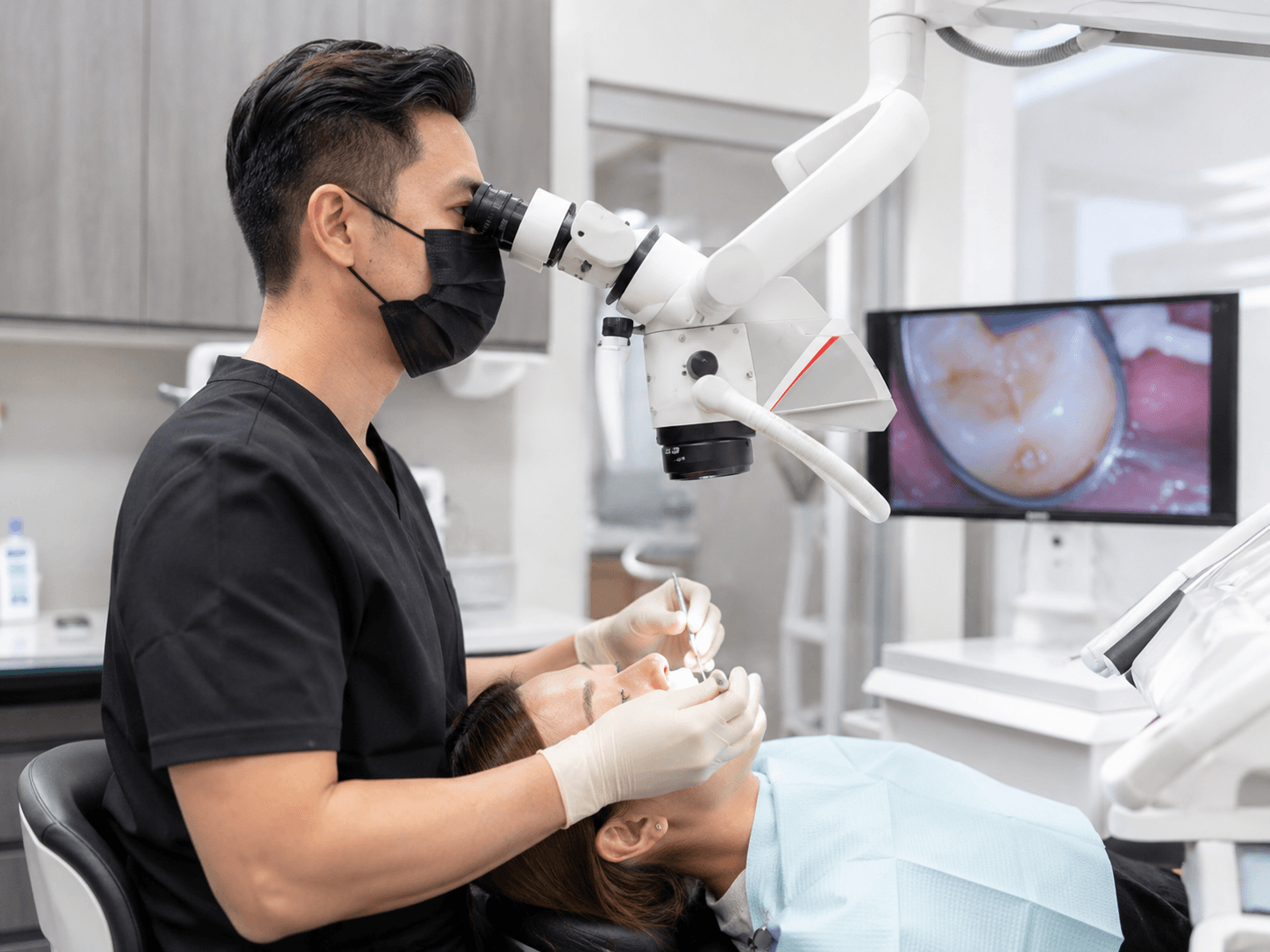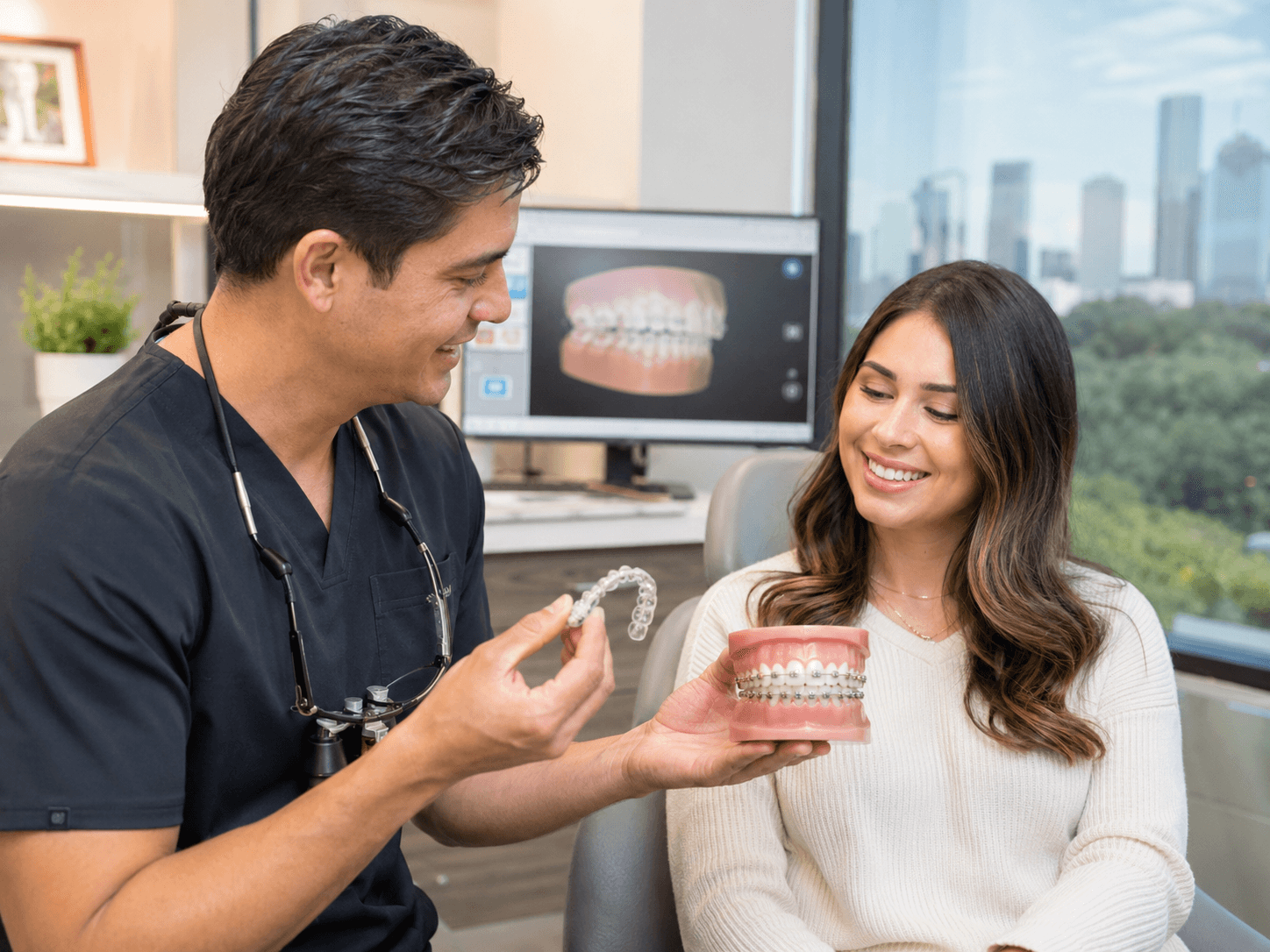
Your natural tooth is always the best option. Nothing artificial fully replaces the feel, function, and health benefits of your own tooth. Clinical crown lengthening is one of the most powerful tools available for saving teeth that appear unsalvageable — and Dr. Nguyen uses it in difficult cases specifically to give patients that chance.
What Is Clinical Crown Lengthening?
Clinical crown lengthening is a surgical procedure that exposes more of a tooth's structure above the gum line — creating enough tooth to securely place a crown or other restoration. It does this by gently repositioning the gum tissue downward, and when necessary, reshaping a small amount of the bone around the tooth.
The procedure was formally defined as "a surgical procedure designed to expose sound tooth structure for restorative purposes by apically repositioning the gingival tissue, with or without the removal of alveolar bone." In simple language: Dr. Nguyen moves the gum line down slightly so that enough healthy tooth is visible and accessible to hold a crown in place for the long term.
This is not about making a tooth look longer for cosmetic reasons alone — it is about creating the biological foundation that allows a restoration to succeed and the surrounding gum tissue to remain healthy for years.
When Does Dr. Nguyen Recommend Crown Lengthening?
This procedure is used in specific clinical situations where the tooth cannot be properly restored without first creating adequate space above the gum. Crown lengthening is indicated to address restorative needs, increase clinical crown height, access subgingival caries or fractures, create a ferrule for restorations, or relocate restoration margins.
Deep Decay Below the Gum Line
A cavity that extends below the gum into the root surface cannot be properly cleaned and filled without first exposing it. Crown lengthening makes the full cavity visible and accessible, so the restoration is clean, sealed, and lasting.
Fractured Tooth Below the Gum
A tooth broken off at or below the gum line looks un-restorable. But if the root is sound, crown lengthening can expose enough structure for a crown to grip — saving a tooth that appears lost. This is where Dr. Nguyen's approach is especially valuable.
Crown That Keeps Falling Off
A crown needs at least 1.5–2mm of solid tooth above the bone to hold reliably. When this "ferrule" is absent — usually because the tooth broke down — the crown cannot grip and will repeatedly fall or fracture. Crown lengthening creates that retention zone.
Short Clinical Crown — Not Enough Tooth to Work With
Some teeth have naturally short crowns, or have worn down over time, leaving insufficient structure above the gum. Without lengthening, a crown cannot be properly fitted. The procedure creates the tooth height needed for a secure, lasting restoration.
Gummy Smile (Esthetic)
When teeth appear short because excess gum covers them, esthetic crown lengthening removes that excess tissue to reveal the tooth's true proportions. This is often combined with veneer treatment for a complete smile transformation.
Biologic Width Violation by Existing Restoration
An existing crown or filling that sits too deep into the gum causes chronic inflammation and bone loss. Crown lengthening moves the tissue away from the restoration margin, stopping the inflammation and protecting the bone.
Left: A tooth with a fracture below the gum line — not enough tooth structure above the bone to hold a crown, and the biologic width is violated. Right: After crown lengthening, adequate tooth is exposed, biologic width is respected, and a crown can now be placed with a healthy foundation.
What the Procedure Involves
Crown lengthening is a minor surgical procedure performed under local anesthesia. Most patients are surprised by how manageable the experience is. Here is what happens step by step.
Local Anesthesia
The area around the tooth is fully numbed. You should feel pressure and vibration but no pain. The procedure is typically 45–90 minutes depending on how many teeth are involved.
Gum Incision and Flap Reflection
Dr. Nguyen makes a precise incision in the gum tissue and gently reflects it to expose the underlying tooth and bone. The Leica dental microscope gives exceptional visibility throughout this process.
Bone Reshaping (When Needed)
When gum repositioning alone is insufficient, a small amount of bone around the tooth is carefully reshaped to create the 3mm biologic width required for a healthy restoration margin. This is measured and done conservatively.
Gum Repositioning and Sutures
The gum is repositioned at the new, lower level and sutured precisely. This creates the new margin where the crown will eventually sit — above the bone, within the biologic zone.
Healing Period — Then Restoration
The gum tissue needs 6–8 weeks to fully heal and stabilize at its new position before the final crown can be placed. Proceeding too soon risks the gum creeping back up and compromising the restoration margin. Patience here protects the long-term result.
Why Saving a Natural Tooth Always Comes First
An implant is an excellent solution for a missing tooth. But it is not a natural tooth. Your natural tooth has a periodontal ligament — a shock-absorbing attachment system that implants do not have. It is connected to your immune system and provides sensory feedback that implants cannot replicate. Natural teeth preserve the bone around them in ways that even the best implant only approximates.
When a tooth is declared "too far gone" and extracted without exploring surgical options, the patient loses all of those benefits permanently. Crown lengthening is often the difference between losing a tooth and keeping it for 20 more years.
When a patient comes to me with a tooth that another dentist said needs to come out — the first thing I do is look more carefully. Many of those teeth can be saved. Crown lengthening is not complicated. What it requires is time, precision, and a dentist who believes your tooth is worth the effort.
— Dr. Minh Nguyen, D.D.S., P.A. · SoftDental, Houston TXWas told your tooth needs to come out?
Get a second opinion at SoftDental. Dr. Nguyen will evaluate whether crown lengthening — or another tooth-saving approach — can help you keep it.
Educational content only. © 2026 SoftDental | Dr. Minh Nguyen DDS PA · 10028 West Road Ste. 108, Houston TX 77064